
Fresh air, room to roam and custom digs: Life is good for former SeaQuest animals

Caregivers at Duluth’s Lake Superior Zoo and elsewhere are learning the needs and personalities of their new wards from the bankrupt Roseville SeaQuest.

The Minnesota Star Tribune
September 28, 2025 at 12:00PM
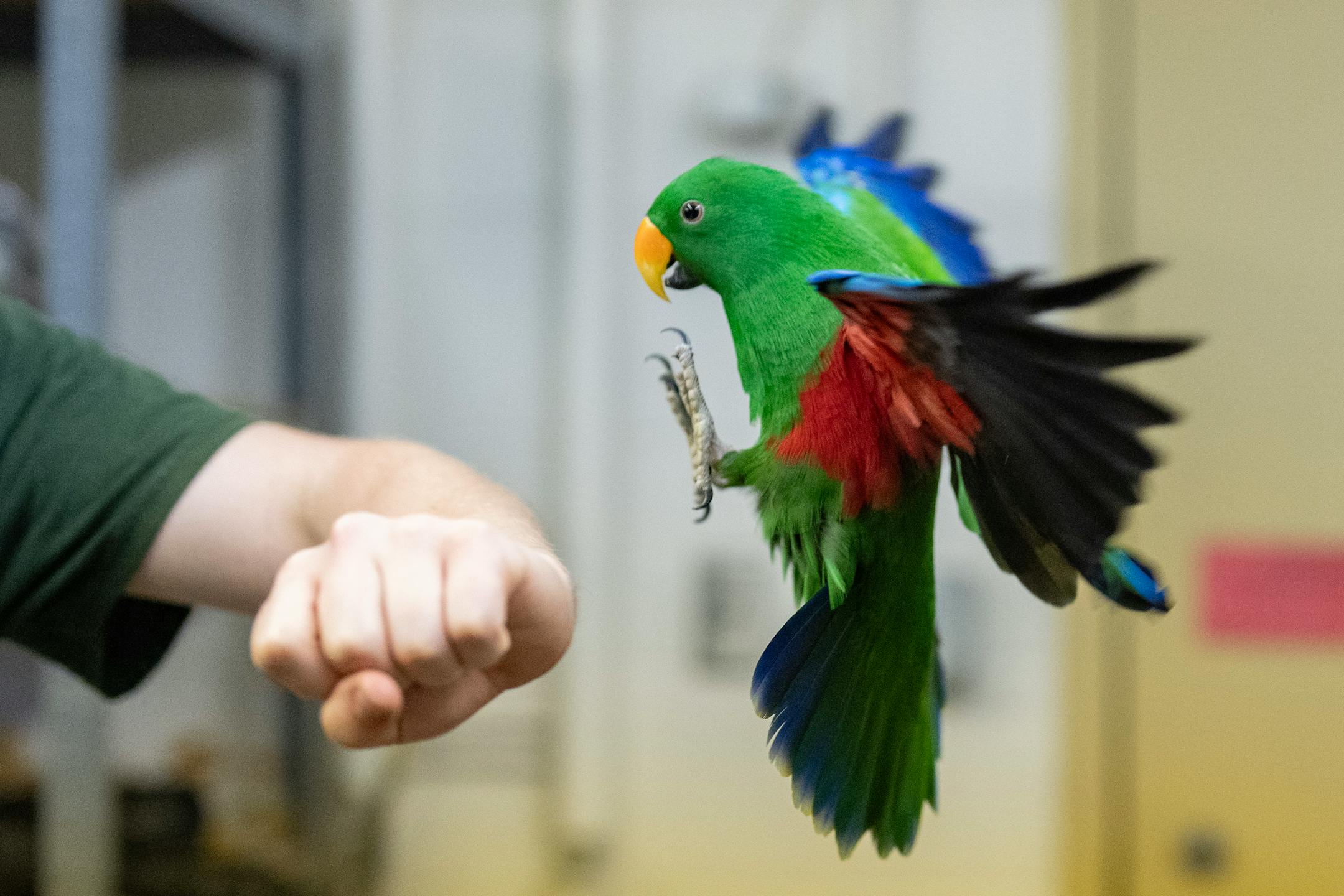
Jalapeño, a male eclectus parrot, flies to zookeeper Dan Johnson during a training session in a back room at the Lake Superior Zoo. (Alex Kormann/The Minnesota Star Tribune)

DULUTH – If the deadliest creature at the Lake Superior Zoo could experience serenity, his introduction to his new space last week surely did it.

Rumen, a reticulated python, soaked up the warmth of the primate building floor as handlers carefully measured his languid body. Then, ferried by snake-wrangling hooks, he was placed inside his new habitat — several times larger than his exhibit at his previous home, the Roseville SeaQuest.

Across Minnesota, zoo workers are learning their new animals’ care and personalities, and nursing many back to good health after the Roseville aquarium and petting zoo closed.

Inside his new habitat, Rumen unfurled fully and began exploring as more than a dozen zoo workers watched intently.

“It’s really fun to see him blossom,” said his keeper, Emily Perala.

Rumen is among the 200 animals the Lake Superior Zoo took in last March after the closure. More than 1,000 other animals went to places like the Minnesota Zoo, the Como Zoo Conservatory and the Great Lakes Aquarium.
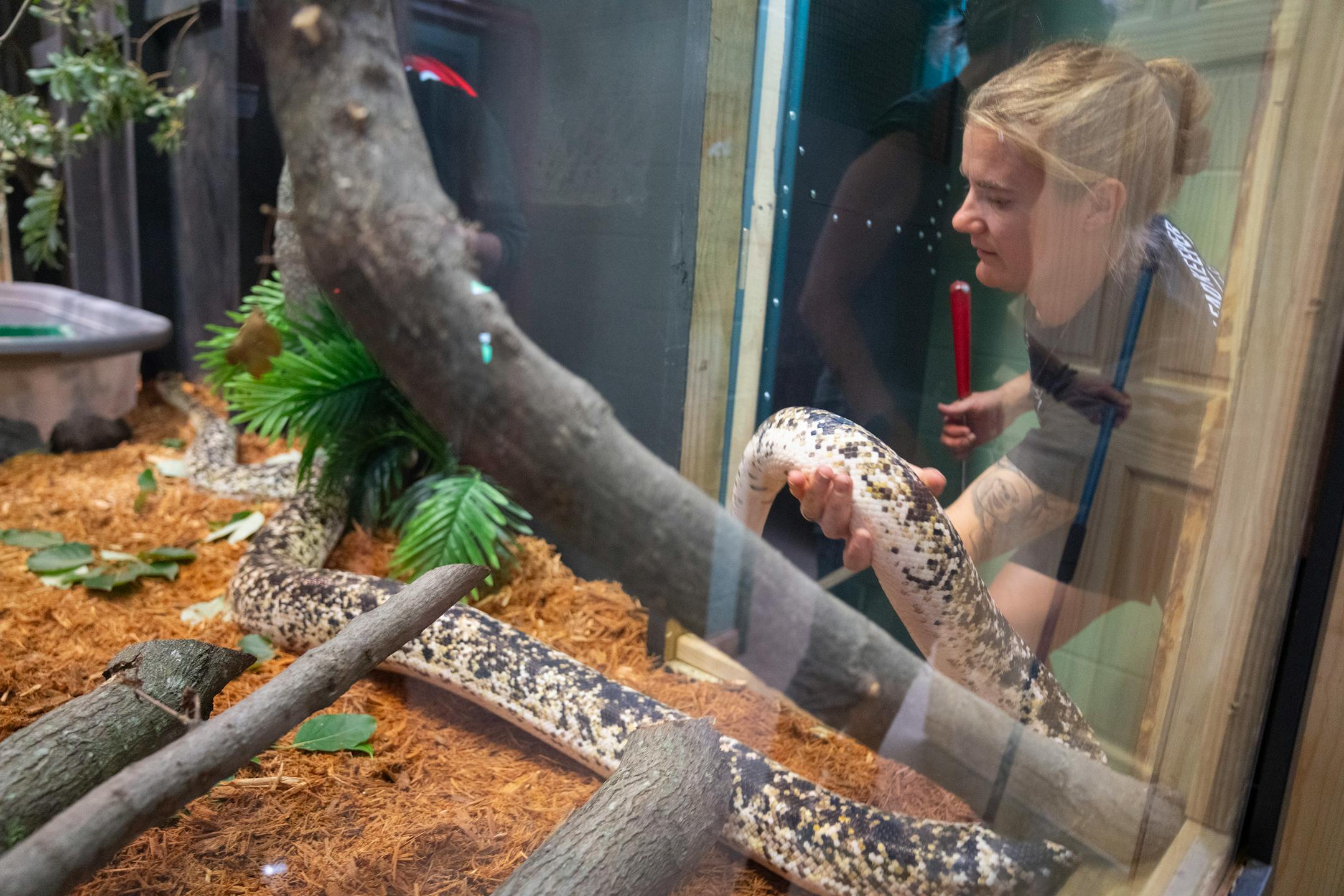
Emily Perala, the lead zookeeper at Lake Superior Zoo, releases Rumen, a 10-foot-long reticulated python, into his newly finished enclosure at the Lake Superior Zoo. (Alex Kormann/The Minnesota Star Tribune)

The national SeaQuest chain declared bankruptcy last year amid reports of animal abuse and neglect at some locations. In Roseville, federal reports showed the facility hadn’t followed appropriate methods to prevent and treat injured animals, among other issues.

That showed in many of the creatures brought to Duluth, where for the last seven months, zoo workers have mended, trained and learned to care for animals, many that had lived without proper diets, enclosures and health care.
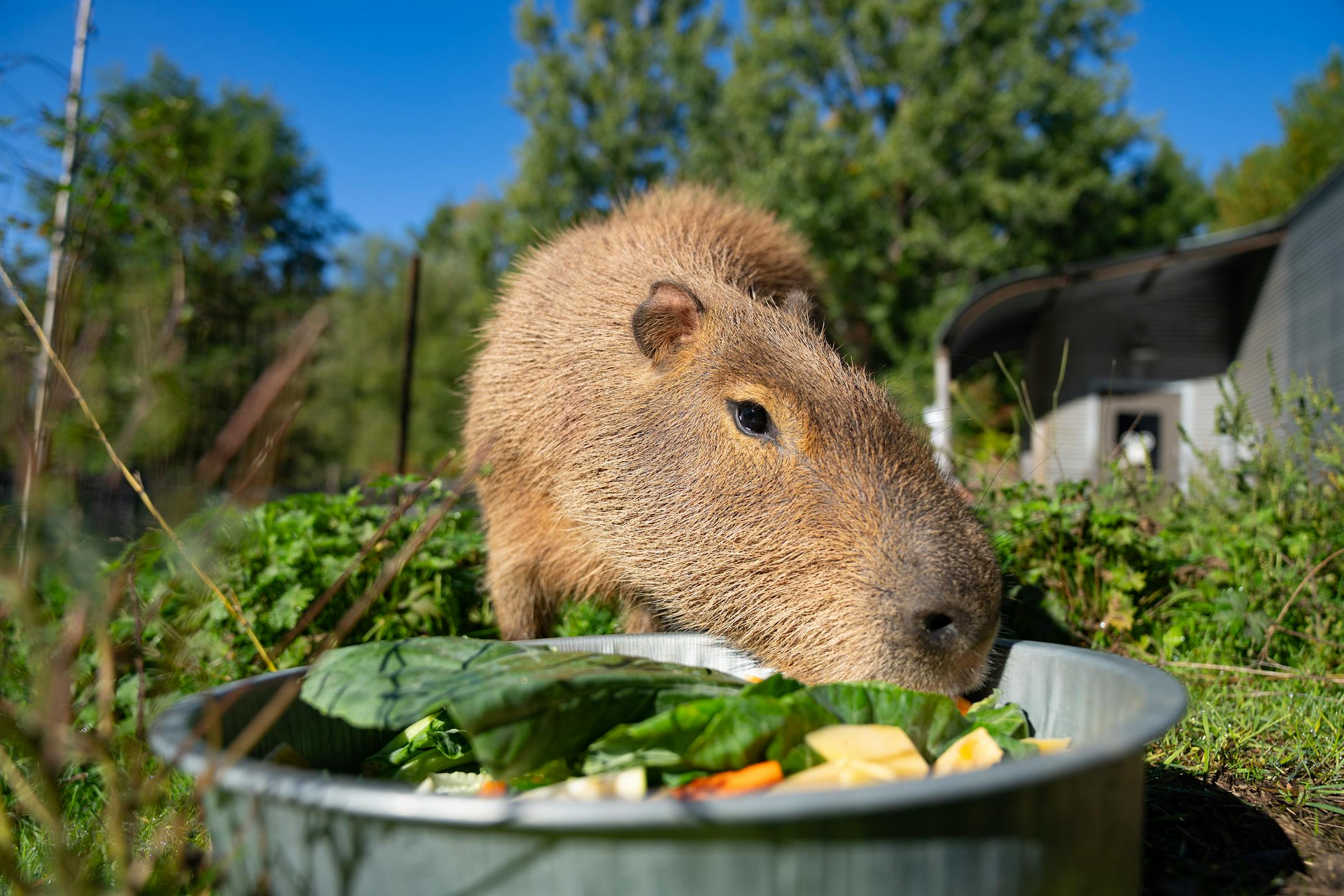
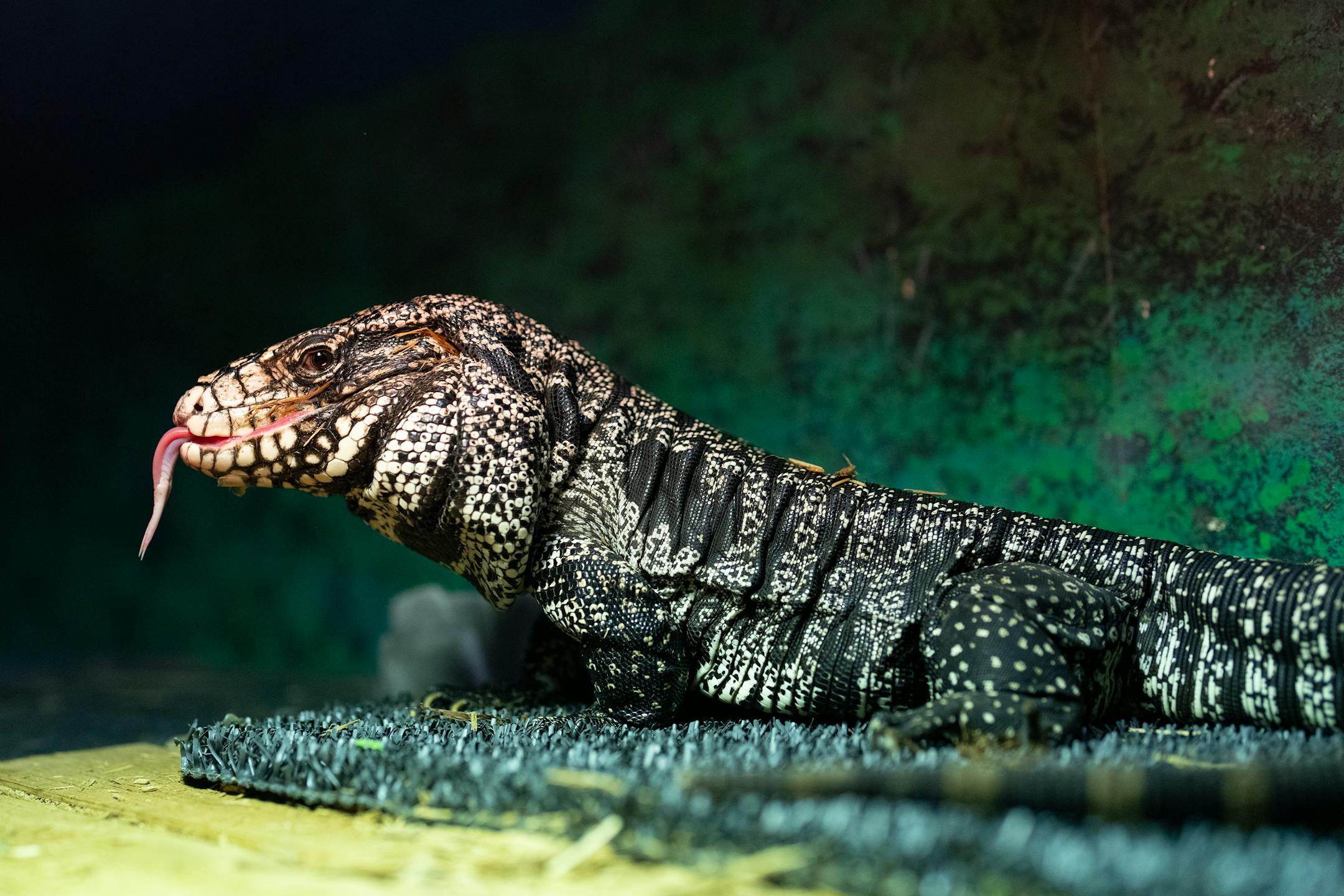
An underweight capybara had never been given a choice to take refuge from visitors. A parrot’s toe had been amputated, likely after neglect. A tegu, a type of large lizard, had infected gums. Most animals hadn’t been trained to aid in their own care, like offering a shoulder for a shot — training that eliminates the need for sedation. Zoo workers had much to teach, they said, while animals remained in quarantine for several months.

No one questioned the decision to take them, said animal management director Lizzy Larson. Despite the extra cost and work, they knew the animals would end up somewhere else unsuitable or be euthanized if other facilities didn’t step in.

Larson and others have talked with some of the Roseville employees. They cared deeply for the animals and did what they could, she said.

As for SeaQuest’s leaders, “I don’t know how they can sleep at night,” exploiting animals as an attraction, without prioritizing their well-being and the education of others, Larson said.

“That is something I would never be OK with,” she said.

A chance to thrive

Last Wednesday in the September sun, Danny the capybara grazed on a high-fiber breakfast of zucchini, carrots, collard greens and squash while eying a couple of visitors.

Danny, a capybara, eats his breakfast at the Lake Superior Zoo. Danny was one of hundreds of animals transferred to the zoo after SeaQuest in Roseville closed in March 2025. At SeaQuest he was sequestered to a small enclosure compared to the large, open-air space he now has. (Alex Kormann/The Minnesota Star Tribune)

Danny is a large rodent, with the good looks of a guinea pig. He has moved in with a kangaroo and wallabies, and a pond and barn will be built to give them all more options and space. To find him a girlfriend, Danny has been placed on the Species Survival Plan, an Association of Zoos and Aquariums-managed breeding program.

Capybaras like to dig, so he roams in a large fenced enclosure outside and eats greens. So far, he likes to lie by the fence near visitors when they approach. Duluth’s cold weather will keep him inside much of the winter, so he’ll also get indoor space.

It’s all a long way from his past life, where he lived indoors in tight quarters, never experiencing the world outside.

“Danny just didn’t have the chance to have a personality, and now he’s figuring it out,” said Cassy Siirila, who cares for Danny.

Most of the 170 budgies (a type of parakeet) the zoo acquired have been transported to other zoos that had more space. The technicolor-bright Eclectus parrots Jalapeño and Habanero are still in an off-exhibit space, but will have a new enclosure soon to be part of zoo education programs.

Fish in quarantine

Animals and fish placed in other facilities in Minnesota are also flourishing, caretakers say.

The Minnesota Zoo welcomed nearly 130 new residents, mostly tropical fish. Most of those fish are still in quarantine as they heal from a parasitic infection, said Kurt Heizmann, director of animal care.

Others, like the crested porcupines, needed dental work or other overdue medical care. But two wallabies are now on exhibit, along with a sloth and a three-banded armadillo.

The Great Lakes Aquarium took in an electric eel, a couple of white sturgeon and some trout. All are thriving, said husbandry director Darin Reinke, especially an eel who accidentally ingested rocks and had to have them removed. Rocks were part of his Roseville enclosure and shouldn’t have been, Reinke said.

The work of the Minnesota, Como and Lake Superior zoos and other reputable facilities to ensure animals were rescued “was a huge undertaking,” Heizmann said.

“Our biggest thing is making sure these animals were given a second chance and a new home that is passionate about these animals,” he said, while caring for them and their well-being.

Xerox, a tegu, sits under a sunbathing lamp in a temporary enclosure at the Lake Superior Zoo. Xerox is one of hundreds of animals transferred from SeaQuest after it closed in March. (Alex Kormann/The Minnesota Star Tribune)

It was also important for animal conservation education, Larson said.

Danny is among the animals who are part of a new free trading card collection the Duluth zoo has begun. Its website offers scavenger hunts and other activities to complete to earn cards at the zoo, as a way to learn using a method kids enjoy, said Caroline Routley, the zoo’s marketing manager. The zoo is also running a campaign to raise money for its new residents, with costs to transport, feed and care for the animals in the thousands.

At the Minnesota Zoo, total rescue costs this year have amounted to $100,000, mostly from the SeaQuest rescue, Heizmann said.

about the writer

about the writer

Jana Hollingsworth

Duluth Reporter

Jana Hollingsworth is a reporter covering a range of topics in Duluth and northeastern Minnesota for the Star Tribune. Sign up to receive the new North Report newsletter.

See Moreicon

More from Greater Minnesota

See More
card image
Leila Navidi/The Minnesota Star Tribune

Friday’s morning commute and weekend travel could be impacted by the snow.

card image
card image