
Rising frustrations lead Twin Cities renters to form unions for better housing conditions

A Minnesota law passed this year encourages tenants to form unions and penalizes landlords who retaliate by increasing the rent, evicting tenants, or reporting immigrant tenants to law enforcement.

Sahan Journal
September 20, 2025 at 7:00PM
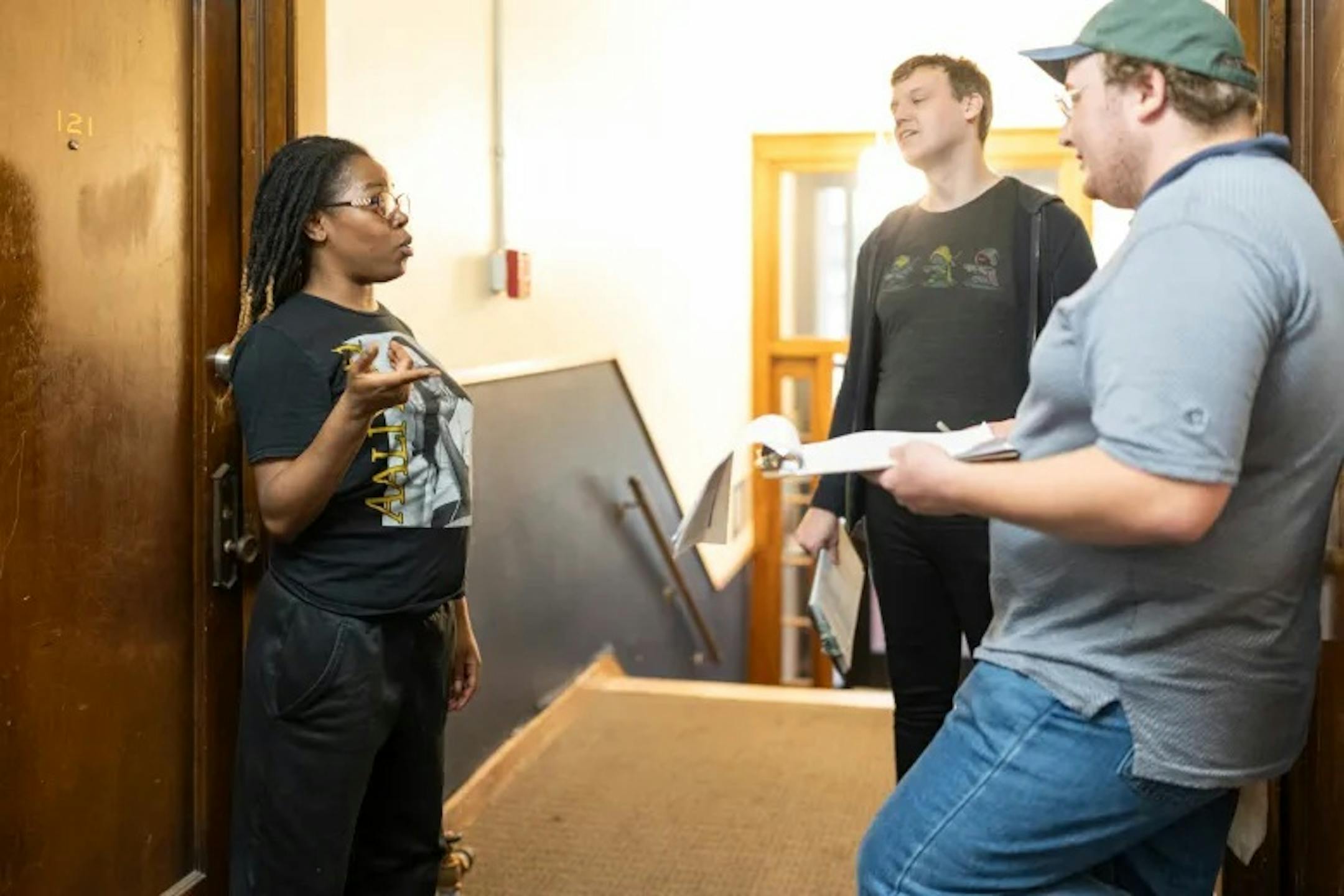
Tenants union organizers Michael Plowman and Emery Brush speak with neighbor Tameeka during door-knocking Sept. 12. (Aaron Nesheim/Sahan Journal)

Emery Brush and Michael Plowman went door to door at the three buildings that make up the Brentwood Apartments near Loring Park in Minneapolis.

Since the Brentwood Tenant Union formed earlier this year, canvassing is routine for them. This time, it was to check which apartments were vacant and update them on the outcome of litigation against their landlord.

After two consecutive winters of erratic heating in the apartments, things came to a head when the buildings didn’t have heat and water for six days in January. Frustrated by months of inaction by the landlord, the residents decided to form a tenants union.

It’s a tool more advocates are pushing to bring property owners to the table and address tenants’ needs, said Edaín Altamirano, organizing director at United Renters for Justice, a tenants’ rights nonprofit. “At the end of the day, the landlord doesn’t live in the buildings, and they don’t know what is happening most of the time in the building,” she said.

According to Home Line, a nonprofit tenant advocacy organization that offers free legal services to tenants through its hotline, there was a 4% increase in the number of tenants reaching out for support compared to last year. Their biggest grievances? Repairs and evictions.

Brush was one of the tenants who started putting out flyers to urge other tenants to call 311, leave notes about their apartment issues, form a group chat, and eventually, start meeting. Now, over half the occupants of the 102-unit complex are part of the Brentwood Tenants Union.

“I truly believe that that issue, or several other issues in the building, would not have been addressed had we not organized in the way that we have,” said Brush, a board member of the union.

Through litigation against the landlord, the Brentwood Tenants Union reached a tentative agreement that the residents who lived in Brentwood last winter will have one month’s rent relief.

He said that, besides getting issues addressed by their landlord, the union has also brought the neighbors together. “I didn’t know any of my neighbors. And now, I know most people in all three of the buildings.”

One of the larger groups, the year-old South Minneapolis Tenant Union meets with South Side tenants every week to discuss and address their grievances.

Nadia Langley, a member and organizer with the union, said that the union has conducted training on how to better understand the terms of their leases, look up their landlords and their offices in the city, and how to respond in case of immigration enforcement agents in their neighborhoods.

Organizers like Ivory Taylor, associate director at the nonprofit Housing Justice Center, say tenant unions give residents collective bargaining power. “It’s much easier for [a landlord] to ignore one person complaining about a thing,” she said, “but when a group comes together, it’s much harder to dismiss that.”

Tenant unions aren’t new, but community organizers say they’re seeing more tenants in the Twin Cities wanting to organize, and that many of these demands come from low-income tenants of color and immigrant families.

Regan Reeck, managing organizer at Home Line, added that tenant unions offer collective protection to tenants who are particularly vulnerable, like immigrants, LGBTQ renters and elders.

Minnesota has had a persistent homeownership gap along racial lines. A 2025 state report reveals gains for some groups, including Dakota and Asian households. But Black, Native and Latino rates of homeownership are still about 20 points behind white households, meaning Minnesotans of color are more likely to be renters.

“These are people that are more susceptible to exploitation, and that don’t have as many resources to access a lawyer to fight their rights being violated,” Taylor said.

Tenants and housing rights advocates say that absentee landlords are often difficult to reach, slow to respond to maintenance issues and unfamiliar with the conditions their tenants are living in.

A growing number of out-of-state property owners investing in the Twin Cities has only added to that. Data from the Federal Reserve Bank of Minneapolis shows that in 2022, 10% of single-unit family rentals in the Twin Cities are owned by large investors, and over 81% of them are from out of the state.

At the Blaisdell Apartments in Minneapolis, for example, tenants say a lack of engagement from ownership has left them with uninhabitable living conditions for months.

Residents at 2119 Pillsbury Ave., one of the buildings in the complex, which is owned by the Investment Property Group, voted to form a tenants union in August.

Earlier this year, a new law called the Tenant’s Right to Organize went into effect. Sponsored by state Rep. Esther Agbaje and Sen. Zaynab Mohamed, the law encourages tenants to form unions, and even penalizes landlords who retaliate by increasing the rent, evicting tenants, or reporting immigrant tenants to law enforcement.

About the partnership

This story comes to you from Sahan Journal, a nonprofit newsroom dedicated to covering Minnesota’s immigrants and communities of color. Sign up for a free newsletter to receive Sahan’s stories in your inbox.

about the writer

about the writer

Shubhanjana Das

More from News & Politics

See More
card image
Renée Jones Schneider/The Minnesota Star Tribune

A federal lawsuit alleges a Maryland company never delivered the lessons meant to tie into the city’s college savings program for newborns.