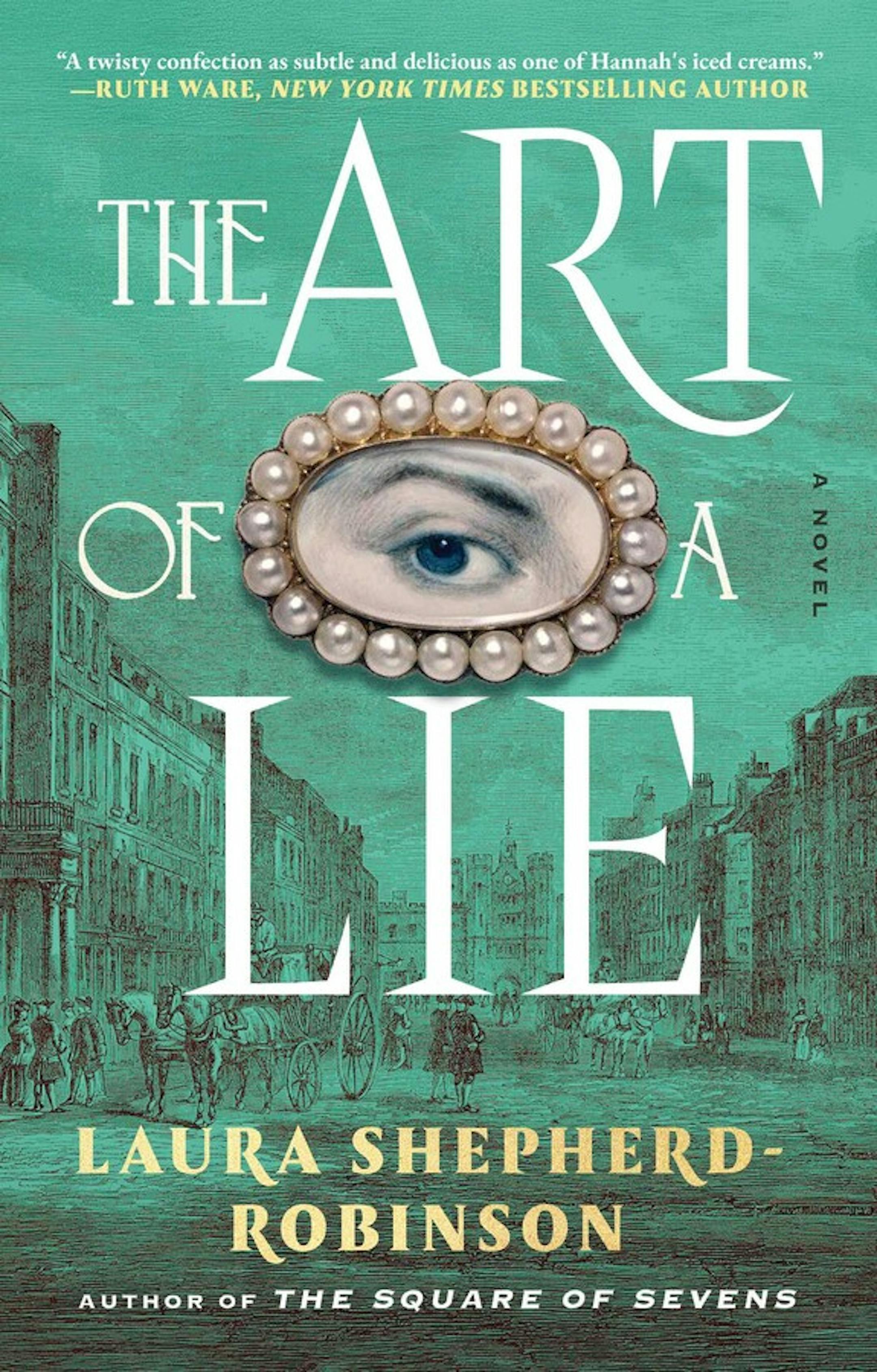
“I’m not a saint, William,” says Hannah, the main character in “The Art of a Lie.” She‘s not kidding.
Laura Shepherd-Robinson, whose last book was a twisty bit of historical fun called “The Square of Sevens,” returns to the bad behavior of another era in “The Art of a Lie,” which is alternately narrated by two characters who are hiding big secrets. Hannah Cole operates a sweets shop in London in 1749, after the unexplained disappearance of her husband. A stranger, William Devereux (not his real name, of course), offers to help Cole settle her husband’s estate, which almost certainly means he’s up to no good.
They’re both smart, shifty and hot. So, of course, they fall for each other. Their shenanigans also capture the investigative attention of Henry Fielding, who wrote “Tom Jones” but was also — really! — a cop.
One of Shepherd-Robinson’s strengths as a writer is the seamlessly entertaining way she incorporates her research. The speech and customs of “The Art of a Lie” seem legit — it feels like we’re dipping our toes into the 18th century — but the book wears those details as lightly as a mystery woman in a face-obscuring veil. (Shepherd-Robinson tells us more about her sources in an entertaining historical note at the book’s conclusion.)
Everything we learn about a dessert emporium in the 1740s, for instance, is fascinating. Whether or not you have a sweet tooth, I bet you’ll eat it all up: Intriguingly old-fashioned confections such as bergamot chips. The ethics of candy making (to buy sugar processed by enslaved people, which is cheaper, or not?). The introduction to London society of an astonishing new treat: “iced cream,” the creation of which is made more complicated and expensive by the scarcity of ice in an English summer.
There’s even a little about the psychology of sweet choices, which can tell Hannah a lot about her clientele. She muses of a dopey visitor to her store, who buys something called Holland candy: “It is a confection for a man who takes a child’s delight in the world, and I envied Twisleton his optimism about human nature, even as I scorned it.”
As in “Square of Sevens,” Shepherd-Robinson fills us in on the difficult lot of an intelligent woman in an era when her gifts are not valued. Hannah has managed to inherit her husband’s store but her hold on it is tenuous, especially with con artists and unscrupulous money men eying the lines of customers attracted by her new iced creams.
“Curse all these men for keeping things from me,” Hannah muses at one point, and there are a lot of those men. But the flip side of that is something Hannah knows and, because she shares it with us, so do we: Those same men are underestimating her.