

Viola is the Rodney Dangerfield of orchestral instruments. Like that 20th-century comedian, the viola is known for getting no respect. Above it in pitch is the violin, the instrument of the superstar soloists, while below it is the dark-toned cello, the approachable singer among the strings, the contemplative loner to counter or complement the outgoing romanticism of the violin.
But the viola is bursting out of its traditional role as a punchline among classical musicians, with more exceptional soloists emerging and its repertoire broadening. And when American violist Richard O’Neill took home a Grammy for best classical instrumental performance in 2021, it was not only a triumph for his artistry, but also for his instrument.
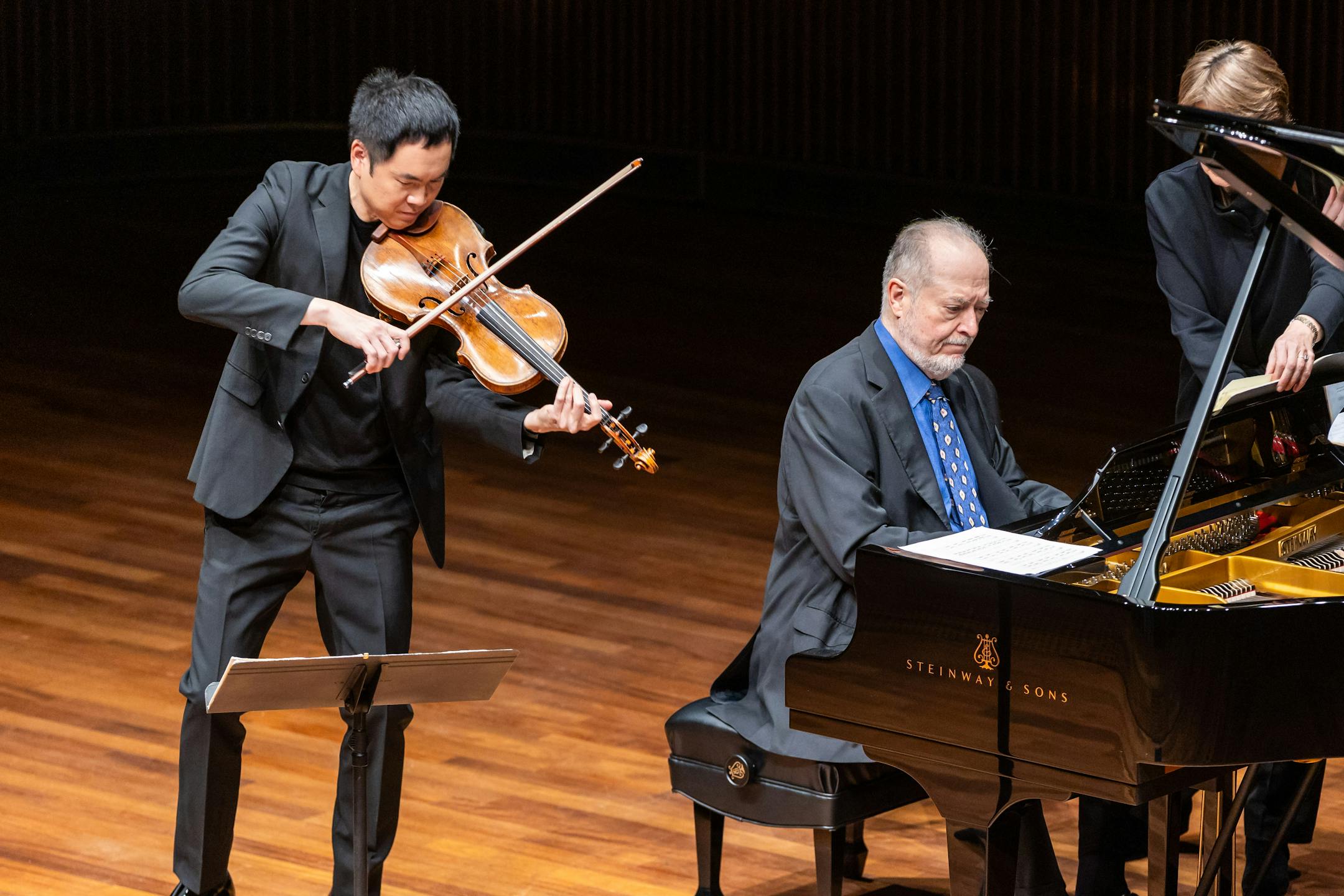
It’s another sign that the viola is at last getting some respect that one of America’s most esteemed classical pianists, Garrick Ohlsson, has asked O’Neill to join him for a mini-concert tour featuring two Schubert Club International Artist Series recitals at St. Paul’s Ordway Concert Hall this weekend. Together, they’re taking repertoire written for voice, organ, cello and a 19th-century oddity, the arpeggione (a kind of guitar-cello combo), and lending it all the mellowness and melancholy that only a viola can deliver.
On Feb. 6, the two collaborated on a concert that reminded the assembled audience that Franz Schubert was among the masters of melody and that anytime the name Sergei Rachmaninoff appears on a concert program, there are almost certainly piano pyrotechnics in store. Add a work by 20th-century American Florence Price — who’s being saluted next door at the Ordway Music Theater with a new opera about her life — and you have a rewarding concert that likely expanded the sonic horizons of many in attendance, yet also offered some warmth and comfort in a time of tumult in the Twin Cities.
For the viola does have a soft, warm sound that can buff the edges off the most harried of moods. But there was a welcome calmness from the evening’s opening notes, when Ohlsson emerged alone to perform the first of Schubert’s Impromptus and made it an intriguing dialogue between the bright optimism of his right hand and the gripping gravitas of his left.
Then O’Neill joined him for a pair of Schubert songs, their lyrics set aside in favor of his viola’s expressive tones. He brought earthy angst to the usually ethereal “Du bist die Ruh (You are Repose)” and disarming directness to “Nacht und Traume (Night and Dreams).”
O’Neill and Ohlsson then delivered a particularly playful take on Schubert’s Sonata for Arpeggione and Piano in A minor, its opening movement lilting like a folk dance, the central adagio both mournful and hopeful, and the finale a fine example of Ohlsson’s gift for finding the lyricism in any piece.
While written for organ, Price’s “Adoration” has become a favorite of violinists, and O’Neill showed that a viola can bring its own unique mood to this church-inspired miniature.


