
Advertisement

Retire right: Plan to do it twice

Advisers stress that an astute financial plan needs to consider the second stage of retirement, when health problems can upend your world.

April 1, 2017 at 7:00PM
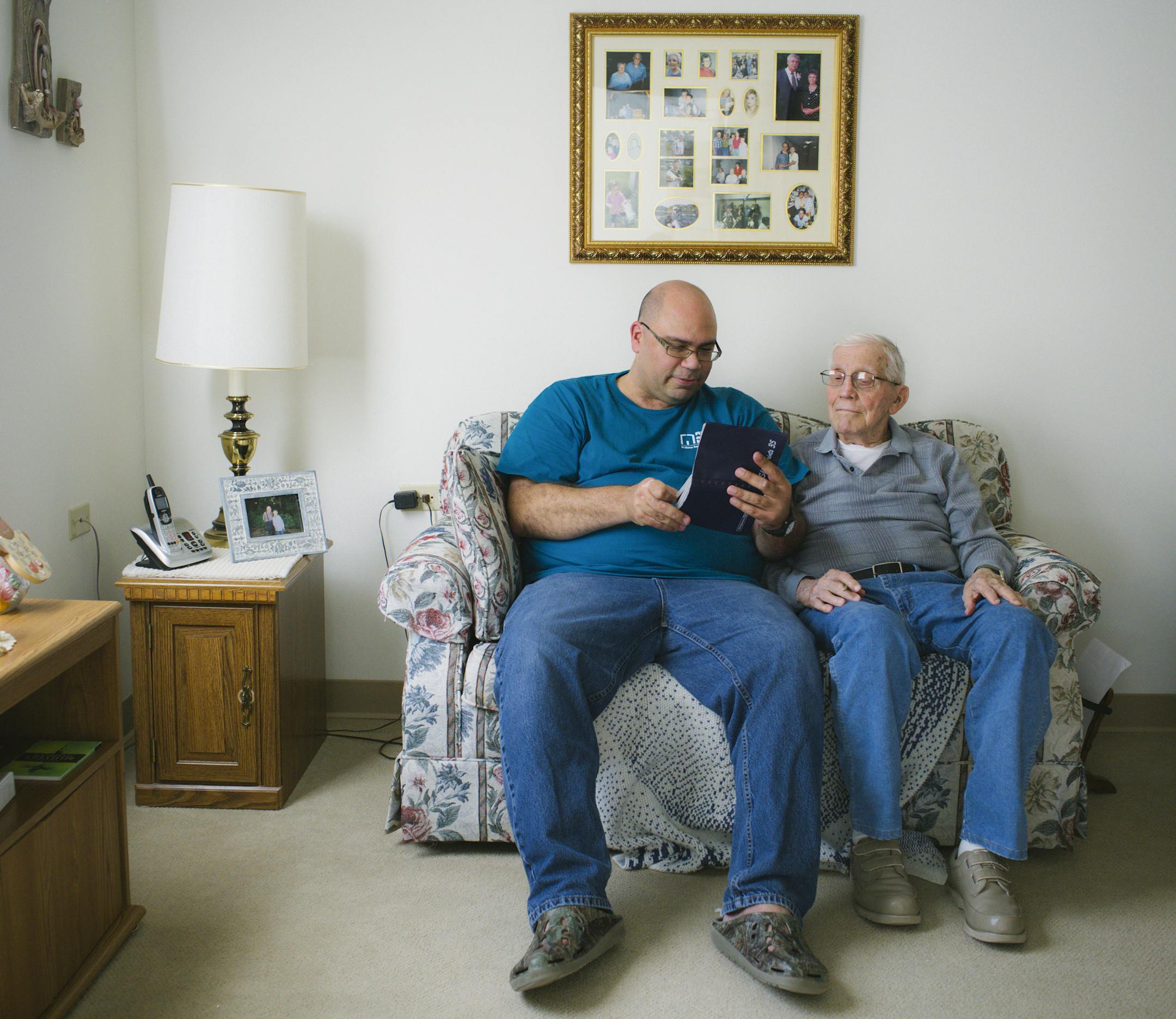
Gayle Snyder, 95, right, looks through his photo albums with his home caregiver Jeffrey Interiano in Zion, Ill., Oct. 22, 2015. While it is far preferable for retirees to remain at home as they age, the choices and costs can be daunting. (Taylor Glascock/The New York Times)
While many retirees prefer to remain at home as they age, the choices and costs can be daunting. (The Minnesota Star Tribune)
Advertisement

There's the retirement that looks like the commercials: biking, travel, enjoying the family.

And then there's the one where you can't get up the stairs anymore.

Most of us happily plan for the first, when our health is good and energy high. The second can be hard to contemplate, when health falters and medical crises can change lives in an instant.

Yet a focus on just the active part of retirement can shortchange your quality of life once you begin to decline, which is why financial advisers suggest you also look at how you will live in the later phase. Here's what you should consider for that second stage.

Envision the future

Certified financial planner Dana Anspach of Scottsdale, Ariz., doesn't want her clients to prematurely give up their homes or make other moves that may not suit them.

One couple she advised, for example, moved into a continuing care community — one that includes independent living, assisted living and nursing home care — in their 80s and moved back out again a year later because they couldn't entertain or decorate their apartment the way they wanted. (They used their refunded deposit to buy a condo and had enough money to pay for in-home care.)

Anspach also has heard horror stories of seniors who stayed too long in unsafe conditions until health crises propelled them into the hospital — and left their families scrambling to deal with the costs, their care and what to do with the family home.

The key, planners say, is to start thinking and talking about how you want to cope when your health begins to fail.

Advertisement

"You have so many more options if you plan earlier and set up the trajectory of where you're wanting to go," said Danielle Howard, a CFP in Basalt, Colo.

Howard starts with the somewhat easier decisions, such as whom the clients want to make medical and financial decisions should they become incapacitated.

Then the discussion moves to the harder topics — imagining life when they can't navigate stairs or drive or handle daily activities such as cooking, cleaning, dressing or bathing themselves.

Could they stay in their current home? Would it need to be modified? Who will provide their care and how will they pay for it?

Anspach advises clients who don't have long-term care insurance or family members willing to provide care to save their home equity for such expenses, rather than using it to boost their retirement income. (Home equity can be tapped with lines of credit or reverse mortgages or by selling the home.)

If parents do expect children to help, Anspach said, they need to make sure the children are on board and that their lives are stable enough to provide care if the parents move closer.

Advertisement

"You don't want to move across the country and have them get transferred somewhere else," Anspach said.

Take caregivers' needs into account

Parents also should consider how they can make things easier for their caregivers, said Ed Vargo, a CFP in Cleveland. Vargo encouraged his in-laws to move from a home that was 20 minutes away to one that was five minutes away.

"That 20 minutes can turn into an hour back and forth, and you may be going multiple times a day," Vargo said.

His mother-in-law, Rose Forrester, understood those dynamics well. Before she retired three years ago, Forrester was a physical therapist who provided in-home care to older patients — and a caregiver to her mother, who also lived 20 minutes away.

Eventually, Forrester and her husband, Dan, moved her mother into their home, where she lived for three years until her death.

Then the couple began to talk about what they should do to make things easier for themselves and their children in coming years.

Advertisement

Neither wanted to leave their home of four decades, but both realized its stairs and layout would be tough to navigate someday.

"I could have stayed 10 more years, but in 10 years I knew I wasn't going to have the energy to move," Forrester said.

The couple moved to a one-level, ranch-style home three years ago, when he was 68 and she was 66.

Vargo is now talking with his father about moving closer. His father initially rejected the idea but after a few years of discussions has said he's now considering it.

"There's a tendency for people to tell other people what they should do. That doesn't really work," Vargo said. "Have a discussion, share your concerns, but be patient."

Liz Weston is a certified financial planner and columnist at NerdWallet, a personal finance website.

Advertisement
about the writer

about the writer

investing, liz weston

More from Business

See More
card image
Renée Jones Schneider/The Minnesota Star Tribune

A California man was accused of hiring a friend for a fictitious position and receiving a portion of wages from the no-show job via kickbacks.

card image
Sleep Number headquarters in downtown Minneapolis. (DAVID JOLES)
Advertisement