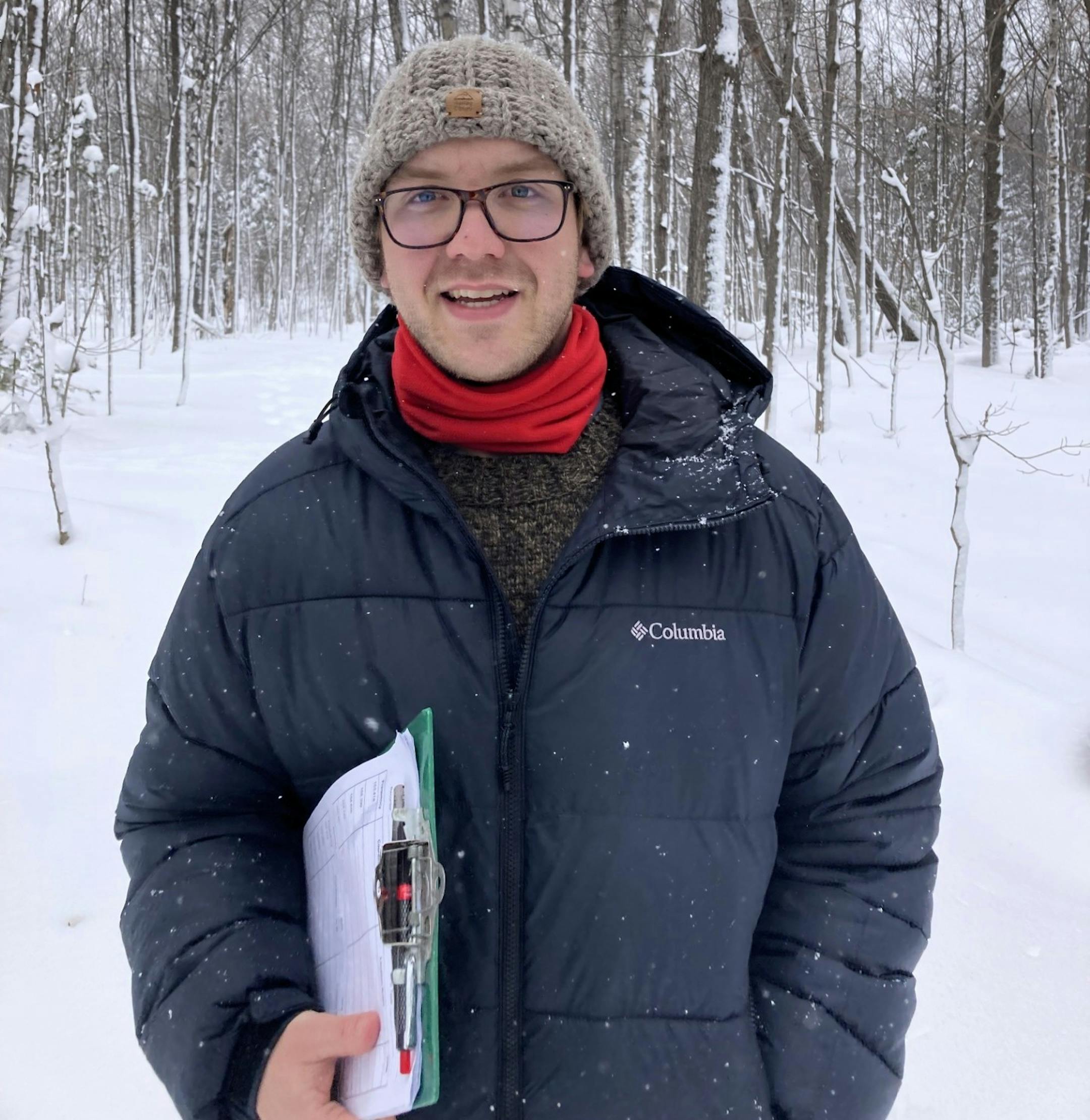
As a young wildlife biologist, Adam Mortensen has worked in the mountains of New Mexico, the high desert of northern California and the wilderness of Isle Royale, where he lived out of a tent and backpacked daily to study wolves.
Now he will ride a snowmobile through the forests of far northeastern Minnesota to help solve the mystery of disappearing moose.
Mortensen, a Wisconsin native, will live in Grand Marais for the next five years to help identify how yearling and 2- and 3-year-old moose contribute to restoring Minnesota’s moose population, which is half the size of what it was 20 years ago.
That age group is in need of study, experts say, and it’s hoped that the results will help identify habitat and wildlife management strategies to benefit the twig-eating animals called mooz by the Ojibwe.
“It’s the most fun job ever,” said Michelle Carstensen, wildlife health program supervisor for the Minnesota Department of Natural Resources. “All moose, all the time.”
The job listing, issued by St. Paul-based National Parks of Lake Superior Foundation, drew more than 50 high-caliber applicants from as far away as Alaska, Texas and Florida, Carstensen said.
If you weren’t a hard-core wildlife biologist, you might balk at the job requirements. Among them: navigating icy northwoods roads on short notice, weekends included, to locate a freshly fallen moose.
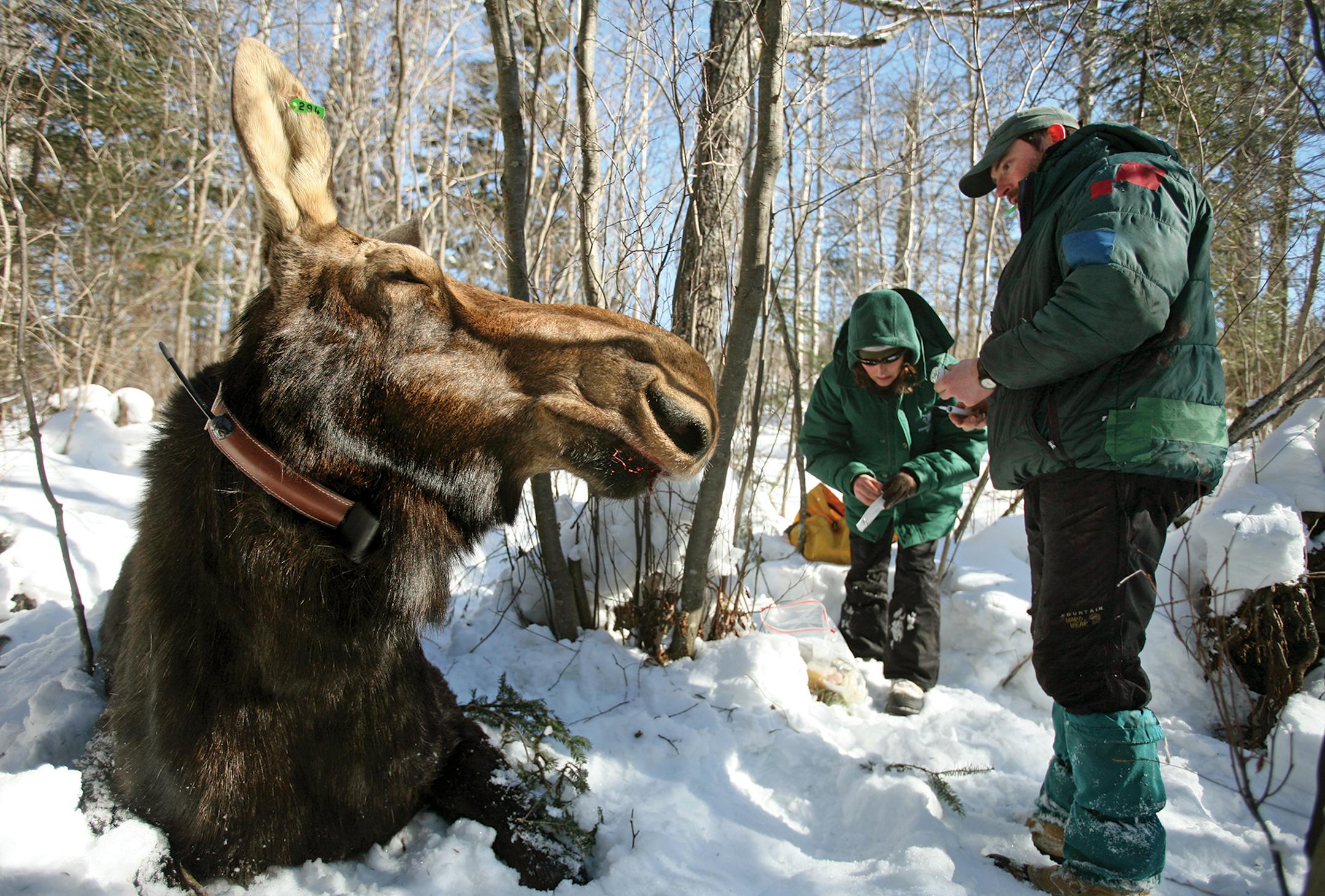
Mortensen said he wasn’t daunted by the job description, one that will require him to off-road into the vast backcountry surrounding the Boundary Waters on an ATV or snowmobile. Young moose in the study will be wearing tracking collars that also signal when they die. Performing necropsies in the bush is part of the job — all for $65,000 a year.