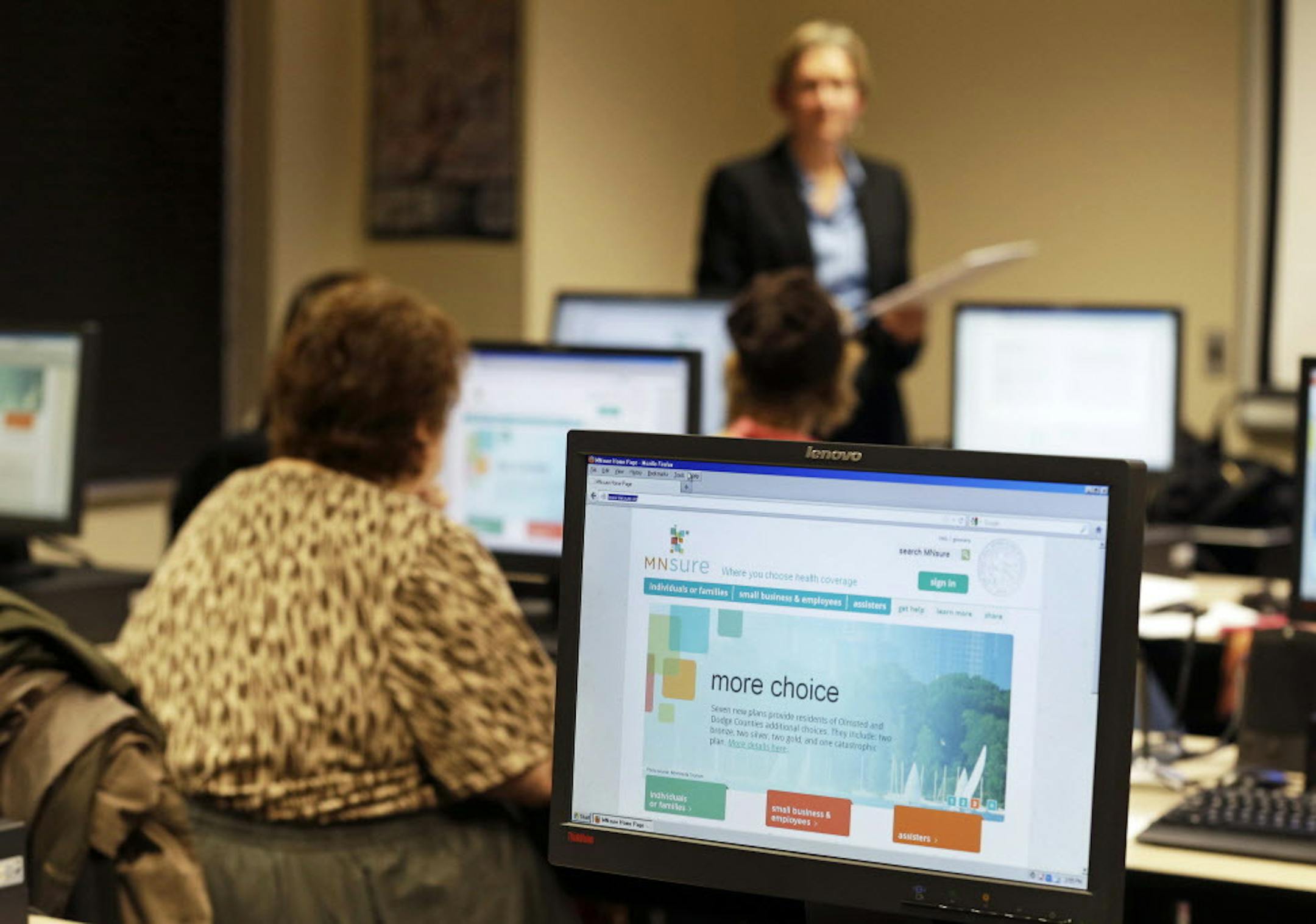
Amid the confusion and controversy surrounding the rollout of health insurance exchanges, one thing remains clear: For small businesses, navigating the process is not the simple, one-stop shopping experience that some predicted it would be.
While the website problems are likely to be smoothed out eventually, changes in how health insurance is regulated and sold suggest that businesses still will need assistance in navigating their health insurance options.
Under the Small Business Health Options Program (SHOP), small businesses can offer several different plan options to their employees through the exchanges, including a "defined contribution" approach that gives employees a set amount of money with which to purchase insurance.
Tax credits are available for businesses that have fewer than 25 employees and the average salary of those employees is under $50,000. The federal delay of the SHOP program will not apply to Minnesota or other states with a state-based exchange. So for small businesses in Minnesota, the new world of health care insurance has arrived.
Under MNsure, a company can offer employees plans from multiple carriers. So a small-business owner may have some employees with insurance company A's plan, and others with company B or C. Having choices is great — but it adds complexity to the process.
More choices of insurance carriers may not deliver significantly better options. Both in and outside the exchanges, a number of insurance companies offer many options for enrollees to choose from. The "private exchange" model represents a pre-emptive effort by the insurance industry to compete with some of the main features of the government-sponsored exchanges. If all of a company's health insurance needs can be met by a single carrier, it may be more efficient to buy from that one source, rather than deal with multiple insurance companies.
Options, options, options
The private market still gives employers the most options; a number of insurers are not participating fully in the ACA exchanges. In Minnesota, Bloomington-based HealthPartners is not offering small-business plans on MNsure for 2014 (though it does offer individual plans). Nationally, some insurance companies such as UnitedHealth Group are, for the most part, not yet offering plans on the exchanges. This "wait-and-see" approach may be the best strategy for some businesses purchasing health plans as well.
When deciding between insurance exchanges and the private market, companies should be aware of the trend toward narrower provider networks. Consumers value choice when it comes to accessing care, but the health care industry, spurred by ACA regulations, is moving toward more restricted provider networks.