
Readers Write: The Twins and the Pohlads, St. Anthony Falls cutoff wall, housing

Hey, Pohlads, do you hear those boos?

The Minnesota Star Tribune
August 15, 2025 at 12:00AM
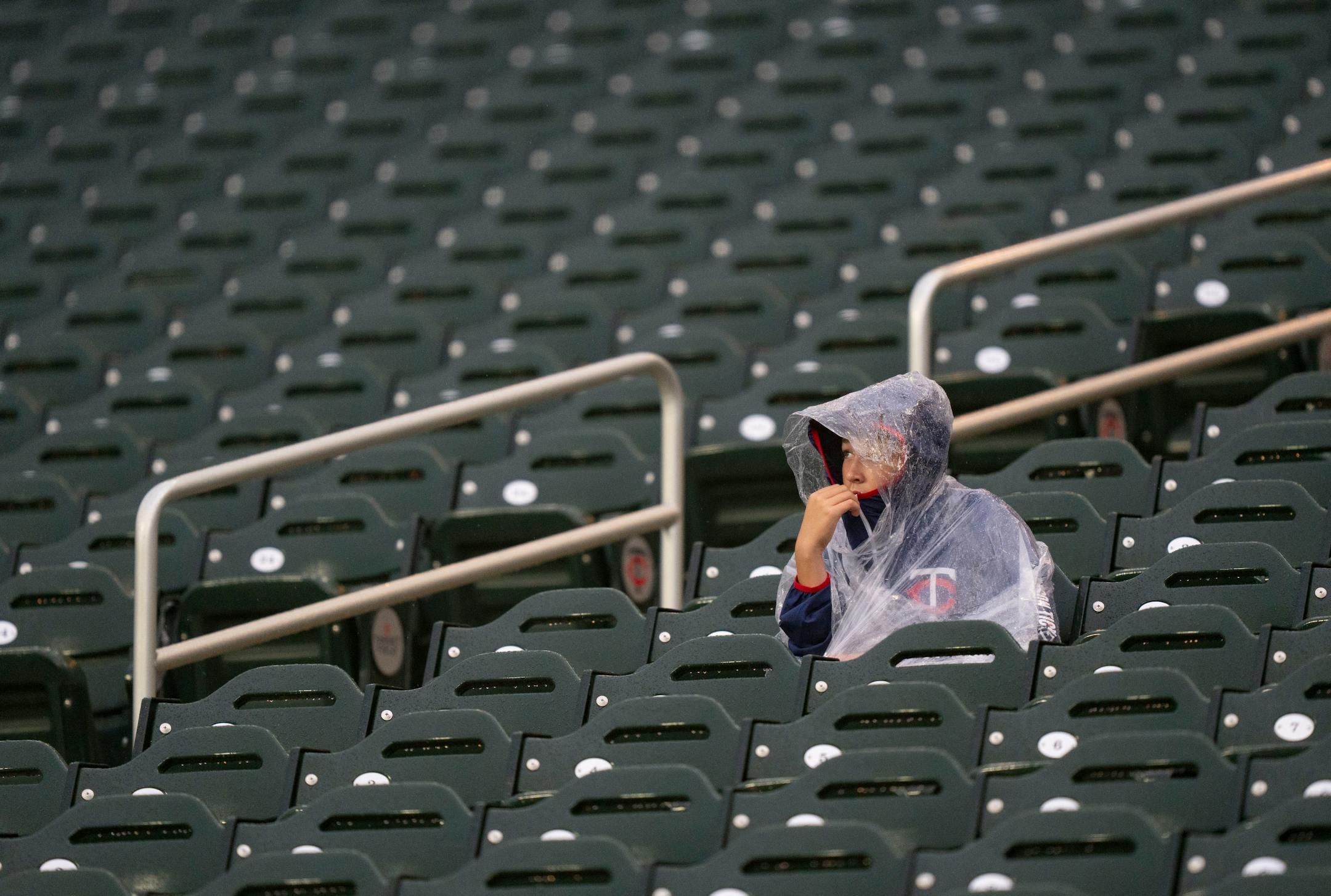
A Minnesota Twins fan sits in the stands during a rain delay for a game at Target Field in 2022. (Alex Kormann/The Minnesota Star Tribune)

Opinion editor’s note: Strib Voices publishes letters from readers online and in print each day. To contribute, click here.

•••

The Pohlad family’s decision to keep ownership of the Twins is a slap in the face to fans who’ve waited years for a change (“No sale! Pohlad family keeps control of Twins,” Aug. 14). Their track record is clear: cutting payroll after playoff runs, trading stars to save money and consistently failing to build a true contender. They once claimed Minnesota needed to help fund Target Field so the team could stay competitive. We did our part. They haven’t done theirs. Instead, they’ve snubbed that promise, choosing profit over performance. Now, after floating a $1.7 billion sale, they’re staying put and bringing in minority partners. It’s cosmetic. Nothing changes.

If the Pohlads remain in control, I’m done. No tickets, no gear, no support. Minnesota deserves owners who care about winning as much as the fans do.

Paul Niebeling, Minneapolis

•••

I’m deeply dissatisfied with the Pohlads’ decision not to sell the team, especially after the trade deadline fire sale. That gutting of the roster was framed as a “reset” for the future — but under the Pohlads’, who have been nothing short of horrible owners, there’s no reason to believe anything will actually improve.

Year after year, they’ve shown a lack of ambition, poor decisionmaking and no real commitment to building a winning culture. The fire sale only made sense if it was followed by a change in ownership — someone willing to invest, lead with vision and actually care about the fans. Instead, the same people responsible for the decline are keeping control, with no evidence they can turn things around.

This isn’t just a missed opportunity — it’s a gut punch. First, they dismantled the team’s competitive core; now, they’ve slammed the door on the one real chance for a fresh start. Fans deserved better than recycled promises from owners who have consistently failed to deliver.

The message is clear: The Pohlads’ are content with mediocrity, and our frustration doesn’t matter. As long as they remain in charge, it’s hard to see a future where the team thrives.

Joe Colt, Minneapolis

•••

The summary of the Pohlads’ ownership of the Twins overlooked a key fact of the 2001 MLB contraction proposal regarding the team: Carl Pohlad volunteered the Twins for elimination. Contraction would have profited Pohlad by more than $100 million over his purchase price. There was no concern for the fans except from the judge who killed the deal. Pohlad was ready to take the money and run, fans and his standing with the public be damned.

The current owners have tried to distance themselves from Dad/Grandpa by repeatedly stressing their commitment to the community and the future of baseball here. Really? Their actions seem to indicate not much has changed.

David Hansen, Faribault, Minn.

•••

I was just texting with a couple of family members about the Pohlads’ continued ownership of the Twins. Let’s just say the fire sale of many players on the team just a short time ago did not have any of us enamored of current ownership. Apparently the actual value of the Twins is up to about $2 billion. I floated this idea to the group and am now floating it to all Minnesotans: How ’bout a million of us each ponied up $2,000 for a share of the Twins? I’d be game. Think about it, if you take the family to a couple games, purchased tickets, refreshments and a jersey for each kid, you’ve blown a couple grand. Now for just $2,000 you can be a team owner. If a bunch of Cheeseheads can own the Packers, why can’t we own the Twins?

Garth Gideon, St. Joseph, Minn.

•••

I’m upset from 1,200 miles away because I care about baseball. If Commissioner Rob Manfred has any gumption, he’ll get off his tuchus and force the owners to sell the team. All fans deserve better. It’s not over till it’s over.

Adam Silbert, New York

ST. ANTHONY FALLS CUTOFF WALL

Minneapolis contributed to this mess, too

The Aug. 12 article “State, feds tangle over wall holding up falls” by Susan Du, whom I respect as a reporter, correctly stated that the cutoff wall extending beneath St. Anthony Falls was “built by the Army Corps of Engineers around 1875 as part of emergency efforts to stop the total collapse of the only waterfall on the Mississippi River.” What the article omits is that the intervention was requested by community leaders in the city of Minneapolis who had a vested interest in maintaining the falls for hydropower and milling.

In 1925, the city of Minneapolis started pushing for construction of the Upper Harbor project, which included extending the Mississippi 9-foot navigation channel from its former location near Washington Avenue to the now-defunct upper harbor. The project included construction of the two navigation locks at upper and lower St. Anthony Falls and dredging the Mississippi River channel.

Congress passed several pieces of legislation over the years, specifying what was required from nonfederal sponsors in the future operation and maintenance of federally constructed projects. Some required a complete turnover of responsibilities after construction was complete, and some required only the provision of dredged material disposal areas, such was the case for the Upper Harbor project.

Following the decline of commercial navigation in the mid-1980s, the city of Minneapolis joined in the push to close the upper lock when the panic over the spread of invasive carp was fomented in 2012.

The ownership of the 140-year-old cutoff wall only became a concern when the federal government recommended divesting itself of the upper lock. While the article states that the debate over ownership is between the state and federal governments, it does not state the role of the city of Minneapolis. The city caused the wall to be built in the first place. The city caused the locks to be built. And the city remains the largest stakeholder in maintaining the falls for its water supply. As the largest stakeholder, the city of Minneapolis should step up to the plate and assume ownership and control of the structures.

Nanette Bischoff, Minneapolis

The writer is a retired Army Corps of Engineers project manager.

HOUSING CRUNCH

Small cities feel similar growing pains

The Star Tribune’s recent article on Mankato’s housing crisis hits close to home here in Decorah, Iowa (“Mankato’s growth prices families out of housing market,” Aug. 1). Like Mankato, Decorah is a college town, home to Luther College, where job growth and a strong sense of community attract new residents. But housing hasn’t kept pace, pushing workers farther from where they work.

Iowa State University’s Rural Housing Readiness Action Plan for the city shows that 3,141 people are employed in Decorah but live outside town, while only 1,064 people who work here actually live in Decorah. That means nearly three-quarters of Decorah’s workforce have to commute from home to work each day. These are teachers, nurses, retail workers and other folks who want to live in the community they serve but are priced out.

This clear gap between demand and availability reflects why, in recent years, housing development has failed to keep up with need. Just like Mankato, local builders say it’s nearly impossible to build entry-level homes under $250,000. A 2022 LOCi Consulting report found workforce housing in Decorah rents for over $1,000 per month, which already consumes more than 30% of many families’ incomes.

Even though Decorah is smaller than Mankato, it faces the same challenge: When housing can’t keep pace with job growth, everyone feels the impact. People have to commute longer distances, young graduates move away and important workers end up living outside the community.

If places like Mankato and Decorah want to grow and thrive, they need to invest in housing working families can actually afford.

Leslie Campbell, Decorah, Iowa

The writer attends Gustavus Adolphus College in St. Peter, Minn.

about the writer

about the writer