
Robust growth in Mankato leaves families, seniors priced out of homes

Mankato needs to double the pace of building in the next decade, report says.

The Minnesota Star Tribune
July 30, 2025 at 5:22PM
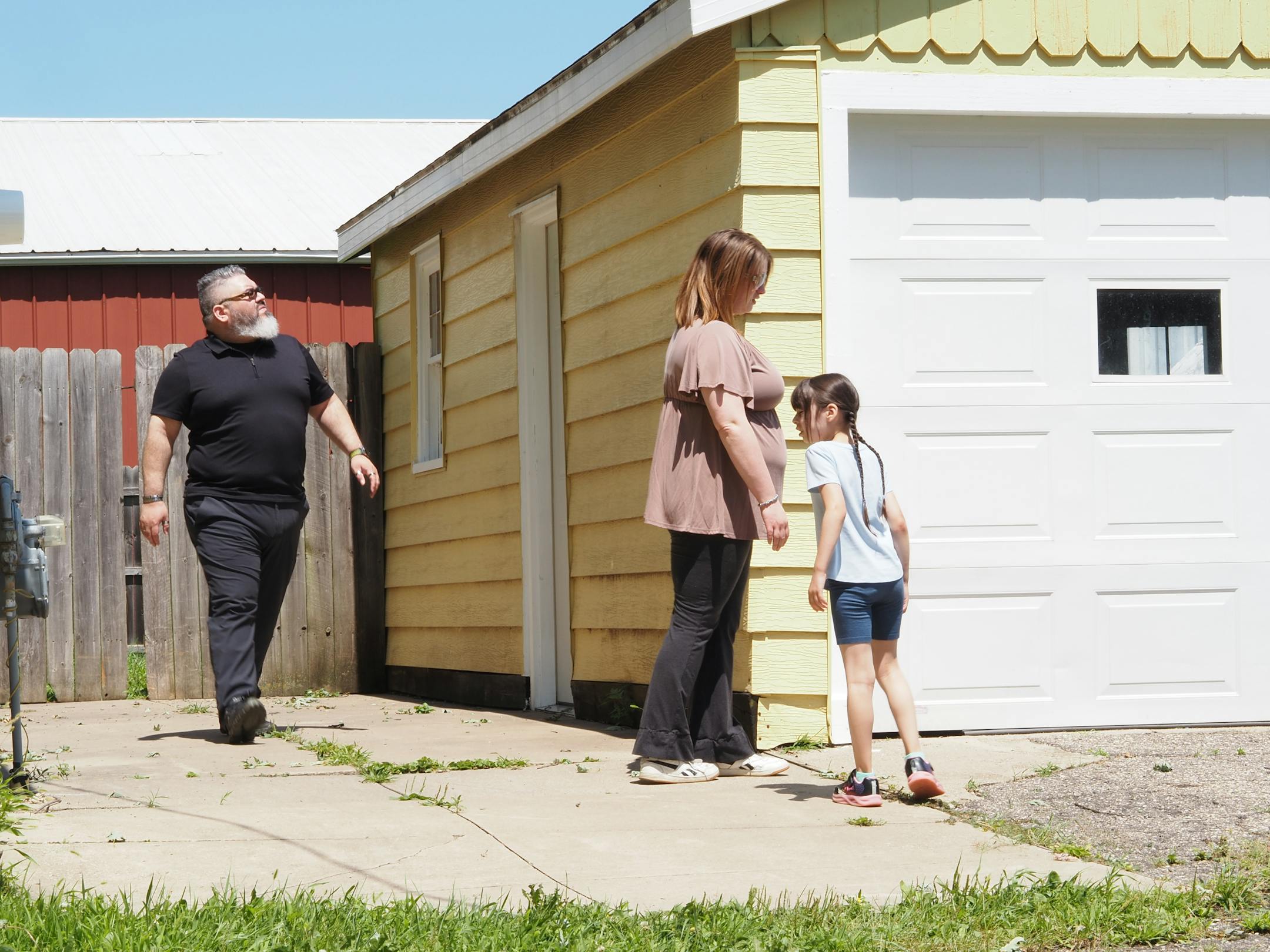
Andrew Martinez, left, his wife, Elizabeth, and daughter Ilyana check out a home for sale in Eagle Lake, Minn., on Wednesday. The family hopes to live in the Mankato area but said they have had trouble finding affordable houses that fit their needs. (Jp Lawrence/The Minnesota Star Tribune)

MANKATO – For three months, Andrew Martinez has been searching for something he’s not sure exists: a four-bedroom house near Mankato that he and his family can afford.

Their hunt for a house around $200,000 has become a series of small heartbreaks: Homes that look promising are too small, in bad shape or already sold.

Martinez said he loves the Mankato area and doesn’t want to leave, but his search for a house has led his family farther and farther away.

Soon the family could be among the 20.8% of Mankato’s workers commuting more than 50 miles to their jobs.

With about 45,000 residents, Mankato has about 21,442 workers commuting into town each day, in part because of a lack of local housing, a report by Maxfield Research and Consulting has found.

The report says Mankato needs to double the pace of building to deal with its severe housing shortage. The price of homes in Mankato has more than doubled in less than a decade, and renters face a market with virtually no vacancies and costs that leave nearly half of them paying more than they can afford.

The shortage is a consequence of Mankato’s success, as it and other regional hubs in Minnesota have grown.

“Mankato stands out,” Mary Bujold, Maxfield Research president, said while presenting the report in a City Council meeting July 14.

The city’s population grew by 13% from 2010 to 2020. The number of jobs in Mankato is also projected to increase 10% by 2035, from employers that include a Mayo Clinic Health System campus, an expanding Walmart distribution center and a strong manufacturing base. And some 20% of students who attend Minnesota State University, Mankato, the largest campus in the state system, choose to make the city their home after graduation.

But to keep pace with its robust growth, Mankato will need to build about 6,515 new housing units by 2035 — which means about 650 units a year, nearly double its current annual rate of 342, the report said.

“We are consistently seeing that there are not enough homes on the market,” Bujold said before City Council.

Developers say that while there is demand for new single-family homes priced under $250,000, they cannot afford to build those entry-level homes because of rising costs.

“In the current climate, developers probably wouldn’t make money, and that’s why they’re not doing it,” said Dain Fisher, a local developer. “Local wages don’t support the rent needed to build a new project feasibly.”

The cost to build a new single-family home has increased by $100,000 in just the last five years, according to Chad Adams, CEO of the Southwest Minnesota Housing Partnership, a nonprofit developer. “Whether it’s lumber, shingles, the roof, the trusses, concrete, everything has gone up,” Adams said.

In Blue Earth County, the median home sale price has more than doubled since 2015, to $309,000, the report said. For at least half of households in Mankato and the surrounding area, “for-sale housing in Mankato may be unattainable,” the Maxfield report said.

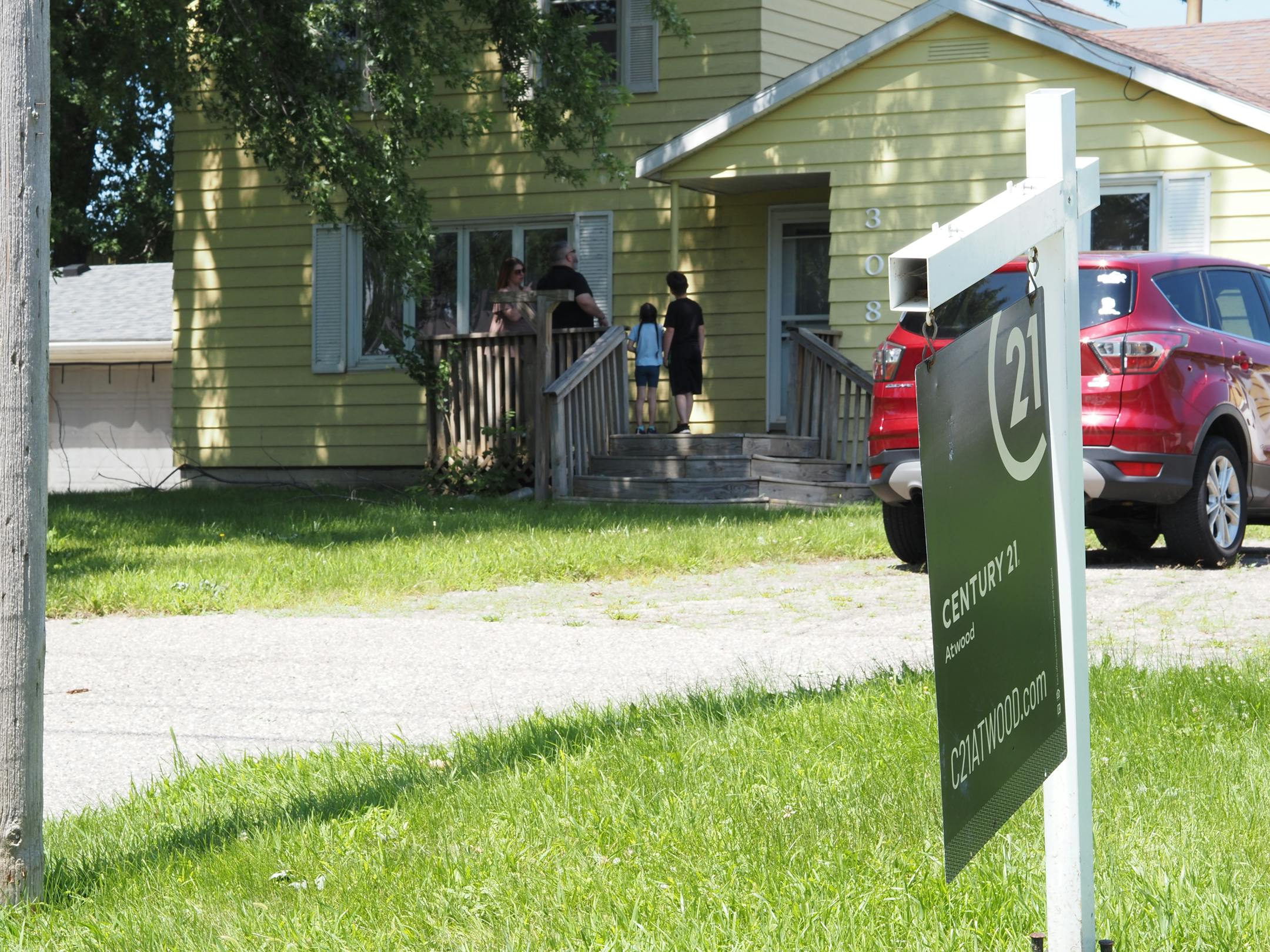
The Martinez family visits a home for sale Wednesday in Eagle Lake, near Mankato. The house, however, was out of their price range, and the Martinezes said they're now looking at houses almost an hour away from Mankato. (Jp Lawrence/The Minnesota Star Tribune)

With high land prices, material costs and interest rates, developers say the only financially feasible projects are often high-end, market-rate apartments. But these have rents out of reach of many.

The result: a 1.7% overall rental vacancy rate in Mankato, far from the 5% considered to be a balanced market. For subsidized housing, it’s worse: The vacancy rate is effectively at zero (0.1%).

Nearly half of Mankato’s renters spend more than the advised 30% of their income on housing, the report said. And a quarter spend over 50% of their paychecks on rent.

The most visible pinch point is among seniors. The population age 75 and older is projected to be Mankato’s fastest-growing demographic in the coming years, increasing by over 20% between 2025 and 2030. Many, living on fixed incomes, want to downsize but are shocked at the prices of newer, smaller options, the report said.

Stuck in place, these seniors keep a significant portion of the city’s single-family housing stock off the market.

The human cost of this gridlock is increasingly visible to organizations who work with the poor.

Sondra Herman, executive director of Habitat for Humanity of South Central Minnesota, recently opened applications for a single new home being built in Mankato. Within days, she received 70 pre-applications.

“We probably received 20 in the first day,” Herman said.

City officials are acutely aware of the problem. The pace of development has increased in recent years, and Mankato has partnered with nonprofits on a range of initiatives, including a community land trust and programs to rehabilitate existing housing to preserve its affordability.

“We know that there’s a lot of people struggling in our community,” said Nancy Bokelmann, associate director of housing and economic development for Mankato.

But the city is battling the same market forces that have led to housing shortages in cities across America. There are no affordable, subsidized, or senior housing developments in the city’s pipeline.

Andrew Martinez, 33, and his daughter Ilyana, 7, enjoy a carousel Wednesday at River Hills Mall in Mankato. Martinez, who has lived in the Mankato area for 10 years, said he doesn't want to leave, but he cannot find housing his family can afford within the city. (Jp Lawrence/The Minnesota Star Tribune)

For Martinez, the search continues.

Martinez spends his evenings scrolling through listings in Le Center, Madelia, Wells and Le Sueur, he said, places that would add significantly to his commute. His wife works part time at a nursing home, and he said he’s thinking of getting a part-time job as well, on top of his work as a mattress salesman.

With a baby due and his 10-year-old son and 7-year-old daughter growing bigger, the walls of his family’s two-bedroom home in Eagle Lake, 10 minutes east of Mankato, feel smaller each day.

He recalled the moment when he and his wife found out they were expecting a third child.

“My brain went, ‘We need to get moving,’” he said.

Sign up for the Minnesota Star Tribune’s Prairie Local newsletter covering the southwest corner of the state.

Correction: Earlier editions of this story contained the incorrect rank for the size of Minnesota State University, Mankato. It is the largest campus in the Minnesota State system.
about the writer

about the writer

Jp Lawrence

Reporter

Jp Lawrence is a reporter for the Star Tribune covering southwest Minnesota.

See Moreicon

More from Mankato

See More
card image
Christopher Magan/The Minnesota Star Tribune

The ACLU argues Freeborn County’s agreement to help with immigration enforcement violates state law.

card image
card image