
Readers Write: Gun laws, DHS payments, vaccines, Hennepin Healthcare, student loans

Those on both sides of the gun debate should praise the reversal of the state’s ban on binary gun triggers.

The Minnesota Star Tribune
August 24, 2025 at 8:59PM
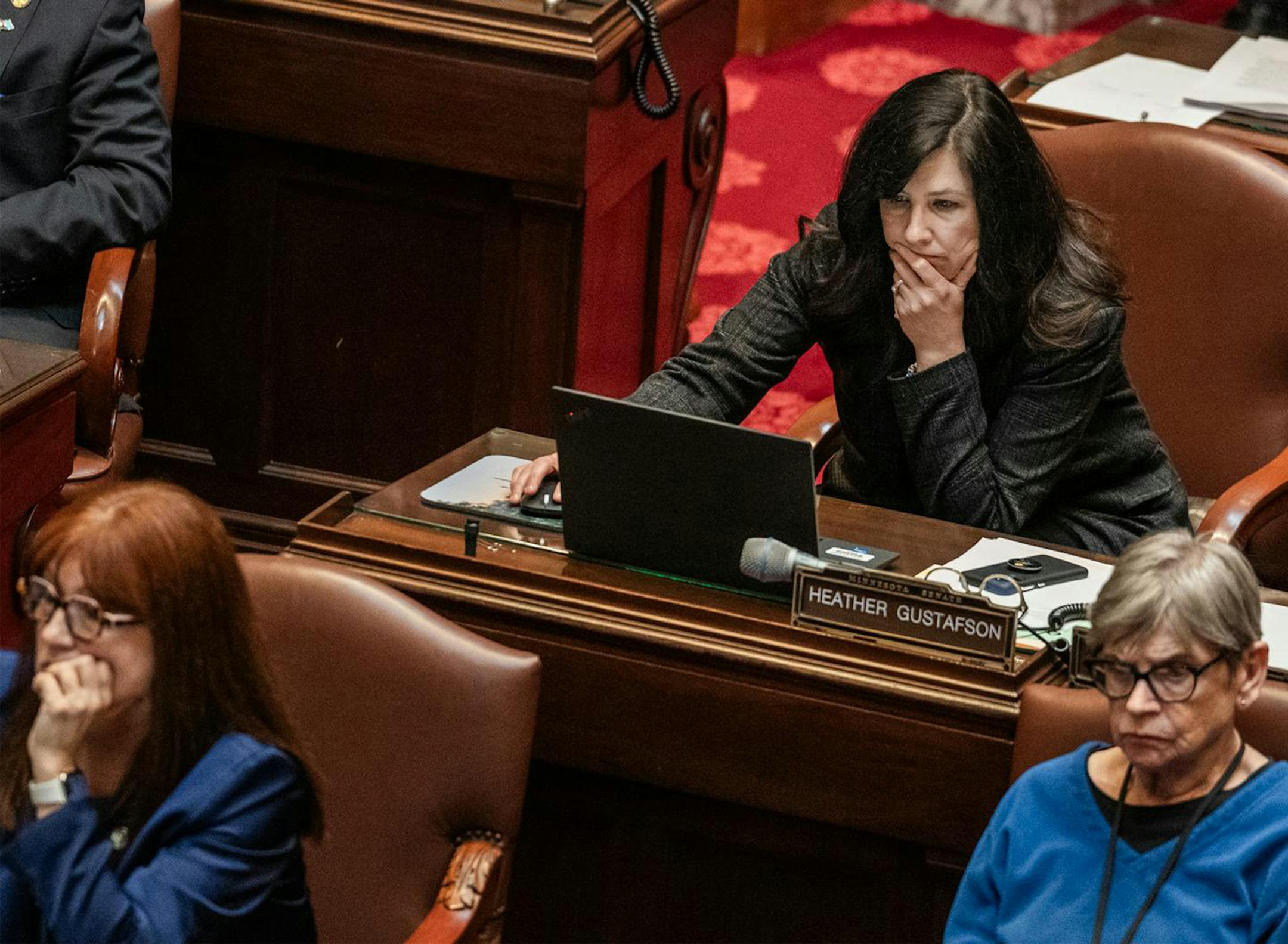
DFL state Sen. Heather Gustafson
DFL state Sen. Heather Gustafson was a sponsor of 2024 legislation that banned binary triggers and was eventually included in a massive omnibus bill. (Richard Tsong-Taatarii/The Minnesota Star Tribune)

Opinion editor’s note: Strib Voices publishes letters from readers online and in print each day. To contribute, click here.

•••

Both advocates of gun regulation and their opponents should praise District Judge Leonardo Castro for striking down the state’s ban on binary gun triggers. Not because it was a bad idea (we need the law; it makes good sense) — but because it was passed in a slovenly, unconstitutional way by its last-minute insertion into a huge bill about totally different issues.

Instead of appealing Judge Castro’s ruling on grounds that the binary trigger prohibition is too important to let the fine print of Minnesota’s Constitution get in the way of its enactment, Minnesota Attorney General Keith Ellison should promote proper passage of the law on its own merits without tying it to the other unrelated stuff in a huge “One Big, Beautiful Garbage Bill.” Or he could campaign to repeal the constitutional language requiring legislative bills to be on a single subject with a clear descriptive title. Saying that the general welfare of Minnesota society is the single subject of all bills is bunk, dishonest, self-deception and incompetent reasoning. If Minnesota is the “brainpower state,” we can do better.

Paul Farseth, Falcon Heights

HUMAN SERVICES

Where has DFL oversight been?

Josh Berg (“Be vigilant against waste, fraud and abuse in Minnesota, but beware collateral damage,” Strib Voices, Aug. 20) makes a compelling case for the importance of government initiatives to help those who are vulnerable and struggling, but also the critical importance of good governance in executing those programs, lest scammers violate the public trust and harm the intended recipients. So it is dumbfounding that a state agency (in the most recent case, the state Department of Human Services) “has been repeatedly notified by providers over the years about suspected fraud, waste and abuse,” but failed to take corrective action.

That is, until investigative journalists put the heat on, including reporting on the alleged virtual fraud factory in the Griggs-Midway Building (near the State Capitol). And Gov. Tim Walz’s lame response of outrage is itself outrageous, as it happened on his watch, and now his response seems to be overreaction, shutting off the legitimate providers as well as the scammers.

One wonders: Where has DFL oversight been? Are this and other recent fraud scandals due to incompetent management, understaffing, agency cultures of indifference or even political pressure? (Witness the unseemly efforts of some political operatives, including Minneapolis mayoral candidate and state Sen. Omar Fateh, to squelch agency oversight in the previous “Feeding our Future” scam.)

The root causes must be uncovered and corrected to restore public trust and counter the unfortunate Republican mantra that government is the problem rather than the solution. With elections coming soon, one hopes that efforts will be redoubled by Walz, the DFL and reform-minded Republicans to actually address the problem and restore good governance rather than seek political advantage from it.

George Muellner, Plymouth

VACCINE DEBATE

Stigmatizing addiction isn’t the answer

While I agree with the opinions of an Aug. 21 letter writer regarding RFK’s ignorant claims about vaccines, I take issue with his analogy comparing the skills of a professional with those of a “former heroin addict.” I am dismayed that the Minnesota Star Tribune’s opinion editors allowed the characterization of those who have suffered from or are currently suffering from substance use disorder (SUD), a disease, as somehow being less qualified than other individuals. Those who suffer or have suffered from SUD are not diminished in intellectual or other abilities like the person the letter writer describes. Many who have or have had SUD are doctors, grocery store baggers, health care workers, politicians and garage mechanics.

The promotion of ill-informed opinions continues the stigma of all individuals and their families that suffer from SUD, mental health and other diseases and disorders. Perhaps if the Trump administration and the Centers for Disease Control and Prevention would have continued and increased the funding of studies and programs to address SUD, the education of the public would have progressed to hopefully lessen the stigma associated with the use and recovery from opioid (including heroin) use.

Ann Perry, Plymouth

•••

The Aug. 20 front-page picture of a child’s chubby little leg about to get a vaccination brings many things to mind: how hard it is as a parent to hold kids while they get their shots and see and hear and feel them cry afterward, how important it is that they get those shots and how lucky we are to have vaccinations that stave off so much future misery for child and parent alike.

We’re also very lucky to have epidemiologist Michael Osterholm and physicians and physician groups with the expertise and courage to contradict the Trump administration’s foolish statements and policies that will undoubtedly result in fewer kids getting these vital protections against dangerous diseases. Trump and HHS Secretary Robert F. Kennedy Jr. are literally harmful to the nation’s health, and especially to those little ones who can’t do anything to protect themselves.

Steve Schild, Falcon Heights

HCMC GOVERNANCE

Why not Mayo?

Recent articles and letters to the editor resonate in the ongoing and future need for Hennepin County Medical Center as a facility that provides top-tier health care for anyone entering the door. Governance has become an issue that’s not likely to be resolved amicably any time soon. Financing an institution that is already deeply in debt while providing expert care is an inescapable fact affecting all of our lives. One never knows when they might need Level 1 trauma services.

An easy fix aside from raising taxes — which I’d be happy to pay — isn’t in the offing. A letter writer who for a number of years provided medical care at “the County” proposed the idea of a partnership with the University of Minnesota, but that seems untenable given the needs for the U to solve its existing problems; he also dismissed a partnership with the Mayo Clinic as unlikely.

But why not? Trust me, Mayo has the money — as witnessed, among other expenditures, by its current $5 billion expansion plan. It also employs people who know how to run a business. Why not add a well-established, highly performing, welcoming-to-all hospital to its world-famous reputation?

One other thought: Ramsey County also maintains a hospital that doesn’t seem to be making news either regarding finances or internal politics. Does Regions Hospital actually have some answers?

Paul Waytz, Minneapolis

STUDENT LOANS

Leave employers out of the equation

As a response to Peter M. Leschak’s essay suggesting that we engage and act to try to bring about change (“Small efforts can be beautiful — and potent,” Strib Voices, Aug. 17), I write to try and bring a dose of reality to the new rules being proposed by the current administration outlined in “Student loan rules may be altered” (Aug. 17).

I attended college and utilized student loans, which have been repaid. My adult children also hold student loans and will be repaying them for some time, as will most college graduates these days.

The Public Service Loan Forgiveness policy, which forgave loans after 10 years of repayment, was established in 2007 to encourage graduates to enter lower-paying public service jobs such as teaching, health care, social work and more. The new policy would end loan forgiveness for individuals based on the organization they work for and whether that organization does work that is considered “illegal” by the Trump-appointed education secretary. This whole plan appears to be aimed at punishing organizations whose work displeases the administration and its “anti-woke” agenda — including schools/universities, health care providers and even low-cost legal service providers — at great cost to the individual students, now employees, who utilized federal school loans.

From my perspective, basing student loan forgiveness on specific employers’ actions is more than a stretch. Utilizing that definition seems blatantly illegal and will certainly face legal challenges, as most changes made by this administration seem to. I only hope that the courts and the public agree with my conclusion.

Mary Burns-Klinger, Minneapolis

about the writer

about the writer