
Opinion | Small efforts can be beautiful — and potent

It’s the 3.5% rule regarding the percentage of the population it takes to make change. It’s the lesson of my 40-year basement wood-stacking marathon.

August 17, 2025 at 12:59PM
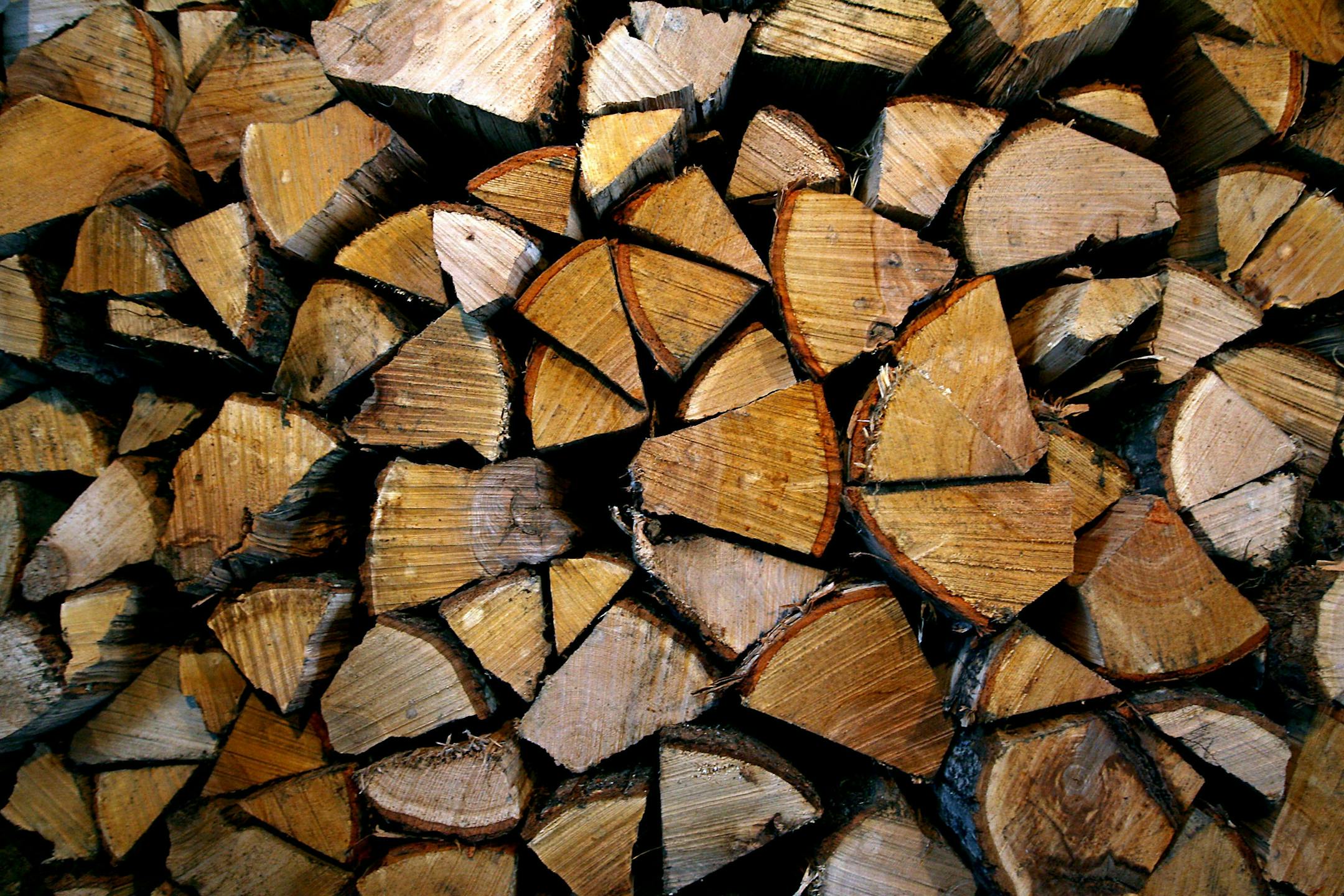
Stacked firewood in Keene, N.H., on Dec. 16, 2009. New England is a tradition-bound region that has clung to its wood stoves for sentimental reasons even as much of the country has declared them passe
"Seemingly small actions (one armload of firewood) can have substantial results over time, and also — and more important — collectively. Many people doing one small thing (casting a ballot, conserving a few watts of electricity, donating $10, etc.) can transform and revolutionize," Peter M. Leschak writes. (CHERYL SENTER/The New York Times)

Opinion editor’s note: Strib Voices publishes a mix of guest commentaries online and in print each day. To contribute, click here.

•••

I’ve tramped 175 miles across the basement floor. It took a while.

In 1978 we moved into our self-built house in the forest, heating it with wood. In lieu of a basement window, I installed a small door through which I drop firewood onto the floor. In the basement I stack the chunks in a crib.

It’s 15 feet from the small door to the crib, so 30 feet round trip. Since I keep an accurate record of how much wood we burn, it was easy to calculate how many times I’ve traversed the basement. And, yes, it adds up to about 175 miles, and for half that mileage I was carrying an armload of fuel. Sure, it took four decades to get it done, but it’s a striking demonstration of how small actions can generate big numbers over time.

One year I kept track of exactly how much time I spent felling/limbing trees, bucking them into 18-inch lengths, splitting the chunks with a maul and hauling the dense biomass out of the woods and into the house. It came to 88 hours. Forty years of that is 3,520 hours, which translates to over a year and a half of 40-hour workweeks. The weight of all that wood — each piece lifted four times — is subject to variables such as species and dryness, but a conservative estimate is 500 tons, or 1,000,000 pounds.

It’s a truism that what has your attention is automatically important to you at that moment, and competition for attention is relentless. Essayist E.B. White wrote, “I arise in the morning torn between a desire to improve the world and a desire to enjoy the world. This makes it difficult to plan the day.” If you wish to plan the day, it helps to know what your actions will cost — in devoted minutes and hours. I’m not necessarily advocating the level of accounting I’ve outlined above, but some degree of calculation can install us in the present, the only facet of life that’s consistently relevant.

We’re urged to not waste time, and what is or is not wasteful is subjective, but I hold that the only time truly wasted is that which is unaccounted for. If it pleases you to idly daydream away an entire afternoon, snubbing obligations, go for it — so long as you know you’re doing it. Intention drives attention, and if you’re going to daydream it might as well be guilt-free and vividly performed. In other words, engage even with disengagement.

A few days before writing this essay I watched our dog Freya fixate on a chunk of firewood. It was near the bottom of the pile, protruding a little. She sniffed it, licked it, then grasped it with her teeth and tugged. It budged a few inches. She raised her right paw to the wood — to use her claws to pull? — and inadvertently pushed it back into the pile. Have you noticed that dogs envy hands? I’ve long savored a particular “The Far Side” cartoon by Gary Larson. Five dogs are crowded into a lab/workshop, intently focused on diagrams and tools. The caption: “Knowing how it could change the lives of canines everywhere, the dog scientists struggled diligently to understand the Doorknob Principle.” Hands would solve the problem.

Freya pulled with her teeth again, and the wood stuck in the same spot. She raised her paw a second time and clawed at the chunk, but awkwardly shoved it back in. She bit down and drew it out a third time, and began to chew the piece in situ. Almost immediately a fragment of wood jammed between her teeth. Clearly distressed, she shook her head, stretched her jaws and swiped at her face with her left paw — to no avail. The fragment pushed against her lip. I probed her mouth, grasped the piece between thumb and finger, and yanked it free. She looked at me with head cocked as if to say “What was that about?” and then trotted to one of her old bones lying in the grass. She had a mission: Something was going to be chewed.

A simple purpose, but for the next half-hour Freya was fully engaged. A decade ago we had a dog, Oscar, who also reserved a stash of bones. I kept a chair on the back porch to use for sitting meditation, and Oscar had his own practice. As soon as I sat and established a meditative pose, Oscar dashed for the woods and returned with a bone. He’d settle in next to the chair and gnaw while I focused on my breath. There’s more than one track to mindfulness.

While working in the fire service I was schooled in a principle called “operational wisdom,” defined as the balance between confidence and doubt. When confronted with a task/project/emergency you must have enough confidence to act, but too much confidence morphs into arrogance, and that’s often deadly. You should entertain enough doubt to realize your information, awareness, skill and available tools may not be enough to succeed, and therefore have a Plan B. But too much doubt can lead to paralysis and prevent any useful action.

As we juggle confidence and doubt, it’s good to cultivate a “bias for action.” I used to tell new firefighters that until they engaged with a fire at some level, their situation awareness would likely be incomplete. When in doubt, try something. Freya did. Plan B was an old bone. Recall that seemingly small actions (one armload of firewood) can have substantial results over time, and also — and more important — collectively. Many people doing one small thing (casting a ballot, conserving a few watts of electricity, donating $10, etc.) can transform and revolutionize.

In 2011, Erica Chenoweth, a political scientist at Harvard, unveiled an extensive study of nonviolent public actions and what the successful participation threshold might be. It’s a surprisingly small number. In a BBC news story about the study, reporter David Robinson noted that movements “engaging a threshold of 3.5% of the population have never failed to bring about change.” And peaceful movements were shown to be significantly more successful than violent ones. The current U.S. population is 331.9 million, so only 11.7 million are required to make big things happen. That’s not a trivial number, but consider that 127.7 million tuned into this year’s Super Bowl. Get off the couch.

Individuals are not powerless. Small personal actions can be hugely magnified by collective efforts over time that reach a tipping point. You grind and grind and not much seems to happen until suddenly it’s a new world. An old proverb says to not count your chickens before they hatch. I say, count and count and count and make them hatch. I didn’t imagine I could carry 500 tons for 175 miles. Until it was done.

And in response to E.B. White, perhaps enjoying the world is one motivation to improving it. Engage. No action is too small.

Peter M. Leschak, of Side Lake, Minn., is the author of “Ghosts of the Fireground” and other books.

about the writer

about the writer

Peter M. Leschak

More from Commentaries

See More
card image
Leila Navidi/The Minnesota Star Tribune

When did we decide that the proper consequence for deep systemic failure is a soft landing?

card image
card image