
Readers Write: The University of Minnesota Morris, artificial intelligence in school, RFK’s nonsense

Don’t bet against Morris.

The Minnesota Star Tribune
August 21, 2025 at 12:00AM
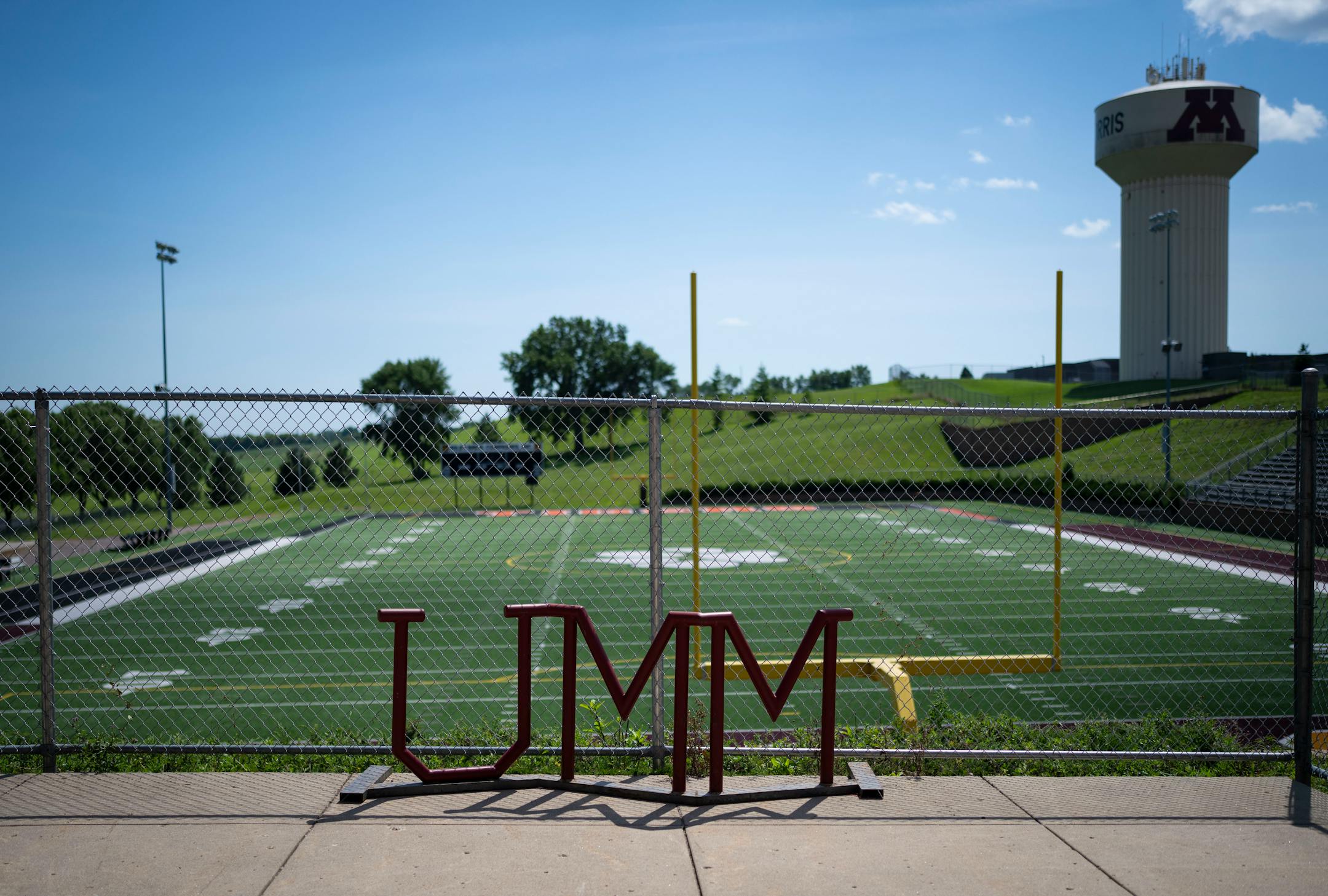
The University of Minnesota Morris' football stadium, photographed Aug. 12. (Renée Jones Schneider/The Minnesota Star Tribune)

Opinion editor’s note: Strib Voices publishes letters from readers online and in print each day. To contribute, click here.

•••

We could feel it the moment we stepped on the University of Minnesota Morris’ campus last weekend. There was excitement, energy, buzz, life everywhere. It was busy and hectic and great fun. It felt like a college move-in day should, with football players unloading cars, community advisers directing traffic, orientation leaders greeting first-year students. It all made sense the next day when we read the Minnesota Star Tribune piece where the reporter stated that this year’s freshman class is almost 25% bigger than last year’s. If you didn’t read to the end of the article, you might have missed this fact (“Enrollment nosedive imperils Morris campus,” Aug. 17). There was a much different feel this year than two years ago when we dropped off our current junior to the same campus.

Morris is figuring things out, and we are proud to be part of the upswing to this vibrant, important campus.

Michelle Stockinger, Bloomington

The writer is a University of Minnesota Morris parent and alum.

•••

Barely a year and a half into a new chancellor’s tenure, the University of Minnesota Morris will see a 25% enrollment increase, having moved up to seventh place in U.S. News and World Report’s National Public Liberal Arts Colleges rankings, being named a 2025-2026 College of Distinction, and having developed an innovative new “Degree in Three” program. The vital rural campus adds $165.3 million to Minnesota’s economy every year, most of that in greater Minnesota. All this despite being the cheapest public, four-year option in Minnesota!

What a comeback story! Yet somehow the Star Tribune’s Aug. 16 story managed to turn it into a doomed college dragging on the university’s $4.5 billion budget with its free tuition to a handful of deserving Native students. Coupled with deceptive photos of empty halls taken — you’d never guess it — the week before students returned to campus and you’ve got yourself a real hit-job contrived by a couple of metro voices dedicated to slandering Morris. No matter how far down you bury a 25% enrollment increase (the 13th paragraph!), the reality is Morris is on the rise. Its alumni are our state’s teachers, scientists, social workers and, in my case, attorneys. Morris gives Minnesota so much more than it costs to run. We are lucky to have it.

Michael McBride, Minneapolis

The writer is a 2011 graduate of the University of Minnesota Morris and former president of the Morris Campus Student Association.

ARTIFICIAL INTELLIGENCE

I could use a little less screen time, too

I am sitting here reading about young people being addicted to scrolling and the effect of artificial intelligence in classrooms (“I’m ditching computers in my public school classroom this year,” Strib Voices, Aug. 20). I am 71 and waste many hours doing the same thing — justifying my love for animals as a reason to spend hours of the time I have left on this Earth looking at a screen.

It takes me away from washing my floors, taking a walk, cleaning out a closet. I joke about being in my 80s one day and happily watching a hunky farrier from Scotland cleaning horses’ hooves.

Maybe I’ll make it to 80 if I program myself to stop scrolling and start moving around.

Cynthia Syverson, Minneapolis

•••

Maureen Mulvaney’s “I’m ditching computers in my public school classroom this year” was a breath of fresh air to someone who, many years ago, toiled in the high school English classroom. The piece brought to mind my many years of watching students strive to find the perfect word that would truly express the meaning of their sentence with no help from a computer checking their spelling or suggesting words that would be the best fit. They were on their own to determine that. But more than anything, it brought to mind the belief that an email is like a pat on the back, while a handwritten letter is like a hug.

George Larson, Brooklyn Park

VACCINES

More nonsense from RFK

Robert F. Kennedy Jr., who bought his way into heading the Department of Health and Human Services by backing President Donald Trump, and who obviously does not understand medicine, and who does not even seem to read the AI-generated “reports” his department cranks out, is claiming that the American Association of Pediatrics is “beholden to corporate interests” because it is advising its members and the public to vaccinate their children (“Pediatrics group veers on COVID shot,” Aug. 20). Let him produce the evidence of such a defamatory claim.

Let’s look at the sources of these positions briefly.

The American Association of Pediatrics is using a century of scientific analysis and peer-reviewed publications, including a Danish longitudinal study of over a million children. The study lasted for over 20 years and tracked children for signs of 50 — yes, 50 — conditions that were alleged to be caused by aluminum in vaccines. Short of a double-blind study (which would be unethical), this is the gold standard for medical research. The parents decided whether or not the children would be vaccinated, and the Danish medical system tracked their progress. No corporations were involved in funding or analyzing the study. The result was that there is no statistical correlation between the vaccinations and any of the 50 conditions studied.

One million children. Fifty health conditions. Over 20 years. No connection.

RFK and his anti-vaccination cronies cannot point to any research that upholds any of their positions that have not been shown to be corrupt. One assertion of problems with vaccines was a campaign by Andrew Wakefield, who claimed in a 1998 article (since retracted) in the British medical journal the Lancet that the MMR vaccine (measles, mumps and rubella) was associated with autism. No other study in Britain or elsewhere was able to duplicate his results. Further investigation showed that Wakefield cherry-picked his cases and discarded any that did not support his assertion. It was also uncovered that Wakefield had financial conflicts of interest. This was not disclosed in the article. Wakefield lost his permission to practice medicine for his unethical behavior. This pattern has been repeated in other anti-vaccine “studies.” Data is chosen or even falsified to support the claim, not the data guiding the researchers to the result.

It comes down to an analogy I have used a dozen times before. If your car needs new brakes, do you take it to a professional mechanic or do you let the bagger at the supermarket have a go at it? In this case, the bagger is a former heroin addict (among other things), not even familiar with how brakes work and being advised by people who have an interest in having your car crash.

I’ll take the pro. Every time.

Daniel Beckfield, New Brighton

•••

While I appreciate the coverage of COVID vaccine recommendations from the American Academy of Pediatrics, I disagree with the idea that it is the AAP that is diverging from the U.S. government’s advice. It is the current administration that has moved away from guidance based on science and evidence.

When it comes to the health of my children I am not confused about whether to trust politicians or pediatricians. I’m going to take the doctors’ advice every time. I hope other parents will as well.

Matt Flory, St. Louis Park

about the writer

about the writer