
Readers Write: Elder care, abortion, Gov. Tim Walz, medical aid in dying

The elder care system is a scam.

February 10, 2023 at 11:30PM
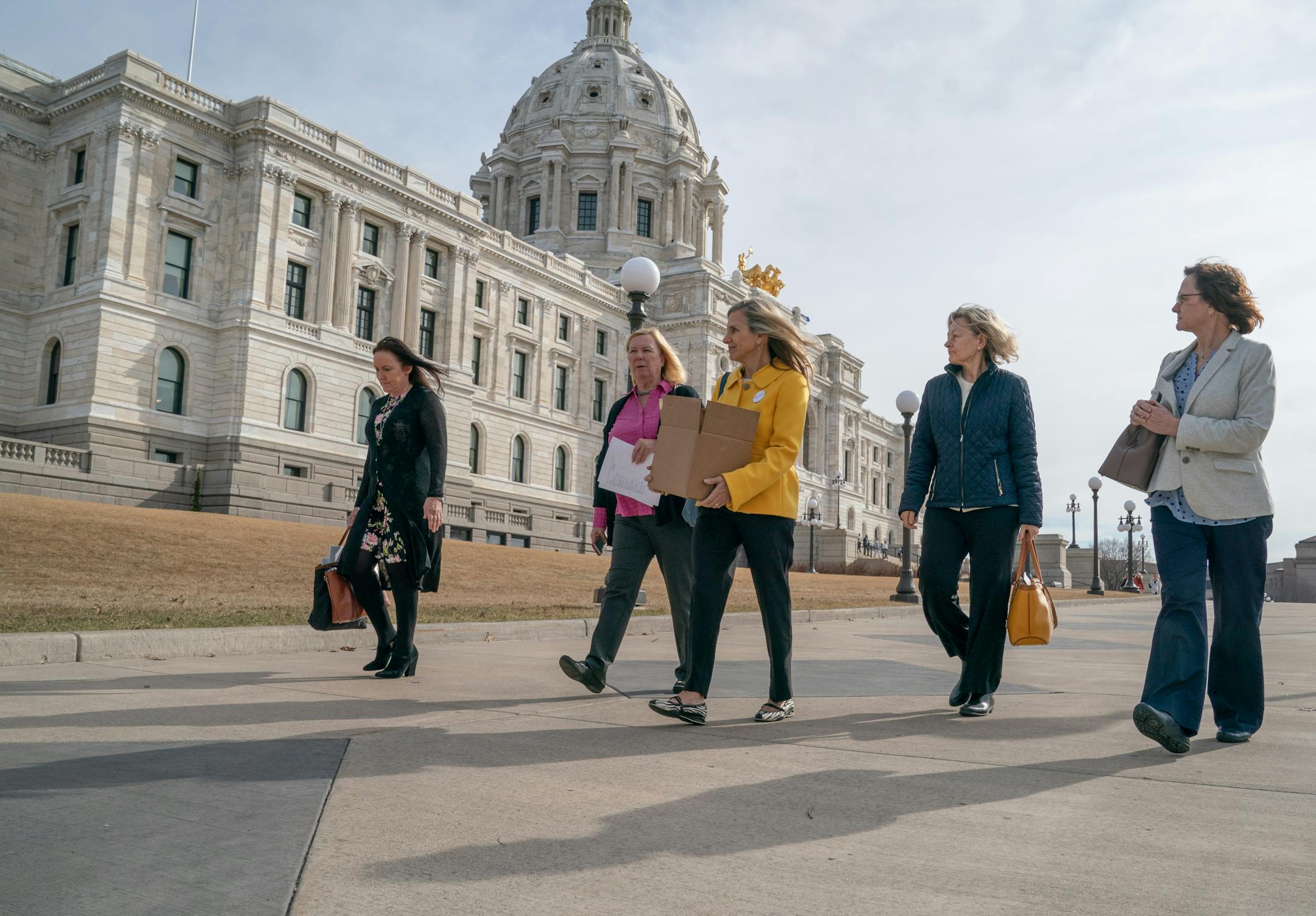
Kristine Sundberg, president of Elder Voice Family Advocates, second from left, leads a group of elder care advocates to meet with legislators in 2018. A recent state investigation found a Baxter senior home failed to seek proper medical attention for a resident who died last summer from septic shock brought on by an untreated foot infection, a wound Sundberg said could not have emerged “overnight.” (Glen Stubbe, Star Tribune/The Minnesota Star Tribune)

Opinion editor's note: Star Tribune Opinion publishes letters from readers online and in print each day. To contribute, click here.

•••

As a registered nurse for 29 years, I'm responding to another sad Chris Serres article ("Baxter senior home blamed in resident's death last year," Feb. 9).

I have worked as a director of nursing the last 10 years for six senior care communities, including assisted living/memory care. I have recently left the field to protect my license and refuse to go along with the lies and unfulfilled promises made to the seniors and their families.

Senior care "institutions," as I call them, are very lucrative businesses. Seniors and their families are made numerous promises: activities, three meals a day with snacks, 24-hour access to trained care staff. Reality is that the food is the cheapest they can get, minimal if any fresh fruit and vegetables, activities if they have staff, and care attendants that make a pitiful hourly wage and work two jobs to make ends meet.

All while seniors are paying upward of $10,000 per month.

I have seen and reported numerous medication errors, minimal staff ratios, complaints of poor food quality, lack of management oversight and disregard for poor care. I was told that "we will take the tags" — violations given when the state does their survey and finds noncompliance. I have reported incompetent nurse aides who were found sleeping on the job, or falsely documenting cares done, to the certified nursing assistant board, on deaf ears.

These senior institutions are popping up on every corner. There are not enough care attendants or nursing staff to properly care for the seniors, and yet they continue to get their licenses from the state.

This is a senior scam, and the investors are making a bundle!

This is happening all over Minnesota. As long as this is allowed to continue, Chris Serres has job security.

Carol Shields, Maple Plain

ABORTION

Humanity is not conferred this way

"Any baby in the womb is not human until I say so. Until I want it." No matter how many bills we pass, this is not science. It is not reality. It is time to own our violence against independently sentient, independently human, beings — human beings with human rights. It is time for us to believe that together we are intelligent, creative and caring enough to find other solutions to our own problems, ways to include in our compassion not only each other but the babies we carry.

Linda Simpkins, Minneapolis

•••

People who oppose reproductive freedom commonly invoke the specter of unregulated mid- and late-term abortion. Steve Calvin, in his recent commentary "There's still time for reasoned restraint on abortion" (Opinion Exchange, Feb. 3), worries that further legislation under consideration would allow abortions to be "performed in licensed birth centers" (as if up until the moment of birth) and would stop state funding for "abortion alternatives" (aka "crisis pregnancy centers," where pregnant people can get a large helping of obfuscation and misinformation, along with a few diapers).

States with no limit on when abortions can be performed and minimal further regulations, like Colorado, New Mexico, Oregon, Vermont and Alaska, have rates of late-term abortions just very slightly higher than states that prohibit late-term abortions with limited exceptions (e.g., 1.8% of abortions in New Mexico at the upper end, vs. 0.9% nationally, according to the Centers for Disease Control and Prevention and PolitiFact). Some of those numbers likely include people coming to those states from elsewhere for care they can't receive at home.

What Calvin and most other anti-abortionists are really worried about is the specter of women and all others who can become pregnant gaining and keeping full control over their ability to decide if, when and how to become parents. If anti-abortionists were really worried about babies, then they'd be working hard to ensure human rights for everyone who's already born, including but not limited to freedom in the full spectrum of health options regarding family formation. They would also be working hard to ensure generous support for struggling families, universal access to excellent public education, safe communities for everyone (not just white people) and a healthy environment for all.

Let's stop focusing on the things that don't matter, like abortion restrictions, and instead focus on the things that do.

Laura Hermer, St. Paul

•••

The celebration photo of the signing of the abortion bill was so disturbing to me ("Abortion rights now guaranteed in state law," Feb. 1). Do those young girls even know the reality of abortion? Have they been exposed to the cruelty of the process? Would they wonder if they could have been aborted, or one of their siblings? Do they understand the lifelong memory of aborting a healthy fetus? Do they understand the millions of babies lost without a chance at life? Or are they just props? Where were the young boys who need to be educated about the consequences of an unplanned pregnancy? Are they given the painful truth about abortion? I am ashamed and fearful about this arbitrary decision about who deserves to live or die.

Who's next?

Margaret Norine, Bloomington

GOV. TIM WALZ

Splintered Minnesota?

I am a lifelong Republican who increasingly finds myself voting for the Democratic candidate because I prefer their positions on social issues.

I voted for Gov. Tim Walz in November 2022 because his statements as a candidate led me to believe he was the better choice for moderation and compromise. The first month into his second term, I have been disappointed, to put it mildly. He did absolutely nothing to attempt to reach a consensus on the recent abortion legislation. Advocating to memorialize Minnesota case law through legislation would have been a reasonable outcome; he was silent on this solution. He has also been silent on reasonable alternatives to the fossil-free energy by 2040 proposal that was passed by the Legislature. He left a reasonable listener during the campaign to conclude he was in favor of eliminating the tax on Social Security benefits; now he supports elimination for some, not all. Yet he finds time to decree bans on hair discrimination? How does he differ from the most far left in his party? More importantly, what has he done in the last month to advance his "One Minnesota" campaign theme?

As a lifelong moderate Republican, I feel I've been had, by a very insincere politician.

Thomas W. Spence, St. Paul

END-OF-LIFE OPTION ACT

Sensible, but not complete

With all the recent letters about the Minnesota End-of-Life Option Act ("I used to oppose it. Not anymore," Readers Write, Feb. 8), I decided to look it up and read through it. I suggest all voters do the same. To me, it seems sensible and measured and has built-in safeguards to prevent coercion. In fact, my concern is that it might not help many who would wish to invoke it.

What about someone diagnosed with early Alzheimer's who would like to choose this option while still cogent, but who may be years out from the time they'd actually use it rather than at the six-month terminal time limit specified? What about someone with a fatal neuromuscular disease, now living essentially as a quadriplegic, who would choose this option but would also be unable to personally administer his/her own life-ending medication? Or what about someone who has been languishing in a care facility for years, with a questionable quality of life, and no way to set this in motion?

All of these profiles describe someone in my life at one time or another. To these scenarios I add the questions of: Where do people go for end-of-life care when they have little or no money, when they can't find a decent facility fully manned with caring and competent staff, when they have no children or other caring agents to supervise their care, when they have no health insurance or meager insurance, and so on?

I know that some folks want to hang on until the bitter end, no matter what. On the other hand, there are those who want options when their quality of life drastically changes and diminishes to the extreme. I hope we can keep moving the needle to accommodate everyone on this continuum.

Laurie Eckblad Anderson, Minneapolis

about the writer

about the writer