
Brown: As a small Minnesota town mourns its only elementary school, opportunity grows from loss

Rural people know well the pain that comes from losing something they can never get back.

Columnist Icon
The Minnesota Star Tribune
October 20, 2025 at 10:00AM
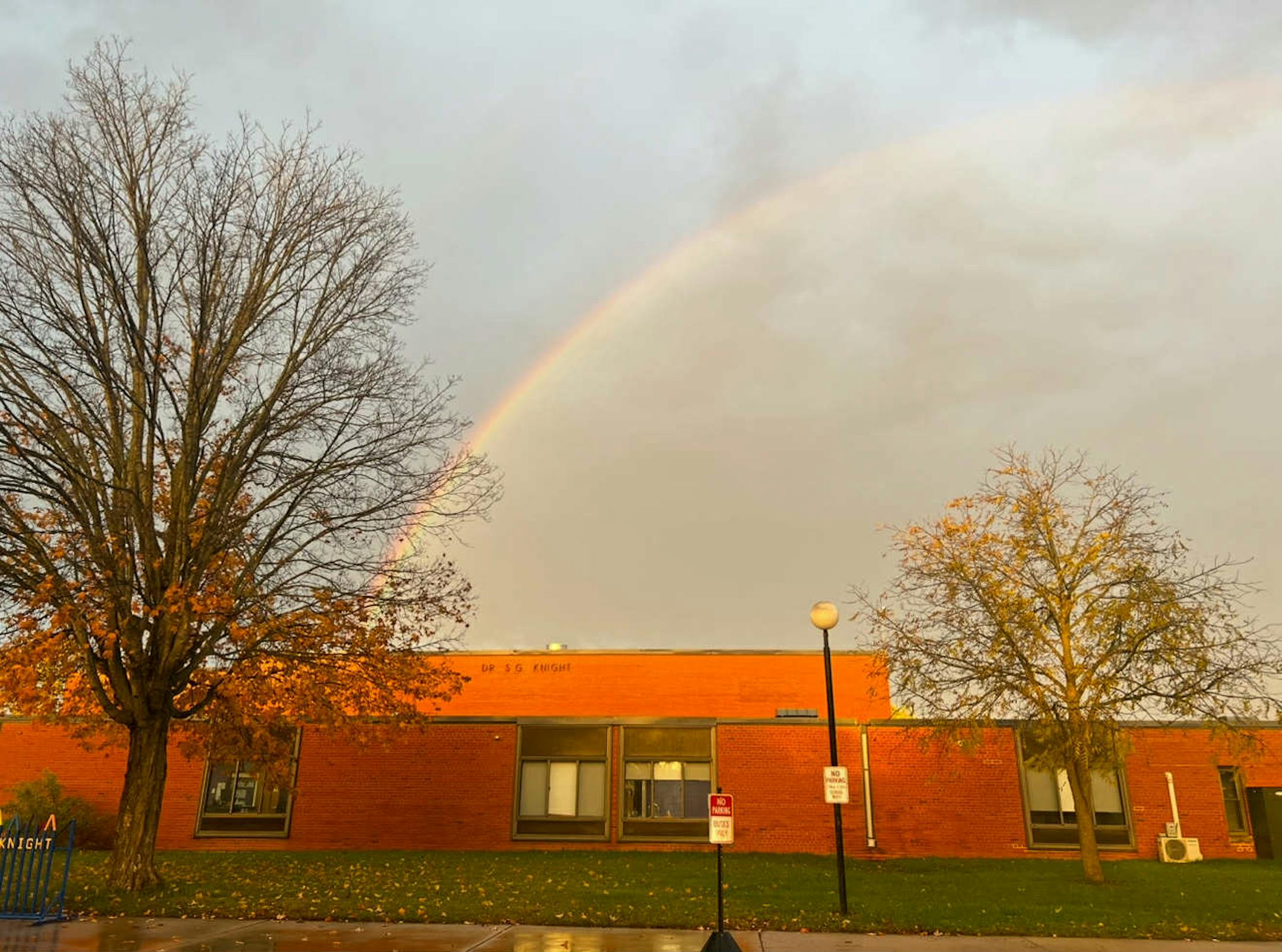
A rainbow over the former Dr. S.G. Knight Elementary School in Randall, Minn.
A rainbow over the former Dr. S.G. Knight Elementary School in Randall, Minn. (Courtesy of Laura Marcus Adamek)

Opinion editor’s note: Strib Voices publishes a mix of commentary online and in print each day. To contribute, click here.

•••

At the only gas station in Randall, Minn., the Friday morning crowd already knew each other. They laughed as they compared weekend plans, mostly chores, with a begrudging joy, because with this good weather the work goes easy.

After weeks of bad news and ugly discourse, a stranger traveling Hwy. 10 northwest of Little Falls teared up at the sound of the world working the way it should. The way it does when we love our neighbor.

I wanted to write about what I felt there. Unfortunately, the first thing I found was a notice about a funeral happening in Randall that very weekend. The service wasn’t for a person, but for the town’s beloved Dr. S.G. Knight Elementary School.

Rumors of a potential closure kicked up last spring, inspiring a passionate campaign to save the school. Then came the public hearings and the fateful closure decision by the Little Falls school board on June 30. By the time school started, Randall students rode buses to the Lincoln and Lindbergh elementary schools in Little Falls.
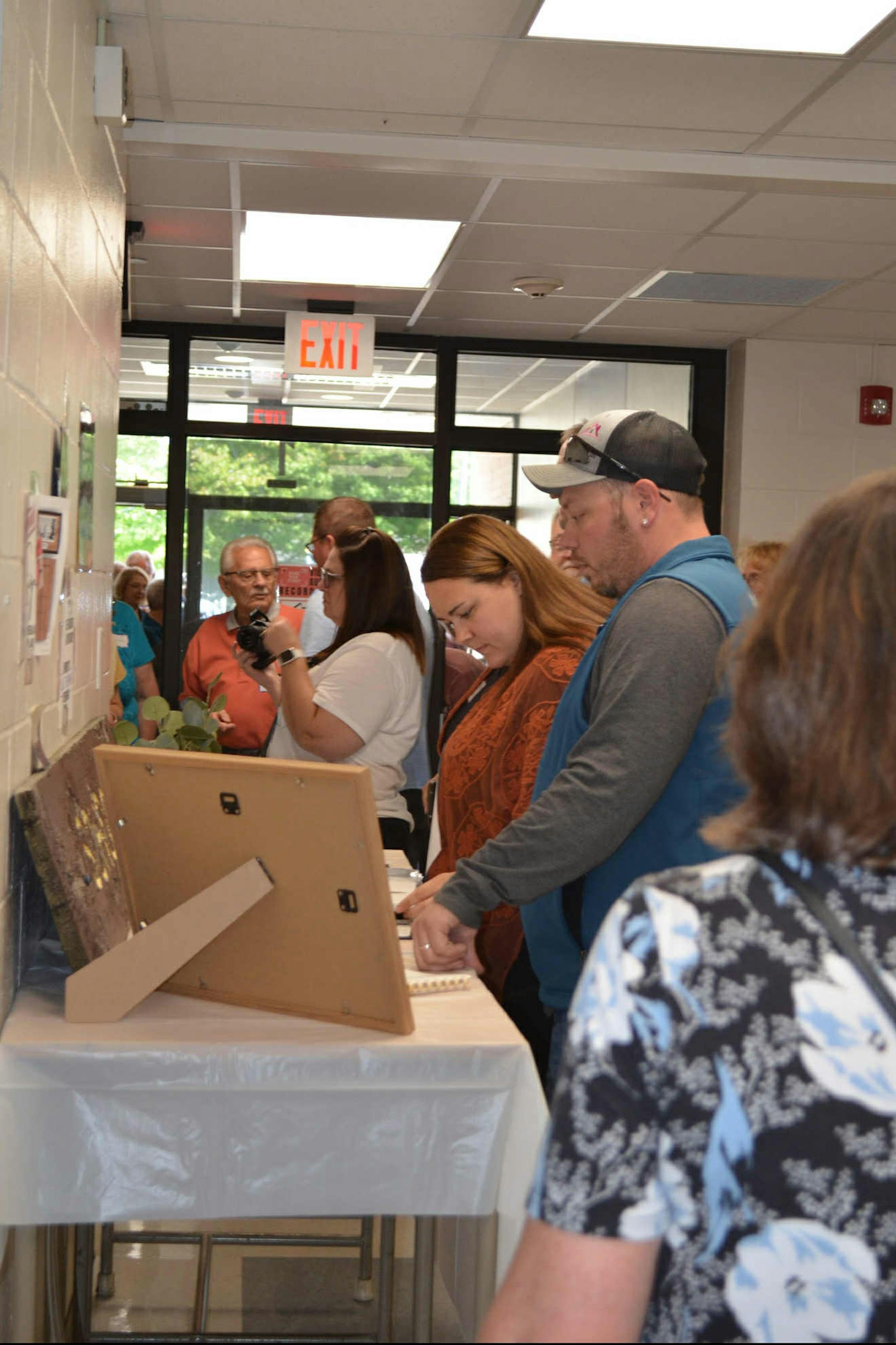
Community members look at memorabilia during the “Lasting Legacy for Dr. S.G. Knight” event on Sept. 28, 2025 in Randall, Minn.
Community members look at memorabilia during the “Lasting Legacy for Dr. S.G. Knight” event on Sept. 28 in Randall, Minn. (Provided by Laura Marcus Adamek)

“It felt like a rug was suddenly pulled out from underneath us just because of how quickly it went from whispers to a closed sign on the door,” said Laura Marcus Adamek, who helped organize the campaign to save S.G. Knight. The whole process took just 120 days, she estimates.

I knew this feeling well. My rural elementary school closed when I was in second grade, adding an hour to my bus ride. My kids’ small town elementary school was bulldozed shortly after they moved up to middle school. I remember their giant backpacks bobbing up the front steps. Now the worn footprints on the stairs are gone forever, along with every brick that ever absorbed their small voices.

This is the true definition of nostalgia. Pain. Specifically, the pain of losing something you can never get back, knowing that the change is forever. And if such nostalgia seems more common in rural places, it’s because this has been happening here, with little to show for it, since most of us were born.

It’s hard to explain this feeling to people who haven’t experienced it.

“It was more than just a building,” said Marcus Adamek. “That structure was the heartbeat of our community. It was life-giving. There was vitality to it. It just felt like the future. It felt like hope.”

Laura’s mother-in-law, Cathy Adamek, taught kindergarten at the Dr. Knight School for 32 years. Now retired, she explains the unique qualities of a small-town elementary.

“As a teacher there you knew every kid,” said Cathy Adamek. “In fact, now that I’m old and it takes five people to come up with someone’s name, there is a group of us that meet to talk. The conversation still goes back to kids and families. That’s why it’s a family. You knew all of those kids, their parents. You may have even known their grandparents.”

One of Cathy Adamek’s former students is Matt Pantzke. She said he showed real potential when he was 6. Pantzke is now the city manager of Randall, tasked with finding a new life for the building in the heart of town.

“I’m confident that in time something good will come of it,” said Pantzke. “We’re just in this transitional period. It’s tough. It burns. It lingers. But we feel that something good will come of this and continue to thrive for years to come.”

The Little Falls school district promised to work with the city to find a use for the building that serves the people of Randall. Ideas range from a community center to a child care hub to an economic development space.

“It’s a choice,” said Cathy Adamek. “You can live in the downers and grump about everything that is bad, or you can wake up every morning and ask, what can I accomplish? And what can I do to move forward?”

Laura Marcus Adamek recently rang the bell to end her cancer treatment. In good health, she’s now dedicated to her family — the one in her house, and the one in Randall.

“This is not just on one of us, it’s collectively on all of us,” she said. “We’re not in this alone. We still have each other and we still have hope.”

When I got home from Randall, my wife saw the gas receipt and asked, “Where’s Randall?” I had a lot to tell her.

In 1912, Dr. Samuel Graham Knight came to Randall from his native Canada. He would become the doctor, druggist and village president, preferring horse and buggy even after the advent of automobiles. During emergencies, he would hop freight trains to reach more distant farms, his wool coat flapping in the cold air like a cape. The improbability of success fell second to his desire to heal the people of this land. More often than not, he did.

This same spirit burns within Randall today. The school that bore Knight’s name will find a new life, and yet more generations stand ready to serve in his stead. Life is not bricks and concrete, but blood and sinew, trials and tears. There is joy in the work ahead.

about the writer

about the writer

Aaron Brown

Editorial Columnist

Aaron Brown is a columnist for the Minnesota Star Tribune Editorial Board. He’s based on the Iron Range but focuses on the affairs of the entire state.

See Moreicon

More from Columnists

See More
card image
Mark Vancleave/The Minnesota Star Tribune

As Faribault joins the list of cities without a birth center, it may be time for the Legislature to get involved.