

Ramstad: Leaving St. Paul campus after a century-plus is an act of faith for Luther Seminary

The training ground for the nation’s Lutheran churches no longer needs as much ground.

Columnist Icon
The Minnesota Star Tribune
August 25, 2025 at 5:00PM
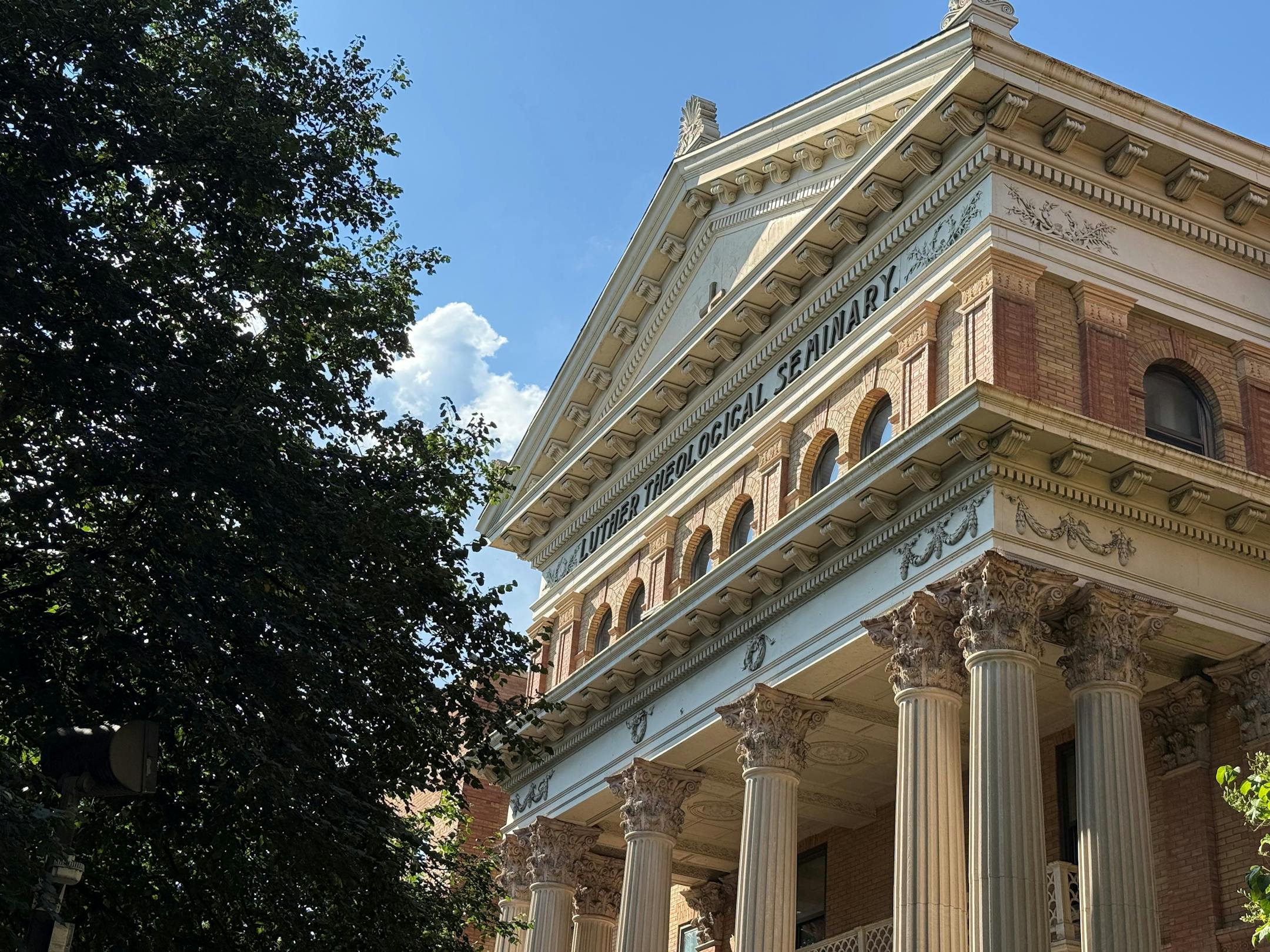
Bockman Hall, the original main building of Luther Seminary, was dedicated in 1902. (Evan Ramstad/The Minnesota Star Tribune)

The opposite of faith isn’t doubt. It’s certainty.

The June announcement by leaders of Luther Seminary that the school for church leaders will move away from the hillside campus in St. Paul where it’s been for 124 years is a true act of faith — especially because they’re not certain where it will end up.

Earlier this month, the seminary contracted with a real estate broker and an architecture firm to identify and design its future space. As students and faculty return in the next couple of weeks, they’ll be asked to meet with the outside experts to describe their ideas and desires for Luther’s next home.

“All that visioning work we will be doing with the community in the month of September, which will really lay the foundation for how we approach finding that new space,” Robin Steinke, the seminary’s president, told me last week.

Luther Seminary for well over a century has occupied one of the most beautiful spots in the Twin Cities, a 16-acre hillside on the west side of the St. Anthony Park neighborhood. Looking out from a grove in front of Bockman Hall, its main building dedicated in 1902, the Minneapolis skyline appears like Oz in the distance.
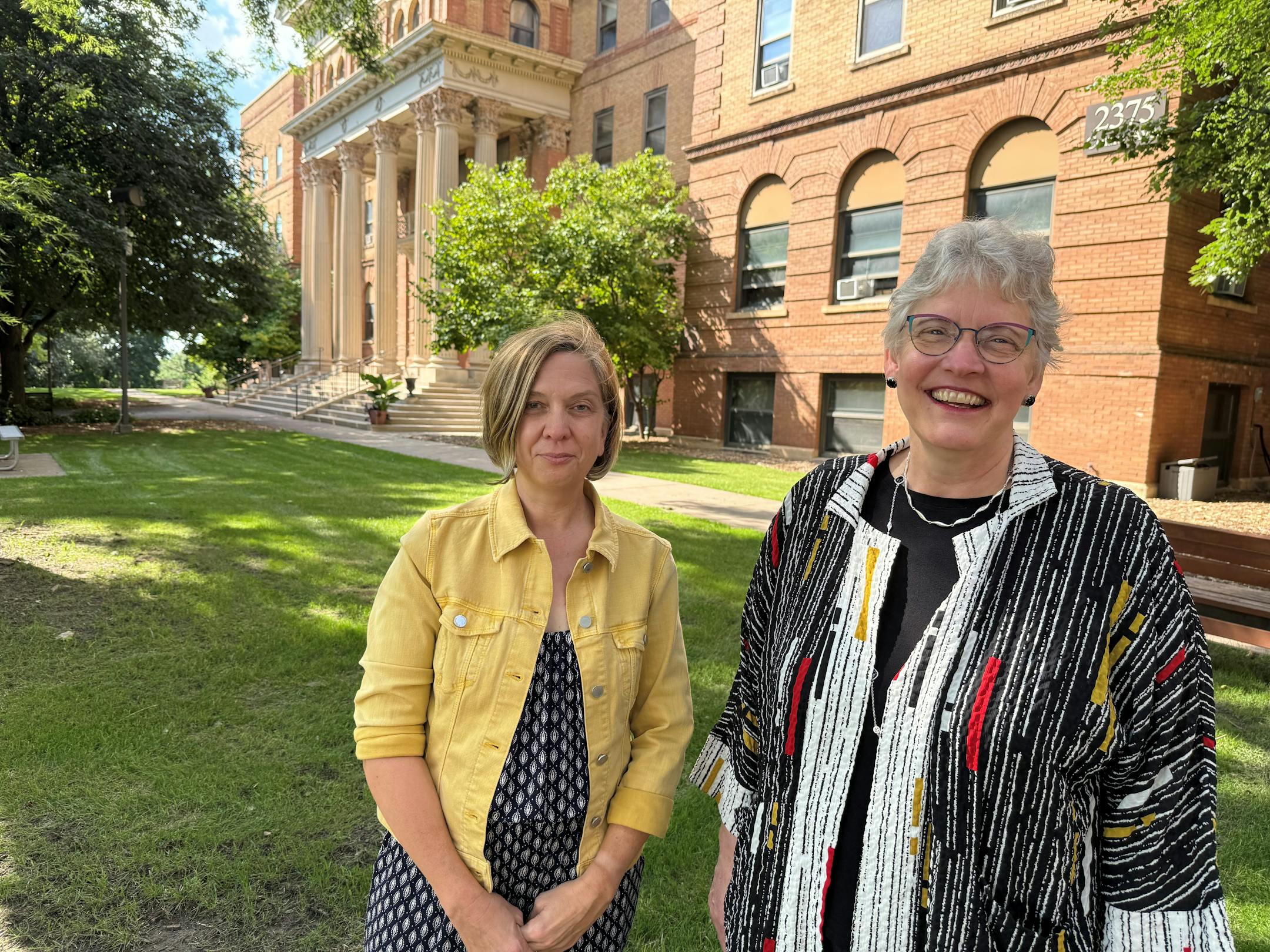
Heidi Droegemueller, vice president for seminary relations, left, and Robin Steinke, president, pose on the campus of Luther Seminary in St. Paul's St. Anthony Park neighborhood. The school announced in June that it will leave the campus where it has been since the early 1900s. (Evan Ramstad/The Minnesota Star Tribune)

More than most institutions of higher education, seminaries confront declining demand for traditional ways of teaching and learning. For a half-century across the country, the number of regular churchgoers has been shrinking, beginning a spiral in the business of religion.

Churches needed fewer ministers. Then young people got the signal, and fewer chose to go into ministry. Eventually, the pipeline of young people shrank. Seminaries and churches increasingly count on people who enter ministry as a second career. Some churches now rely on lay people with some theological training.

“We could either manage that decline or say, ‘How do we lead in this changing environment?’” Steinke said. “We want a smaller footprint and bigger reach. ... Rather than encouraging hundreds of students to relocate to this area, we can bring education to students in time-intensive, face-to-face experiences or within the ministry context where they are.”
Until the early 2000s, Luther Seminary seemed above those changes. It is the nation’s largest educator of ministers for the Evangelical Lutheran Church in America, or ELCA, which has a huge presence in the Midwest but experienced membership declines later than other mainline Protestant denominations.

A decade ago, Luther enrolled about 800 students. Today it’s about 370. Many of them are only on campus part time, a change accelerated by the pandemic.

Luther Seminary has agreed to sell 16 acres to a real estate developer that plans to build nearly 200 units of housing. The institution now plans to exit its remaining 10 acres. (Evan Ramstad/The Minnesota Star Tribune)

Even so, the seminary is in relatively strong financial shape. It agreed to sell 16 of its 26 acres earlier this year, space that will be redeveloped into 197 units of apartments, condos, single-family homes and a senior-living co-op. And it received a $21 million donation in 2018 to help reimagine its educational approach.

Since then, the school expanded its digital resources to four websites that serve churches, leaders and parishioners. Those services have grown to nearly 8 million regular users who, as they do at church, donate when and how much they wish.

“The seminary is a ministry that relies on the benevolence and support of the congregation, whether that’s one of our digital properties or degree programs,” said Heidi Droegemueller, vice president for seminary relations.

The decision to leave the St. Paul campus has been unfolding incrementally for more than a decade, she said. The seminary’s leaders by late 2019 and early 2020 had a thorough restructuring plan ready, but as the pandemic hit, they realized it was irrelevant. For the past year, they tried to hold “quiet conversations” with potential academic and real estate partners, eyeing a move in 2027 or later.

“It was so hard to get any traction because we weren’t coming out publicly to say we’re making this big move,” Droegemueller said. “So, while it seems counterproductive to many people, I don’t think we could have done this any other way.”

They’ve studied recent restructurings of about a dozen other seminaries. One lesson, Droegemueller said, is that “it’s really easy to, in order to try to keep your community together and feeling good, land somewhere with more space than you need. That just drives up your costs.”

Steinke worked earlier in her career as a financial planner in the Atlanta area with the company that’s now Ameriprise, work that forced her to think decades into the future on behalf of her clients.

“I also had the privilege of working with people who had all the resources anyone could ever want and who were deeply unhappy human beings,” Steinke said. “And so that’s where, for me, it’s the mission that really is at the forefront. How do we ensure that there’s another generation of folks being educated in this rigorous way that assures the flourishing of the good news of Jesus for the sake of a hurting world? How are we preparing leaders to lead in this time?”

about the writer

about the writer

Evan Ramstad

Columnist

Evan Ramstad is a Star Tribune business columnist.

See Moreicon

More from Business

See More
card image
Moses Yuhanna

Billy Turner, a Mounds View grad, bought and renovated the 1922-built St. Paul firehouse to be his Minnesota home base during his NFL career.

card image
card image