Ramstad: As uncertainty looms over Minnesota budget, one small town can’t fight the big fires

Minnesota needs a sizable bonding bill next spring, even as lawmakers deal with problems in the state budget.

Columnist Icon
The Minnesota Star Tribune
December 3, 2025 at 12:00PM
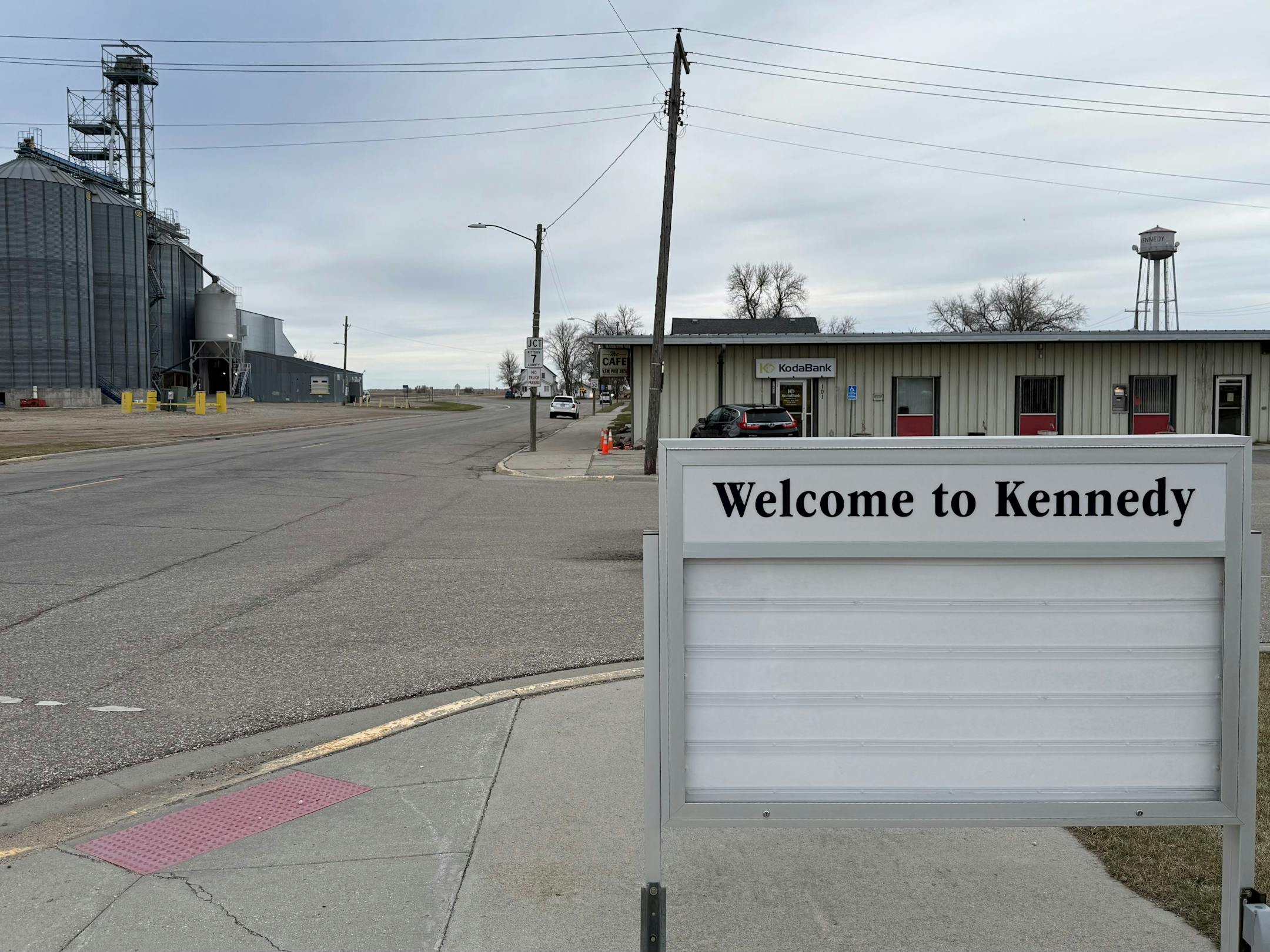
The water tower in Kennedy, Minn., visible in the upper right of this photo, froze during a stretch of ultra-cold weather in late 2017. It hasn't operated since, which has diminished the city's water pressure and left its volunteer firefighters to rely on other places to get water. (Evan Ramstad)

KENNEDY, MINN. — Northern Minnesotans are used to cold winters, but the two-week stretch that followed Christmas in 2017 was unusually harsh. Residents in this town of 181 people in the state’s northwestern-most corner still feel the effects.

During that prolonged period of Arctic air, when temps rose above zero only twice, the water in Kennedy’s water tower froze, a rare occurrence, but the tower has been useless since.

Almost eight years later, Kennedy still hasn’t replaced the tower because the cost is far more than the city’s annual budget of $300,000.

A civil engineering firm told the town it could save money by instead installing a set of pumps to move water at a sufficient pressure from an underground tank that already exists.

“We are trying to run this city and do it as conservatively as possible,” said Melissa Woinarowicz, the 28-hour-a-week city clerk, treasurer and water-meter reader in Kennedy.

The project will cost $2 million. In addition to its own funds, Woinarowicz lined up both a loan and a grant from the U.S. Department of Agriculture. A hole of about $700,000 remained, and town leaders last year turned to the Legislature for an appropriation from a bonding bill.

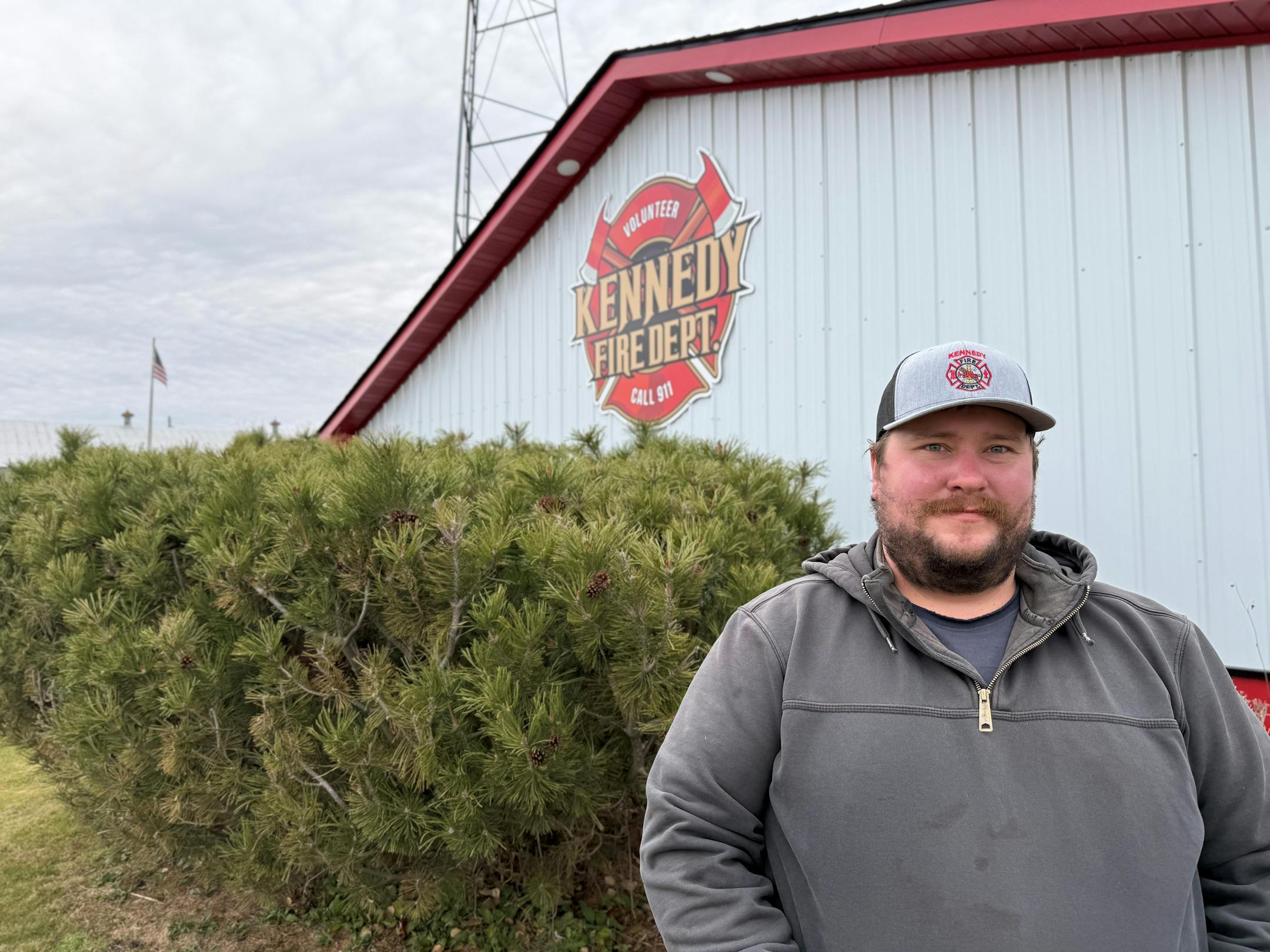
Kennedy’s residents have enough water pressure to get by as they await a repair. However, Kennedy’s volunteer firefighters can’t use hydrants nor refill their tanker truck at the fire station. When the 6,000-gallon tanker runs out, they refill it at a CHS canola processing plant 5 miles north of town.

“I don’t know any other departments that have to plan where their water is coming from,” said Ethan Paulson, a farmer and volunteer fireman for Kennedy. “We tailor our trainings to this, to hauling water and planning for where we will get water.”

The town’s request to the state was for $734,000 for the water pumps. But it fell between the cracks as the Legislature got away from its every-other-year rhythm of issuing bonds for local projects. The 2024 bonding bill became a political football and never happened. This year, a bonding bill passed but didn’t include money for Kennedy.

“We are not banking on the state, but we could use some help. We’ve never asked before, and we all pay taxes here, too,” Woinarowicz told me over lunch at The Cafe, Kennedy’s sole restaurant and bakery.

She made trips to St. Paul last year and this year to testify to legislative committees about the city’s plan. “The political fighting is just incredibly frustrating for us,” she said.

Melissa Woinarowicz, city clerk and treasurer in Kennedy, Minn., lined up $2 million in financing to replace the town's water tower with a series of pumps. A key element was $734,000 in state funding expected to come through a bonding bill. The Legislature has fallen behind issuing bonds as infrastructure projects became a political football. (Evan Ramstad)

On Thursday, state budget officials will announce an updated outlook on the two-year budget that started July 1. The budget office reported in October that the state finished the last biennium with nearly $1 billion more revenue than expected.

But there’s a chance that cuts in federal funding to Minnesota will do more than $1 billion in damage to the state’s expected revenue in 2026 and 2027, even damaging the outlook for the 2028-29 budget.

If that happens, there’s both a new issue in next year’s race for governor and a new top agenda item for the 2026 legislative session. In turn, lawmakers may delay another bonding bill.

I’ve frequently criticized the Legislature’s persistent far-above-inflation increases in the state budget while also advocating for consistent bond issuances to spend on infrastructure.

To some readers, that appears contradictory. However, I believe it’s prudent for governments to regularly spend on capital projects, just as it is for individuals to not let houses and cars fall into disrepair.

Legislators tend to agree. But with bonding bills requiring a super-majority for passage, lawmakers use them as leverage over other legislation where priorities compete. Ultimately, the state economy is hurt when projects are deferred or delayed.

“We are not saving tax dollars by not passing bonding bills,” said Rep. Mary Franson, R-Alexandria, co-chair of the House Capital Investment Committee. “Local communities bear that burden and have to pass that on in the form of property tax.”

The last time lawmakers passed a bonding bill on the normal cycle was in 2020. There wasn’t one in 2022 nor 2024, when I first wrote about Kennedy’s difficulty. Instead, smaller-than-needed bonding bills passed in 2023 and 2025.

Franson sent me a list of more than $1 billion in water projects alone that are backlogged in Minnesota counties and cities.

“They’re all extreme. You just saw one area of the state,” she told me. “We’re looking at pipes made out of wood. Some pipes have arsenic.”

The biggest effect of Kennedy's water troubles has been on its volunteer fire department, which can't use the town's hydrants and has to fill its tanker truck elsewhere. Ethan Paulson, a farmer and volunteer firefighter, said much of the department's training is about contingencies for obtaining water. (Evan Ramstad)

This fall, Franson visited Kennedy with Rep. John Burkel, R-Badger, who represents the community in the House and sponsored its bonding request. Woinarowicz told them a timing issue has emerged because the federal grant in Kennedy’s financing plan will expire at the end of 2026 if it’s not used.

“We have to go to bids and we have to start construction this spring,” she said. “I don’t know that there’s going to be bonding [legislation] between then and now.”

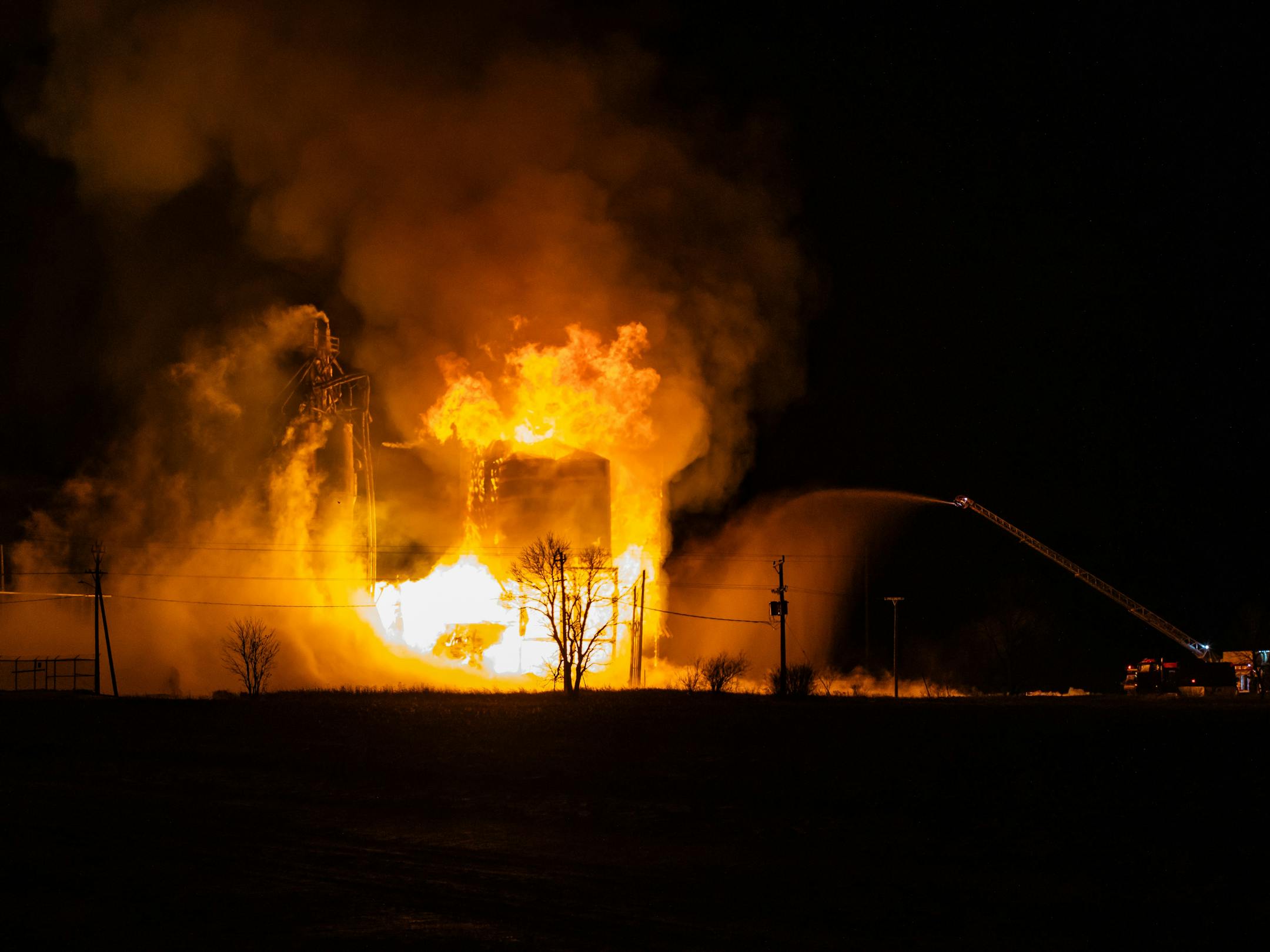
The biggest scare for Kennedy's firefighters came when a grain elevator in nearby Donaldson, population 25, went up in flames in November 2024. This photo was taken by Kassi Winge, a commercial photographer who lives in Kennedy. (Kassi Winge)

So far, Kennedy hasn’t had a major fire since the water tower damage, but Woinarowicz and Paulson said they always think about the risk.

“We have 15 firemen who show up when that pager goes off. They don’t know what they’re going to, but you know what, they do it and they don’t think twice about it,” Woinarowicz said. “And as a city, it’s getting harder and harder saying, ‘Hang with us guys, we’re working on this.’”

Kennedy’s volunteer fire crew protects an area of 200 square miles in Kittson County. On Nov. 29, 2024, they raced to the nearby hamlet of Donaldson after an empty grain elevator caught fire. They and volunteers from other towns couldn’t save it — the best they could do was to prevent ashes from setting nearby houses on fire.

Sign up at startribune.com/evanalert to receive an e-mail from Evan when his columns publish.

about the writer

about the writer

Evan Ramstad

Columnist

Evan Ramstad is a Star Tribune business columnist.

See Moreicon

More from Business

See More
card image
Jeremy Olson/The Minnesota Star Tribune

Triage unit treats many children without ever taking them into the actual ER, freeing up time for the rest of the emergency medical staff.

card image
card image