

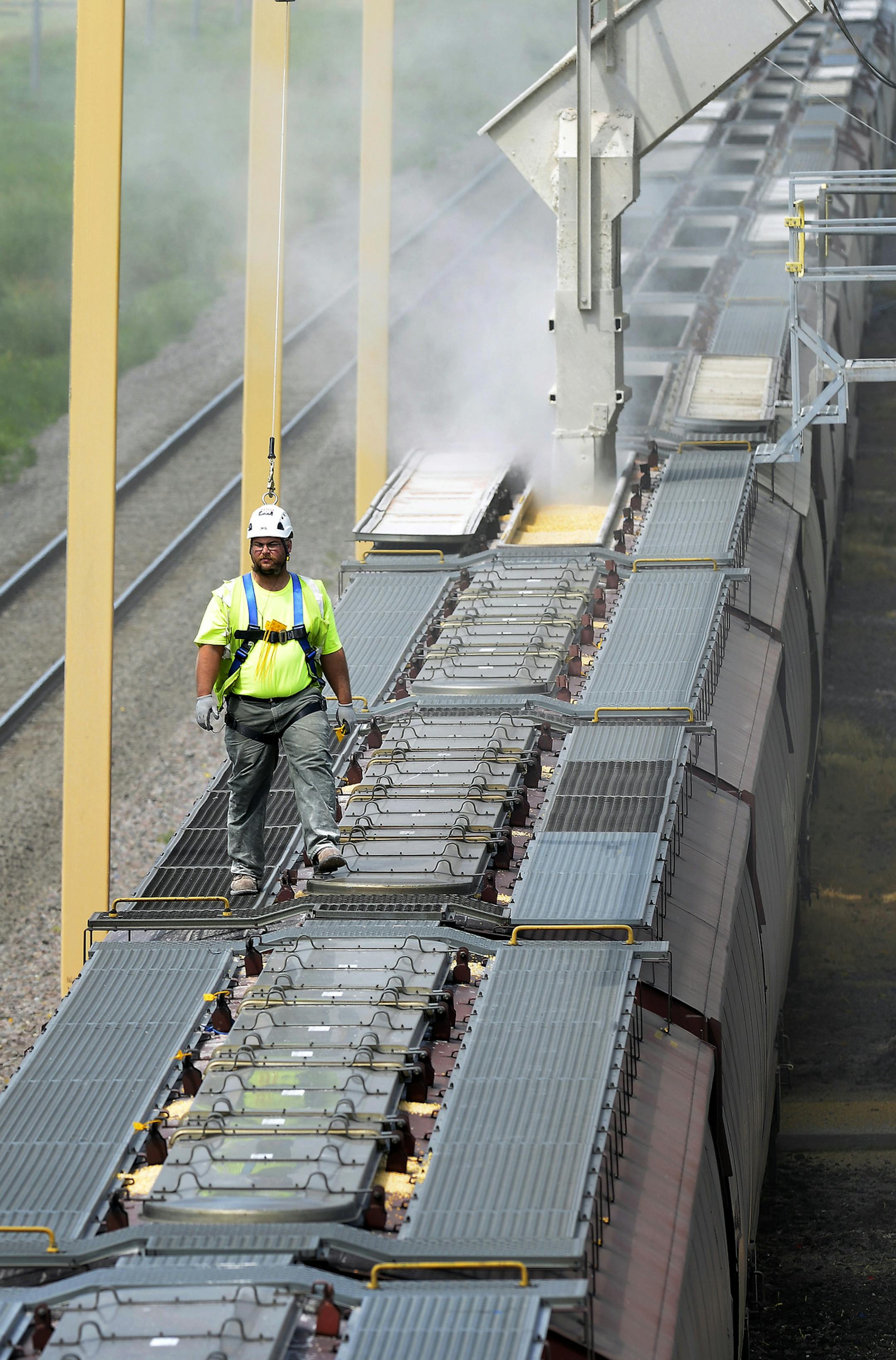
North Dakota wheat, soybeans, lentils and peas will soon gain greater access to international markets because of a new agreement to send the crops by rail to Washington state's Port of Vancouver, which caters to Pacific Rim nations.
The pact signed Wednesday gives North Dakota farmers access to fresh markets and offers another transportation option after the state's oil boom has captured much of the rail capacity.
The exchange is seen as a win for both states. Washington state and the Vancouver port, its third-largest, get heartland crops, while North Dakota gains industrial and energy supplies and access to a frequently untapped market.
If all goes according to plan, each month, two to four rail shipments will leave the Vancouver port for North Dakota with fertilizers, lumber, paper and energy-related materials. They'll return with North Dakota farm products for routing elsewhere along the coast, including Canada, or via ships to Asia and Latin America.
Port of Vancouver spokeswoman Abbi Russell said that before this week's agreement, Washington state only sent energy supplies destined for oil fields in or near Montana and North Dakota. In the future, eastbound shipments should expand to include lumber, paper, cement and fertilizer. Right now, the port has about 50 rail cars' worth of products ready to ship to North Dakota, Russell said. All westbound shipments will be new.
North Dakota Agriculture Commissioner Doug Goehring praised the agreement, which he signed in Fargo on Wednesday.
The rail contract "provides more marketing opportunities," Goehring said. "It also provides a major opportunity for North Dakota commodity handlers, especially smaller and midsize companies to access rail facilities on the same basis as larger companies. [That] enables them to remain competitive."
Todd Coleman, CEO of the Port of Vancouver USA, said the deal should "increase capacity and reliability for farmers needing to move their products to market by rail."


