Twin Cities suburbs turn to technology to identify troubled trees

Plymouth and Bloomington are using new technology to tend to tree canopies damaged by emerald ash borer, drought and storms.

The Minnesota Star Tribune
September 2, 2025 at 4:00PM
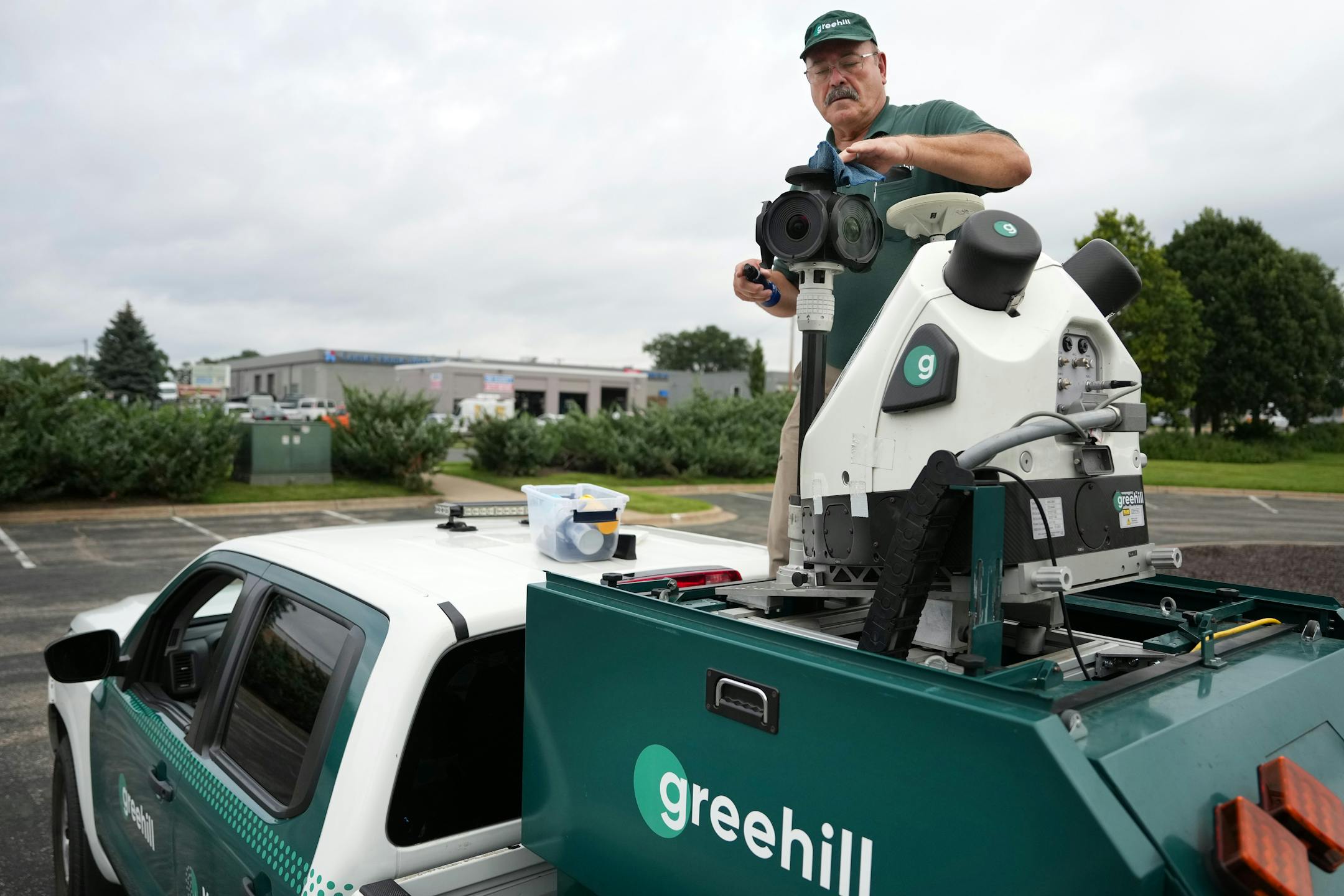
Eric Akers, a lead navigator with tree data firm Greehill, readies a mobile lidar scanning system on Aug. 22 to create a “smart tree inventory” that city planners can use to better manage urban trees in Bloomington. (Anthony Souffle/The Minnesota Star Tribune)

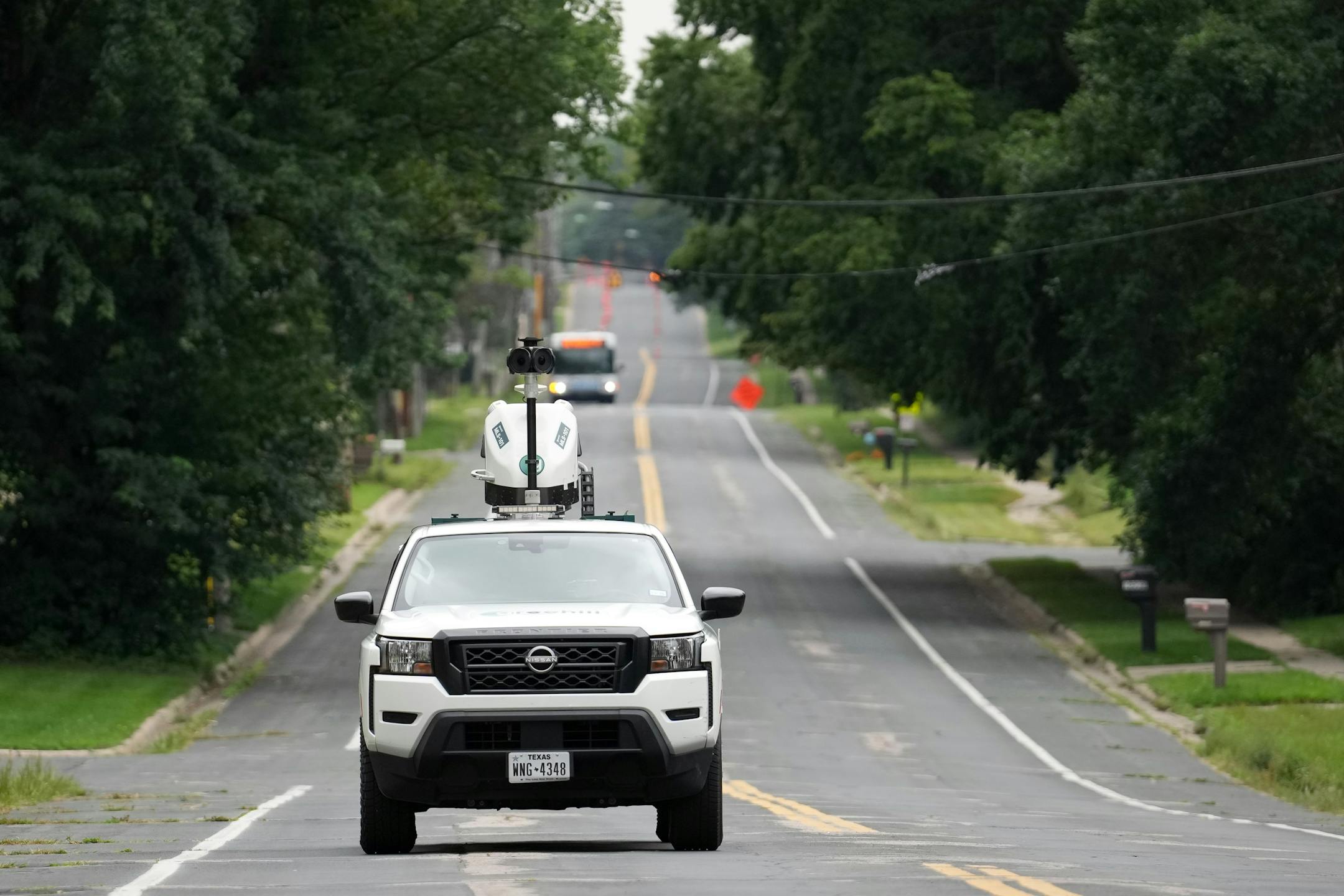
Eric Akers spends his days driving around cities in a truck with a machine on top snapping photos and sending out invisible pulses of light.

Occasionally, someone strikes a pose, mistaking him for the car that makes Google Maps. But Akers is creating something different: a “smart tree inventory” that logs the height, diameter, branch patterns and other data on trees along the roadside.

“It’s the creme de the creme” in new tree technology, said Plymouth City Forester Paul Buck, who has been working with Davey Resource Group and tree data firm Greehill to create a database for the city. Plymouth and Bloomington are the first two cities in Minnesota to use the new tool.

Forestry teams throughout the Twin Cities metro area have been especially busy in recent years, as a combination of drought, severe storms and the emerald ash borer toppled scores of trees that gave many suburbs their character. Now, some teams are turning to new technology in hopes it will speed up their work and improve their efforts to increase the diversity and resilience of their tree canopy.

“This inventory will give us the data to make decisions around urban forestry for many years to come,” said Dave Hanson, assistant director of parks and natural resources for the city of Bloomington.

Forestry crews would typically send teams out to walk local streets and paths in their communities and log various details on each tree they spot, a process that can be somewhat subjective, Buck said.
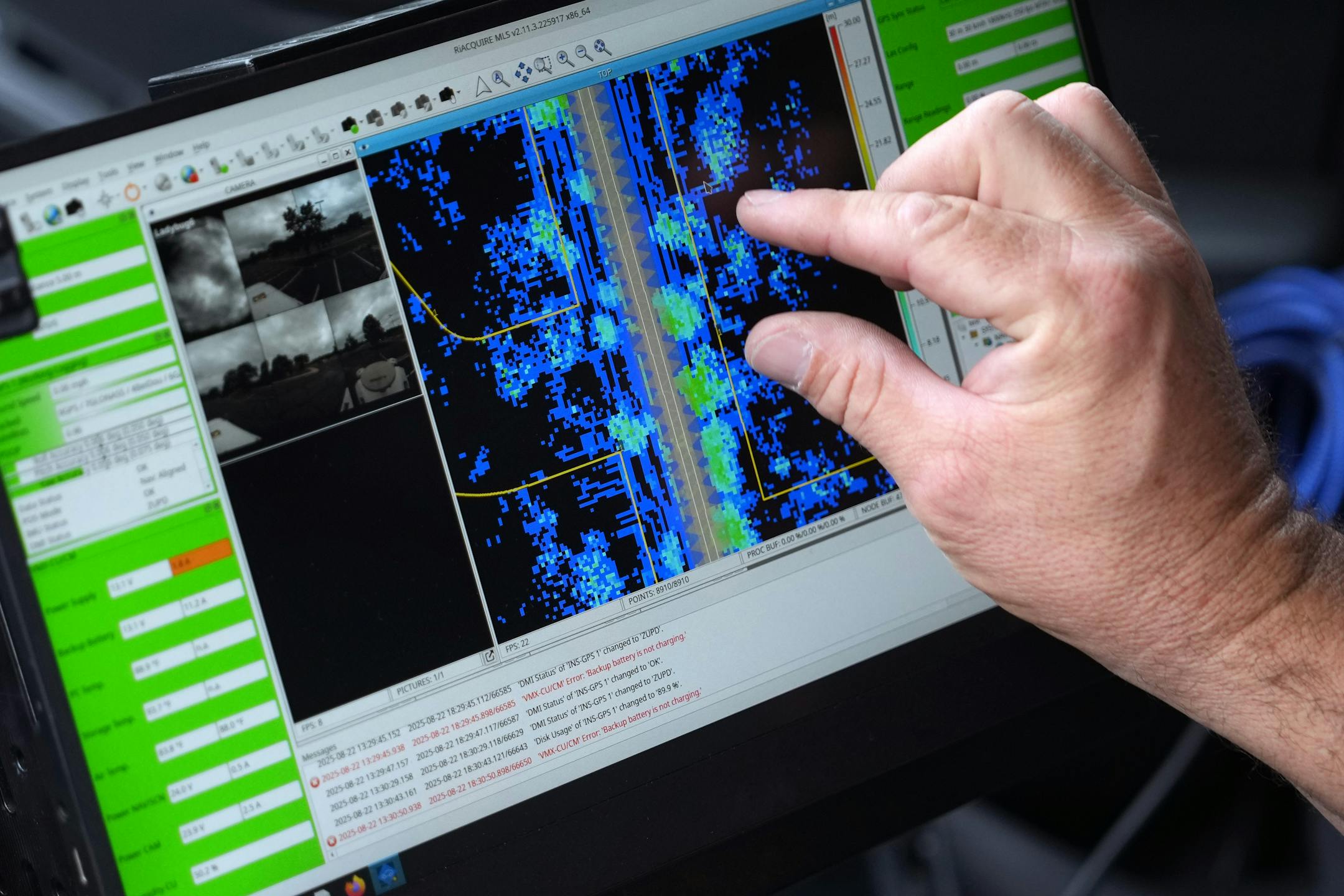
Eric Akers, a lead navigator with Greehill, runs a mobile lidar scanning system to create a "smart tree inventory" city planners can use to better manage urban trees. (Anthony Souffle/The Minnesota Star Tribune)

When creating a “smart tree inventory,” techs like Ackers drive around a city with lidar — light detection and ranging — tools that collect thousands of points of data that can be used to gauge the health of a tree.

“The short version of what lidar is, it uses a laser light that pulses out from a sensor and the laser is referred back to the same sensor,” said Jacob McMains, area manager for Davey Resource Group, which runs the technology. When that data comes back, a computer creates a 3D replica of the tree.

After the scanning is done — a process that often takes two to three weeks, depending on the weather and how much ground a city wants to cover — another team refines the data, to build a database that city workers can access.

The database holds information on each tree’s species, height, diameter and, in some cases, even calculations on how much carbon dioxide it removes from the air. City crews can then sort the data to try to find outliers.

“The computer can’t tell us what’s wrong, but it can tell us those trees were different,” Buck said. “Now, we can do some follow-up on those trees and say, ‘What’s going on with those specific trees? Are they dying?’”

Bloomington is paying about $386,000 for the tree inventory, plus help creating a long-term plan for the city’s tree canopy. Plymouth is paying about $320,000 for its inventory; Buck estimated that a traditional tree count would have cost about $280,000. City officials say they’ll be watching in the coming years to see if the investment pays off.

“It is sometimes a little nervous to be the first one, because you’re putting yourself out there,” Buck said. “It’s like anything that’s new: it’s change.”

Eric Akers, a lead navigator with tree data firm Greehill, drives while running a mobile lidar scanning system to create a “smart tree inventory” city planners can use to better manage urban trees. (Anthony Souffle/The Minnesota Star Tribune)
about the writer

about the writer

Liz Navratil

Reporter

Liz Navratil covers communities in the western Twin Cities metro area. She previously covered Minneapolis City Hall as leaders responded to the coronavirus pandemic and George Floyd’s murder.

See Moreicon