

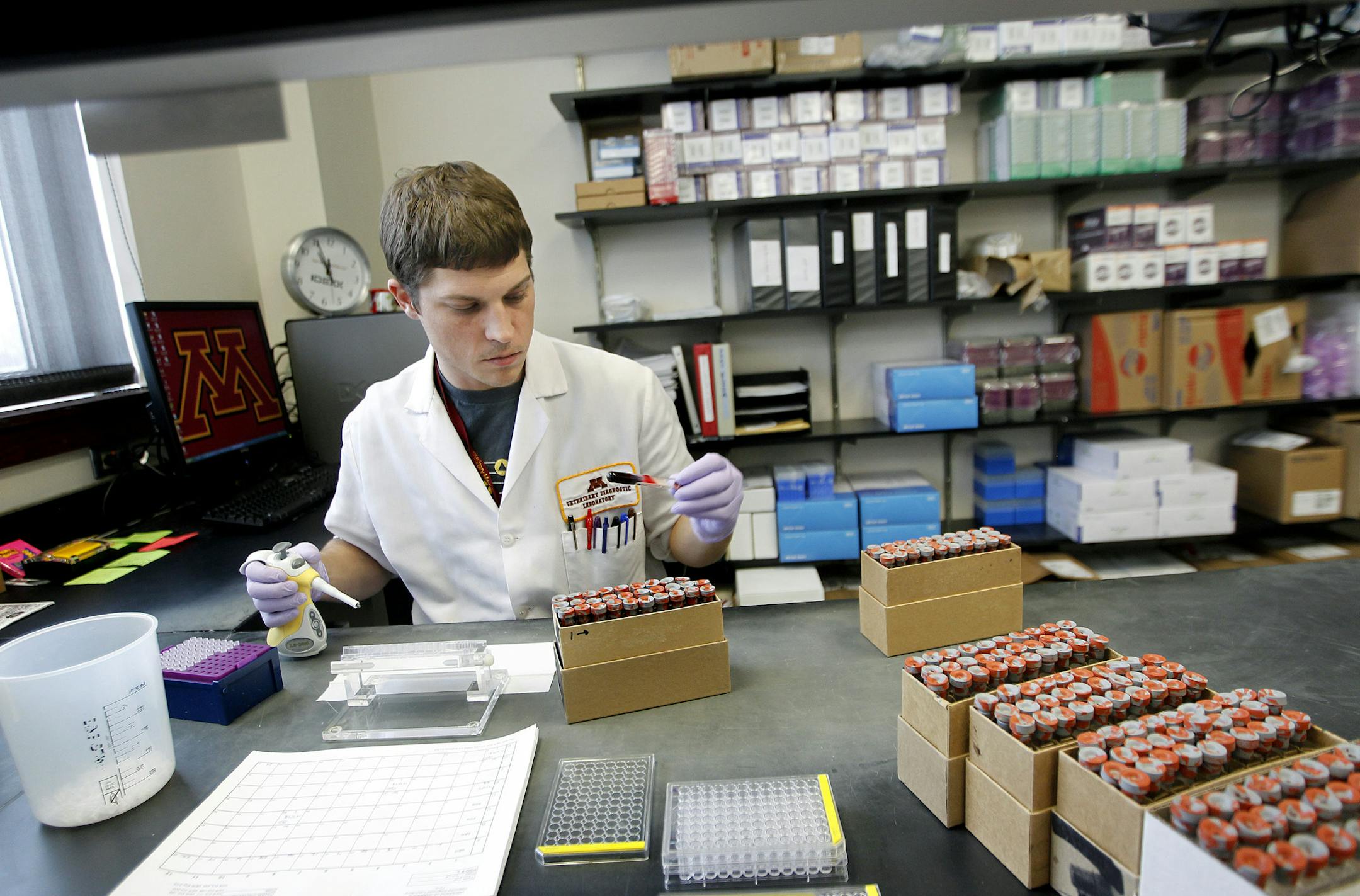
A virus sweeping through the nation's hog industry is killing piglets at an increasingly alarming rate, threatening to hamper production and lead to higher retail pork prices.
Porcine epidemic diarrhea virus (PEDv) surfaced in the United States last spring but has accelerated during the winter, notably in Minnesota. The virus often wipes out an entire barn's young pig population, with piglets dehydrating, unable to retain nutrients from their mothers' milk.
"I've never seen anything like it as far as the devastation it does to little pigs," said Paul FitzSimmons, a 30-year industry veteran in southern Minnesota whose family business manages 16 sow farms, three of which have been stricken by PEDv. "The virus is very, very contagious."
Minnesota is the nation's third-largest pig producing state and home base for Hormel Foods Corp., a major pork producer, and Cargill Inc., one of the nation's largest hog processors.
The virus could crimp the hog pipeline to meat processors. Hormel's CEO, Jeffrey Ettinger, noted during a conference call with analysts in November that hog costs may be volatile "due to concerns in the marketplace about the PED virus affecting supply."
Those concerns have lit a fire under hog futures on the Chicago Mercantile Exchange. The lean hog contract for June is at a 52-week high, 11 percent higher than the past year's average price.
Premiums are built into summer hog futures as a wave of piglet deaths is expected to hurt production by then, said Justin Roelofs, a financial services officer specializing in swine for Mankato-based AgStar Financial.
"If we don't figure out a vaccine quickly, we will likely see an increase in [pork] costs for the consumer," he said. "It will just get passed down the line."


