Cabin north of Duluth combines cozy ease with ‘wow’ factor lake views

The October Home of the Month employs Frank Lloyd Wright’s concept of compression and release to increase drama without sacrificing function.

For the Minnesota Star Tribune
October 24, 2025 at 4:57PM
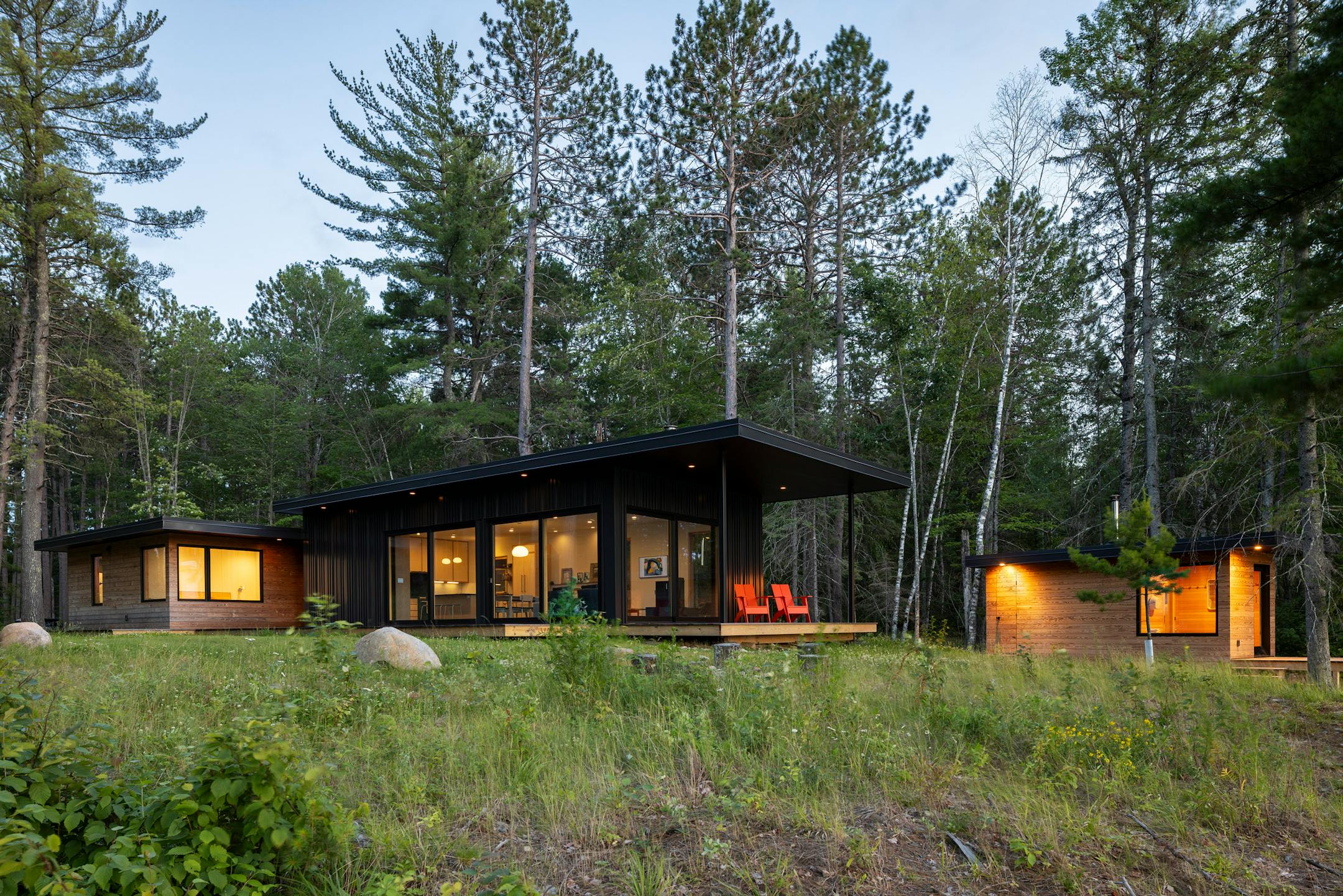
The architectural concept of compression and release inspired the October Home of the Month winner, an Iron Range cabin north of Duluth. (Troy Thies Photography)

A lot of intention went into the Whiteface Reservoir cabin that earned a 2025-26 American Institute of Architects (AIA) Minnesota Star Tribune Home of the Month honor.

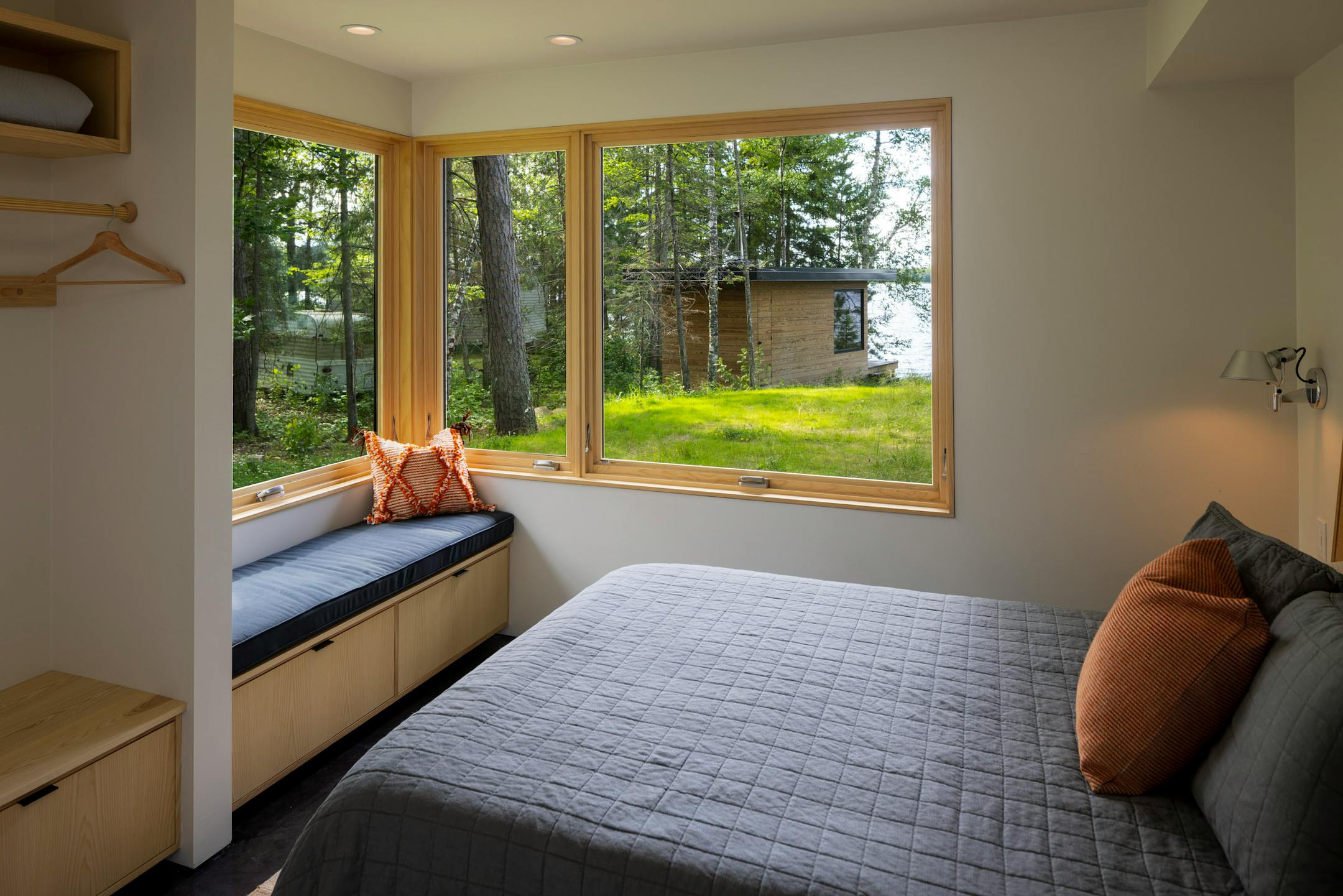
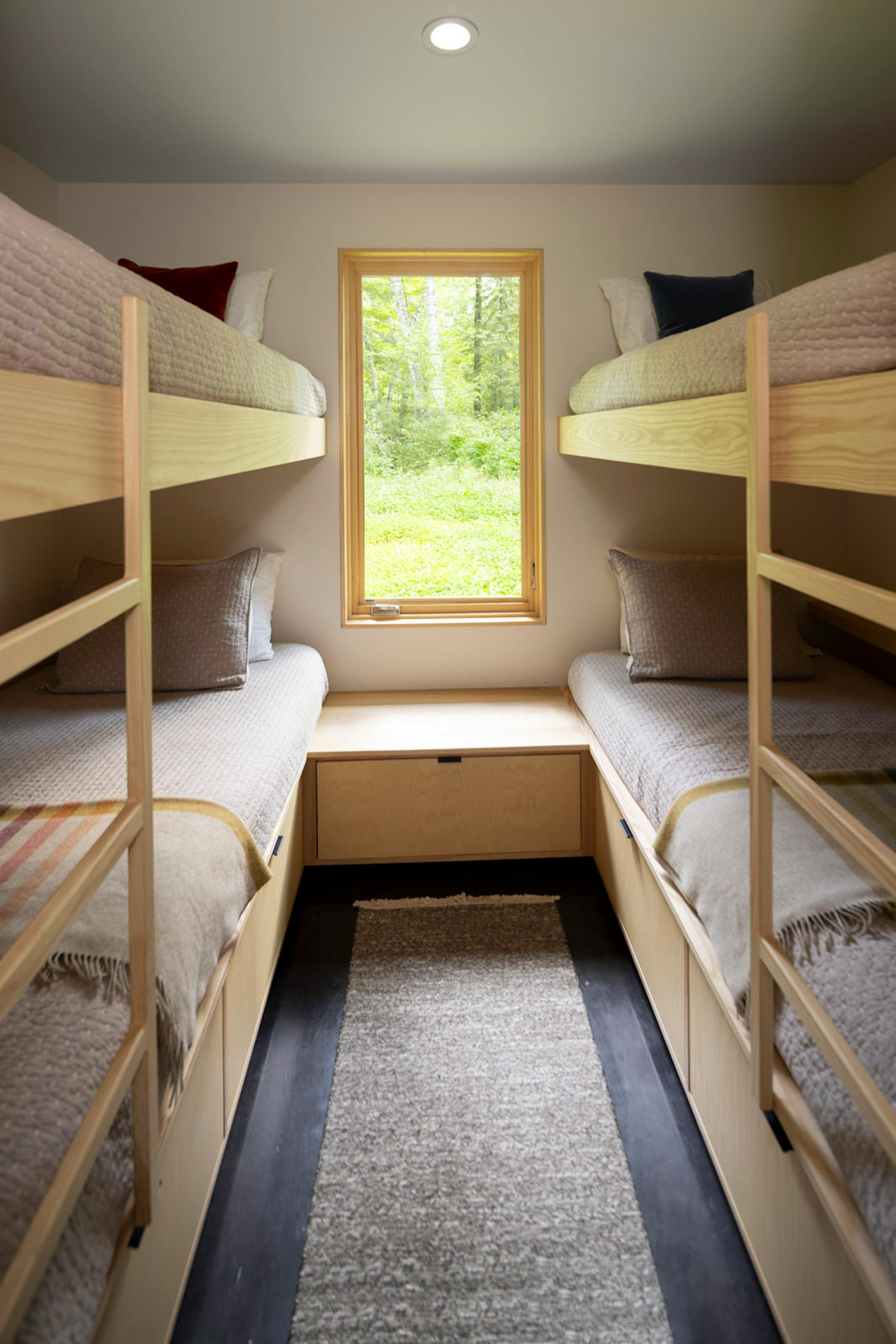
At first glance, the house, which is about an hour’s drive north of Duluth, seems like a simple setup with two bedrooms, a bunkroom, one-and-a-half baths and an open gathering space.

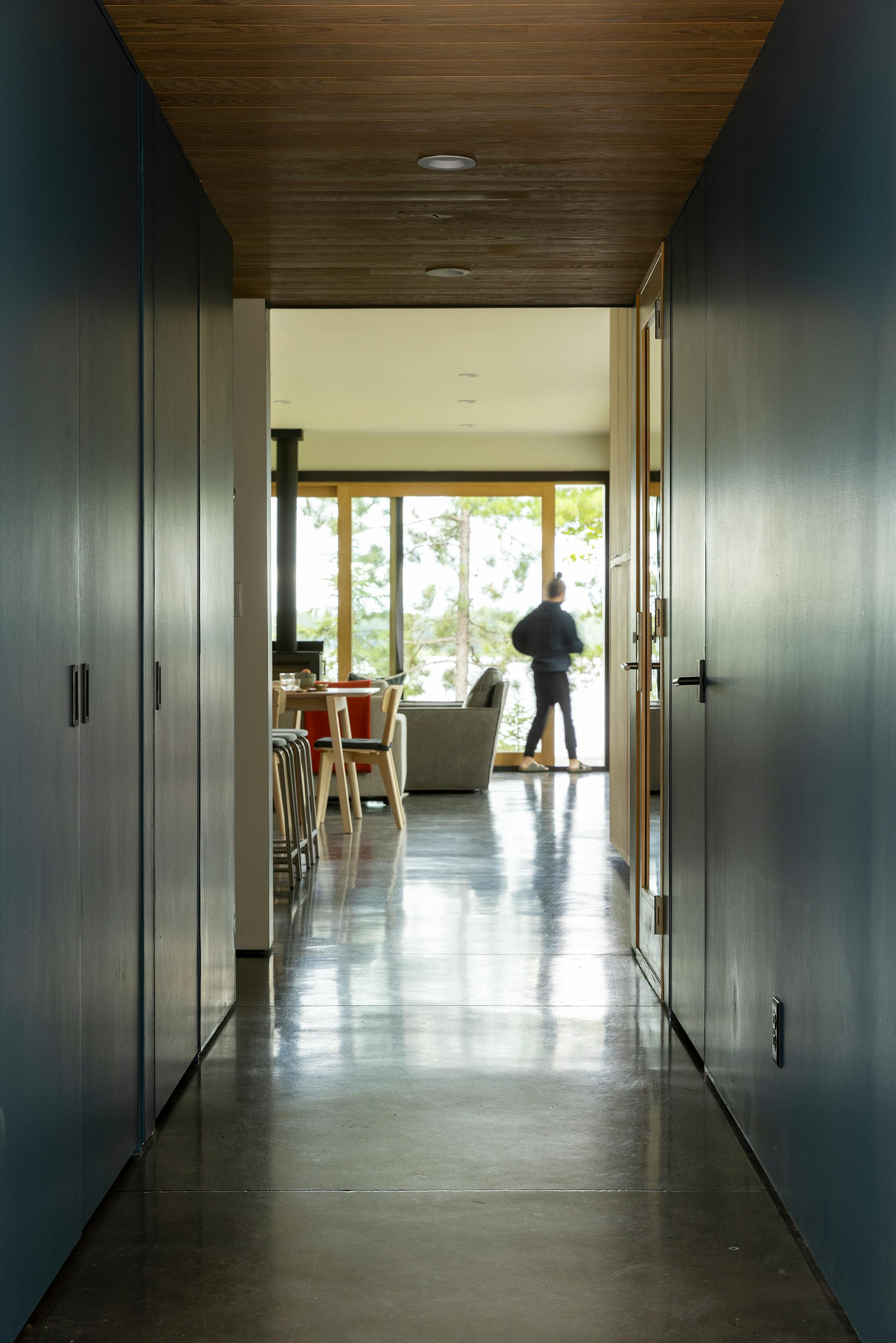
But the way the house flows and feels reflects a bigger idea, the architectural concept of compression and release. Famed architect Frank Lloyd Wright popularized the idea of using smaller, more confined spaces to increase the drama and “wow” factor of larger rooms — for example, a low-ceilinged passageway that leads into a vaulted living room.

Owner and architecture fan Ash Mishra connected Wright’s concept with Minnesota cabin culture.
The October Home of the Month winner, an Iron Range cabin north of Duluth, is a relatively compact 1,600 square feet. (Troy Thies Photography)

“There’s so much anticipation. The drive, your first glimpse of the cabin and then the lake,” Mishra said. “We wanted to intensify the experience.”

Mishra and his wife, Kristin Mishra, know the feeling well. They’ve been coming to this peninsula for 32 years, first as a couple and then with their two sons. For Kristin Mishra, it’s even longer, as her parents have a place down the road, and her brother and niece have homes nearby, too.

Even though Ash Mishra didn’t have the up north experience growing up in India, it still feels familiar.

“The cabin is a place where extended family members are relaxed, on equal footing and let their guard down,” he said. “That’s how families gather in India, too. Very casually.”
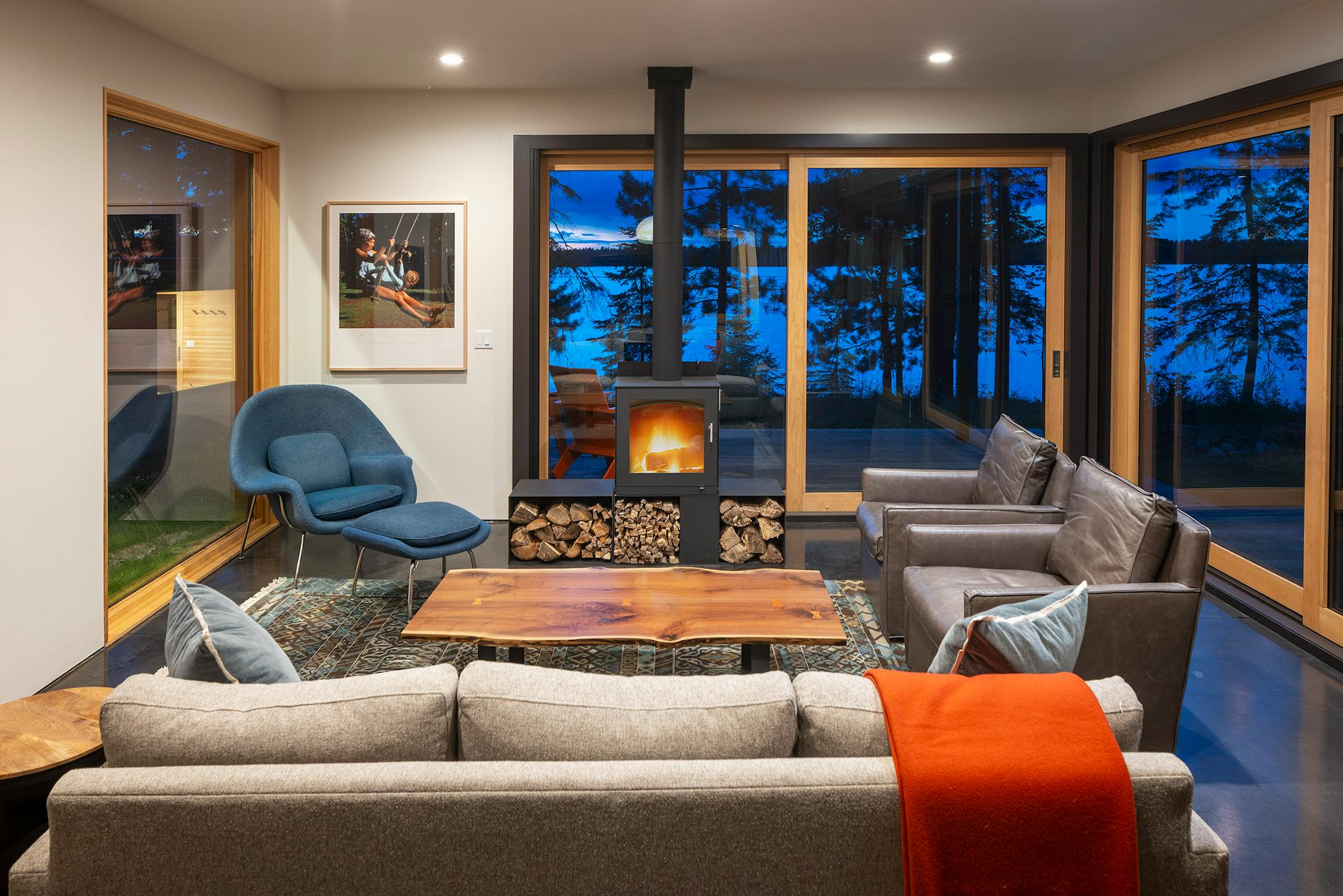
“The cabin is a place where extended family members are relaxed, on equal footing and let their guard down,” said homeowner Ash Mishra. (Troy Thies Photography)

When this property came on the market in 2019, the couple couldn’t resist. The lot was close to family and private, adjacent to 10 acres of Superior National Forest.

The Mishras had a pretty good idea of what they wanted for their new cabin. And Kristin Mishra was happy to let her spouse take the lead, provided the cabin fit in with the modest neighboring houses.

“I didn’t want it to stick out,” she said.

Architect Meghan Kell took the couple’s wishes to heart, designing a single-story, T-shape house set on a slab foundation. That left the underlying bedrock undisturbed.

The heart of the cabin, the vertical part of the T, is where cooking, eating, gathering and connecting with the lake happen. (Troy Thies Photography)

“From the road, it looks like an unassuming box,” Kell said.

The cabin begins to unfold once inside the front door, which aligns with a dark hall that reveals a glimpse of the lake, framing the view much like a camera lens.

At the end of the hallway is the “aha” moment. The heart of the cabin, the vertical part of the T, is where cooking, eating, gathering and connecting with the lake happen. Three sets of 12-foot-wide sliding glass doors create a palpable indoor-outdoor experience.

Deep overhangs and wood decks make it seem as though the house is reaching into and embracing the landscape, while still blending with the surroundings.

There’s plenty of breathing space around the cabin -- room for trees, grasses or a tent, (Troy Thies Photography)

“In this setting, the glass acts as camouflage because it reflects the trees,” Kell said.

In the same way, dark vertical siding in variable widths mimics the different ages and sizes of the property’s trees.

And because the house is a relatively compact 1,600 square feet, there’s plenty of breathing space around it. Room for trees, grasses or a tent, when overnight guests exceed the cabin’s sleeping quarters.

“We weren’t trying to conquer the land,” Ash Mishra said.

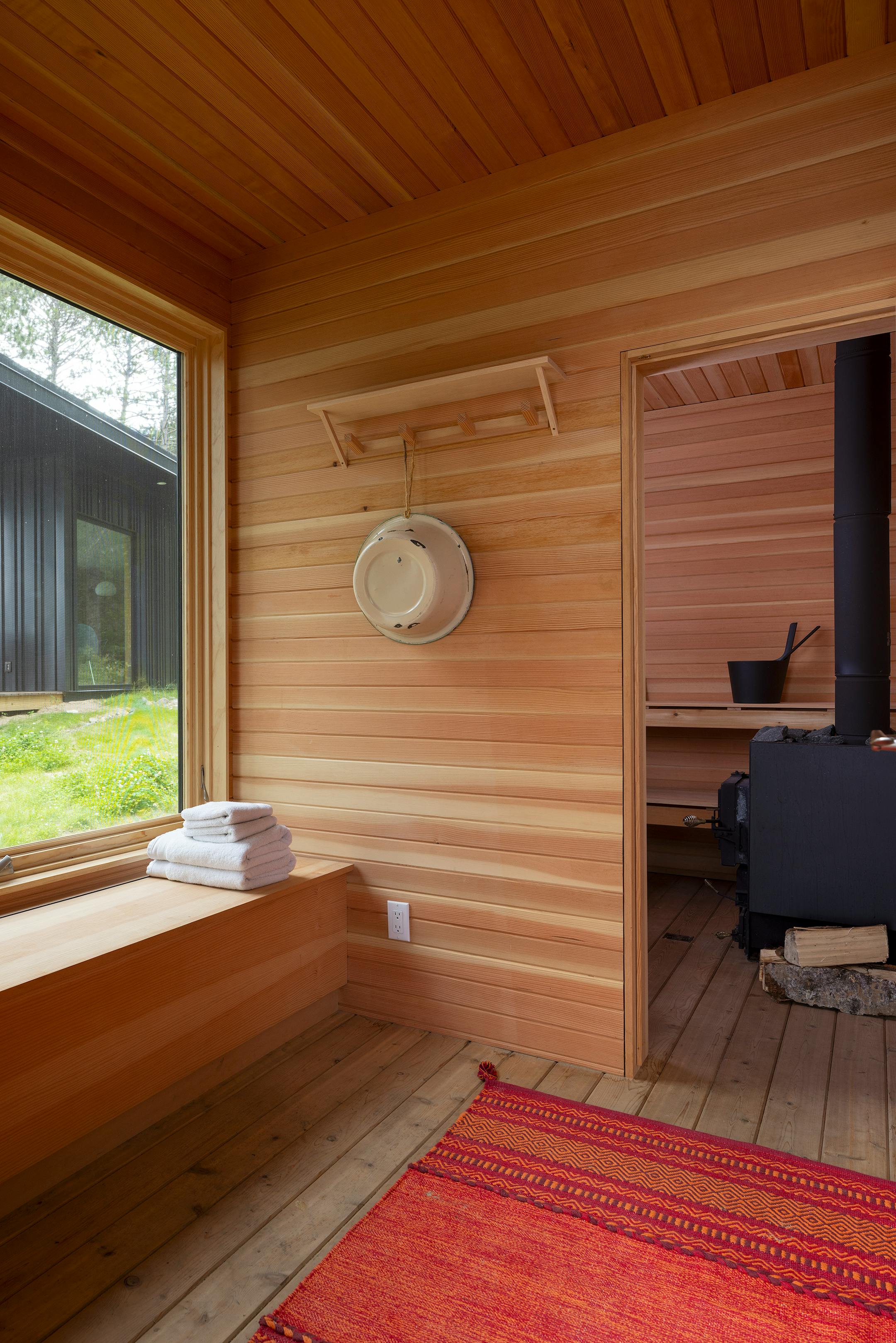
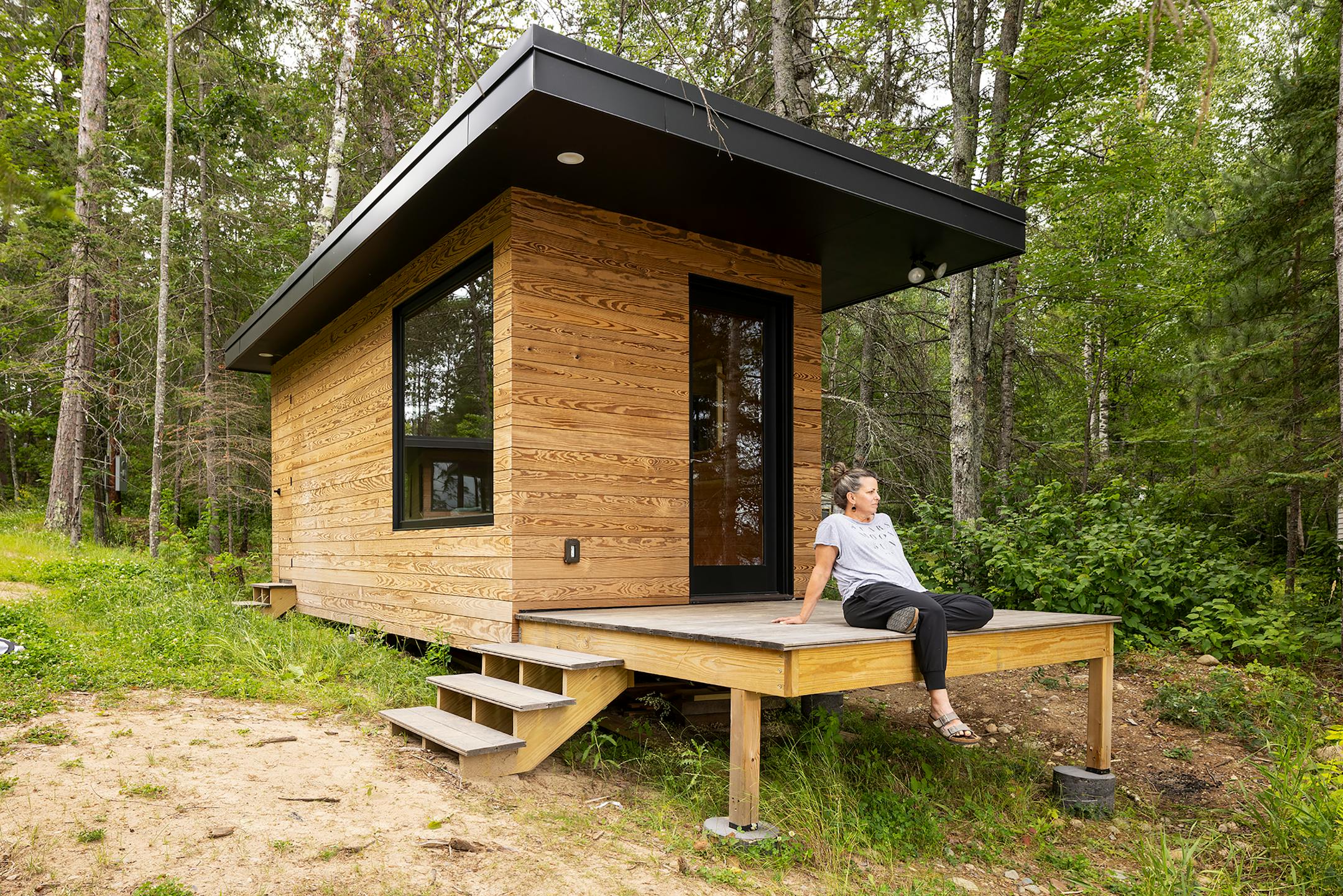
A sauna closer to the lake is a tiny version of the cabin, with a covered deck for cooling off and reflection.

The cabin has two bedrooms, a bunkroom, one-and-a-half baths and an open gathering space. (Troy Thies Photography)

Wood-burning stoves provide heat and fragrance in both buildings, and the stove in the cabin has an integrated bench that provides extra seating. The cabin has additional heat from radiant concrete floors with a wax finish that enhances the material’s color and variation.

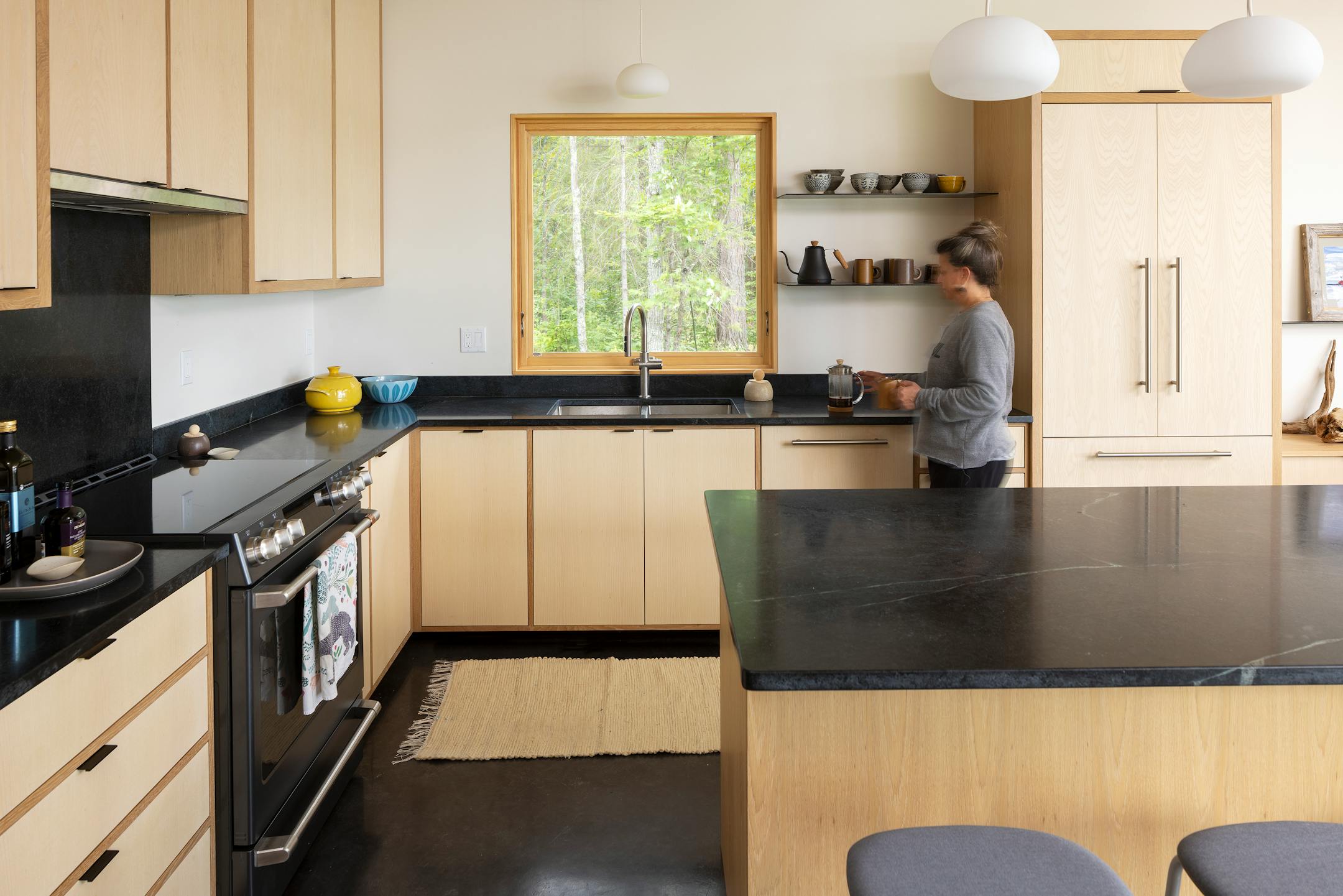
Other interior finishes lean spare and natural but not rustic. The windows are stained pine. The cabinets are ash with oak frames. Thin floating metal shelves in the kitchen are anchored behind the wall, eliminating the need for brackets. A long window in the dining room is the same height as the refrigerator, with a built-in storage cabinet as separation.

“Aligning these geometries creates peace without you knowing it,” Kell said, pointing out how a window also helps delineate the dining area within the open space. “That’s what this cabin is about.”

The sauna is a small structure closer to the lake. (Troy Thies Photography)

The Mishras’ sons are now in college, so these days, the couple often go to the cabin alone or with friends to cook, sauna or garden. So far, they’ve planted 10 quaking aspen trees on the road side of the cabin and tall grasses outside the sauna building. They’ve built a French drain from rocks collected on the property.

They’re also happy to sit by the fire and enjoy frequent sightings of deer, loons, eagles and more.

“Last winter, we saw a pack of eight wolves walking through heavy snowpack across the lake,” Kristin Mishra said.

Ash Mishra described each arrival as a transformation.

“You’ve got your groceries and your stuff, which you shed as you enter and walk down the hallway to a feeling of release, of physical and mental clarity,” he said. “It’s cleansing.”

The sauna is a tiny version of the cabin, with a covered deck for cooling off and reflection. (Troy Thies Photography)

About this project

Designing firm: Kell Architects

Project team: Meghan Kell, AIA: Dan Wallace, AIA

Project partners: Rod & Sons Carpentry, Holl Studio

Photos: Troy Thies

Laurie Fontaine Junker is a Twin Cities-based writer specializing in home design and architecture. Instagram: @fojunk

about the writer

about the writer

Laurie Fontaine Junker

More from Home Gazing

See More
card image
Provided by AGNT Media

A former Cold War-era missile launch site is among three Minnesota listings with their own “safe rooms.”

card image
card image