
Number of farms shrinks in state

A USDA census finds that there were 74,542 Minnesota farms as of 2012, with an average of 349 acres.

May 3, 2014 at 1:42AM
Wisconsin has become the organic farming capital of the Midwest -- and by some measures, the United States. It claims the second-highest number of organic farms in the country, after only California, and it's No. 1 in organic dairy farming. Brothers Jim and Alan Ideker, moved to Wisconsin from Minnesota to start an organic dairy farm. They sell through Organic Valley and have worked closely with other Organic Valley farmers in the area to get going. Alan Ideker got ready to haul some feed from s
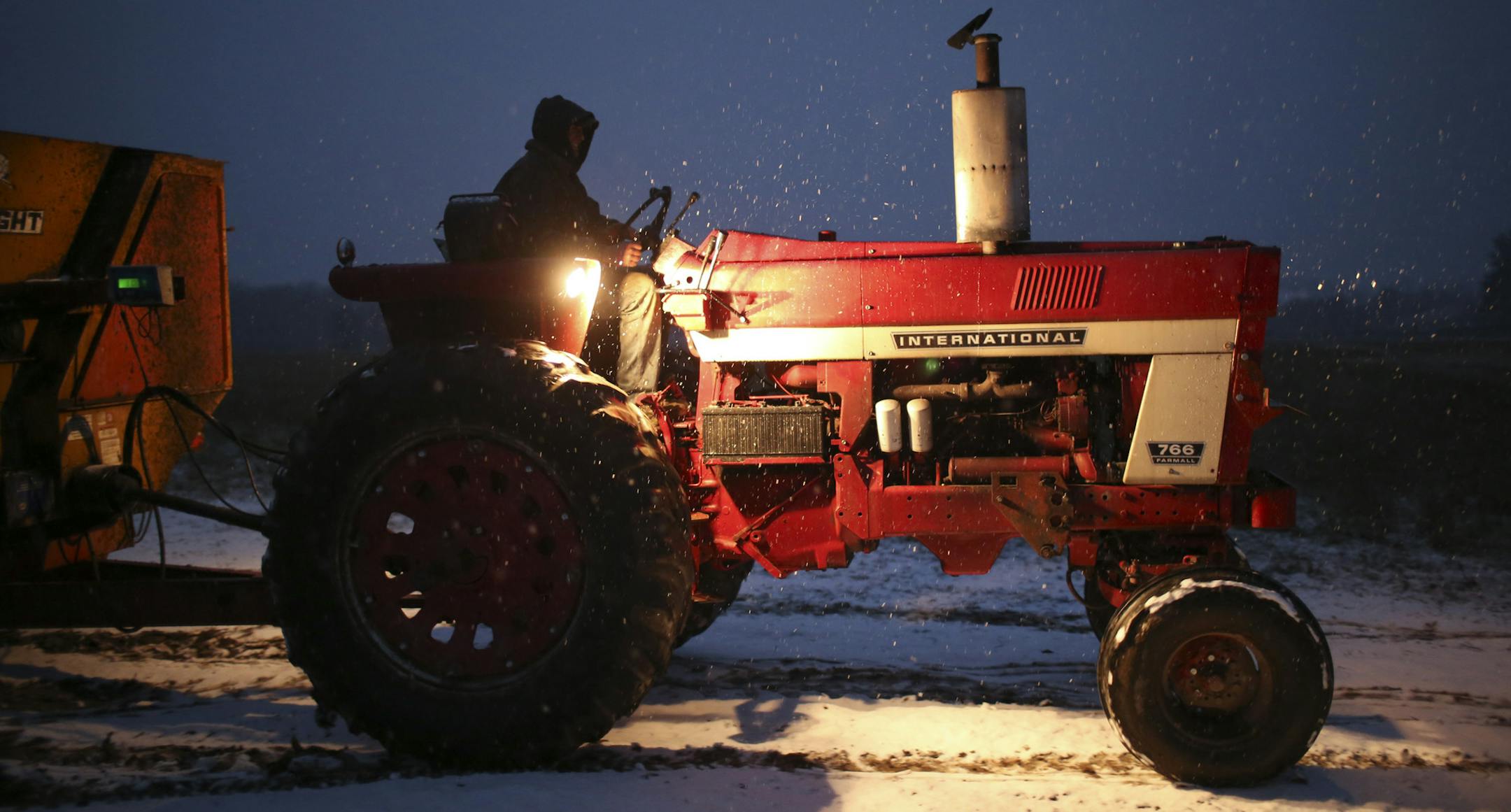
Brothers Jim and Alan Ideker, moved to Wisconsin from Minnesota to start an organic dairy farm. The number of Minnesota farms fell by 8 percent between 2007 and 2012, the U.S. Department of Agriculture said. (The Minnesota Star Tribune)

The number of Minnesota farms fell by 8 percent between 2007 and 2012, but the amount of cropland ­harvested here rose nicely and the value of the state's crops soared.

The first statistic is a symptom partly of growing farm size. The last two developments are testimony to an agricultural renaissance fueled by high commodity prices.

"It's fair to say the agricultural industry in Minnesota is still strong," said Dan Lofthus, state statistician for the U.S. Department of Agriculture.

The USDA released the final ­version of its 2012 Census of Agriculture on Friday.

Minnesota had 74,542 farms in 2012, with an average farm size of 349 acres, up from 332 acres in 2007. The USDA considers the largest farms to be those of 2,000 acres or more. From 2007 to 2012, those farms were the only ones that grew in number in Minnesota: up 13.6 percent to 2,185.

While there were fewer farms in 2012, they were reaping more acres. Harvested cropland rose 3 percent over the five-year period. As prices for corn and soybeans rose, farmers had more incentive to plant more.

That led to happy economic news. The market value of Minnesota crops rose 61 percent from 2007 to 2012, while total production expenses rose 50 percent. The result was an increase in net farm cash income that ­averaged $94,345 per farm.

By acreage, Minnesota's top farm regions are a cluster of counties in the northwest; Stearns County in the state's center; and the adjacent counties of Renville and Redwood in the southwest.

Polk County in the northwest, which is big in soybeans, wheat and beets, is Minnesota's largest county when measured by farmland with 1.1 million acres. Stearns County, which has a multiplicity of crops and is the state's milk cow leader, is the largest by number with 3,501 farms.

Polk only ranked 8th in the number of farms, but the county skewed toward large operations. Todd County in central Minnesota is a hub of smaller operations, ranking fourth in number of farms, but only 23rd in farmland.

Mike Hughlett • 612-673-7003

about the writer

about the writer

Mike Hughlett

Reporter

Mike Hughlett covers energy and other topics for the Minnesota Star Tribune, where he has worked since 2010. Before that he was a reporter at newspapers in Chicago, St. Paul, New Orleans and Duluth.

See Moreicon

More from Business

See More
card image
Jeff Wheeler/The Minnesota Star Tribune

The Minnesota medtech giant plans to appeal the verdict. A California jury ruled that Medtronic’s bundling practices created unfair competition.

card image
card image