

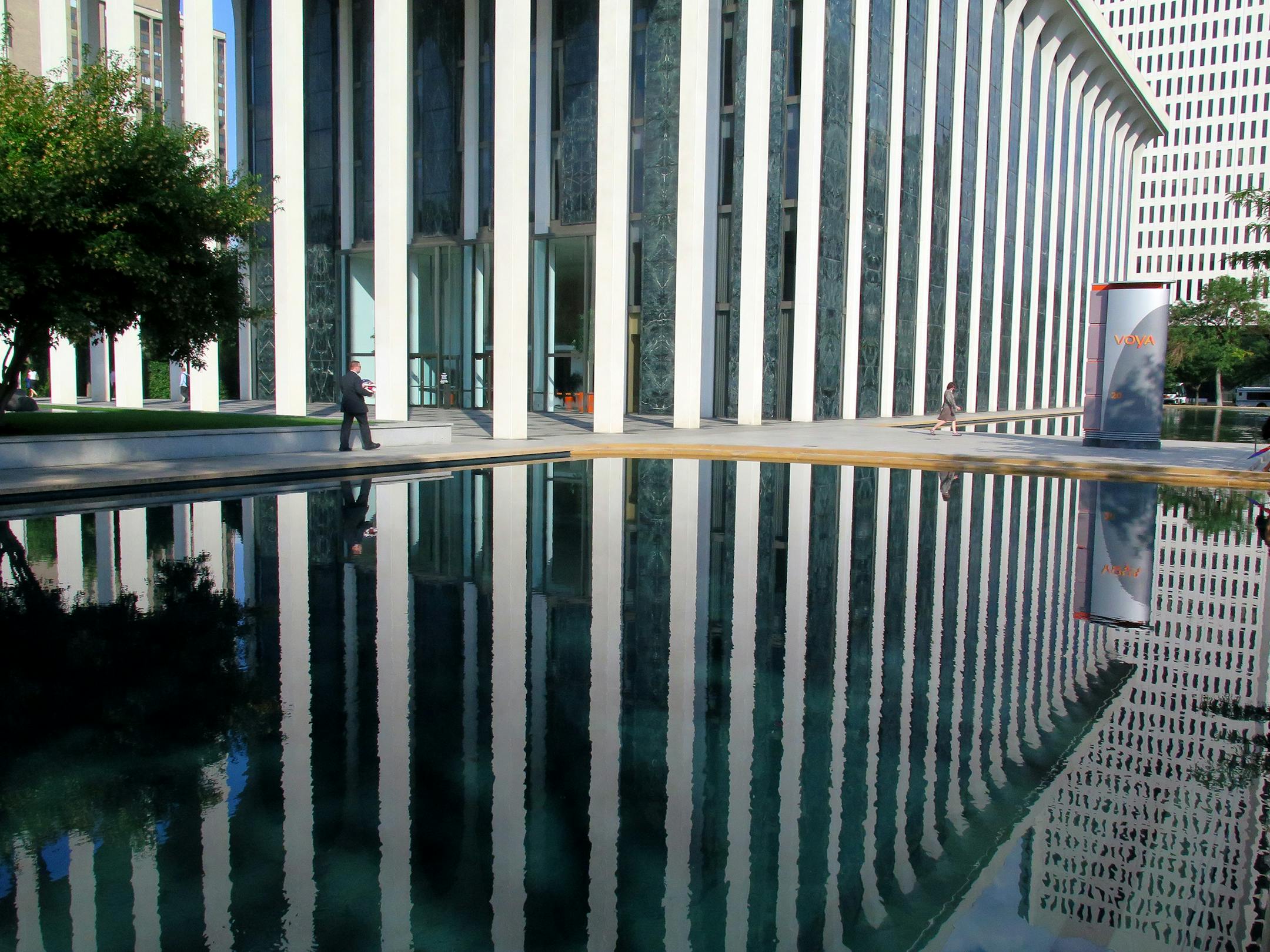
A distinctive downtown Minneapolis office building that anchors the north end of Nicollet Mall sold this month to a local developer with plans to repurpose it.
The property at 20 Washington Av. S., recognizable for its white-columned portico and verde-antique-paneled exterior, opened in 1965 as the Northwestern National Life Building. It’s the work of renowned architect Minoru Yamasaki, who also designed the World Trade Center’s twin towers in New York City.
Chad Tepley, founder and president of Minneapolis-based CDT Realty, announced his firm’s purchase of the building Friday. He declined to say how the property will be reused as his team continues to explore options. People familiar with the deal said the building is being eyed as a potential hotel.
“It’s really critical that we develop it in a way that includes the public and brings people — hopefully it’s visitors from out of state, out of the country — to the local community to finally enjoy pieces of this building in a different way," Tepley said. “The profile of the building, the history of it and certainly what I believed it can be transformed into are just thrilling.”
Such a project could incorporate several city boosters’ downtown revitalization strategies and ambitions. Converting the property — which has been vacant since Voya Financial moved across the street to the Marq in 2023 — would reduce downtown Minneapolis’ glut of vacant office space by 182,000 square feet. It would also bring more around-the-clock foot traffic to the key intersection of Washington and Hennepin avenues and Nicollet Mall.
“It really is a bit of a crossroads for downtown,” said Adam Duininck, president and chief executive of the Minneapolis Downtown Council. “I’m excited about their vision for the property, which is a very cool use for the space and a very proactive interest in how it connects with the other downtown neighborhoods and other planned developments for the riverfront.”
Tepley did not disclose the price of the property, though he did note declining office values are a major reason why today’s buyers are able to pursue costly conversion projects. The building’s estimated value was $4 million in the city’s most recent assessments.
He plans to seek historic tax credits for the project, which first means getting the property on the historic register. Part of the reason Tepley was so drawn to building was his desire to preserve its character — and protect it from demolition, he said.


