

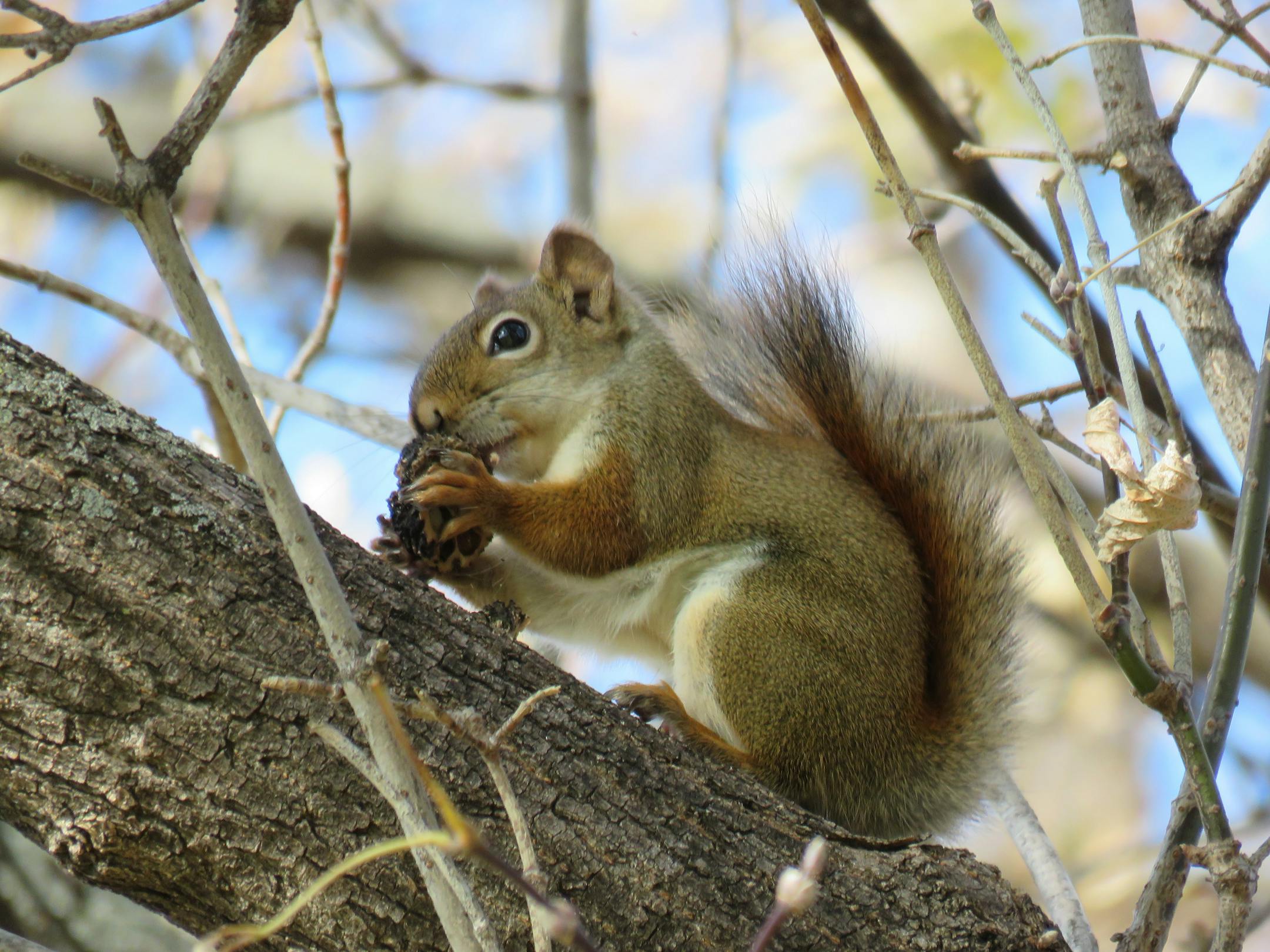
If New Year’s resolutions include spending more time outdoors, keep your eyes and ears open for red squirrels. They’re sporting their brightest, thickest fur this time of year and ready to pitch a fit and thrash their tails if anyone is getting too close to their vital winter food cache.
Blane Klemek, regional wildlife manager for the northwest region of the Minnesota Department of Natural Resources, remembers once having to abandon an outdoor lunch spot because of a red squirrel’s incessant scolding.
“I couldn’t take it anymore,” he said with a laugh. “But I do find that endearing about them. It’s their home, and they defend their territories.”
While larger gray squirrels tend to have stashes of food throughout a wide area, red squirrels love spruce, pine and fir cones and tend to pile up a winter food cache in a single location called a midden.
Because red squirrels rarely grow more than 14 inches long and clock in at under a pound, they resort to pure feist when defending middens from food raiders such fellow squirrels, deer and other critters.
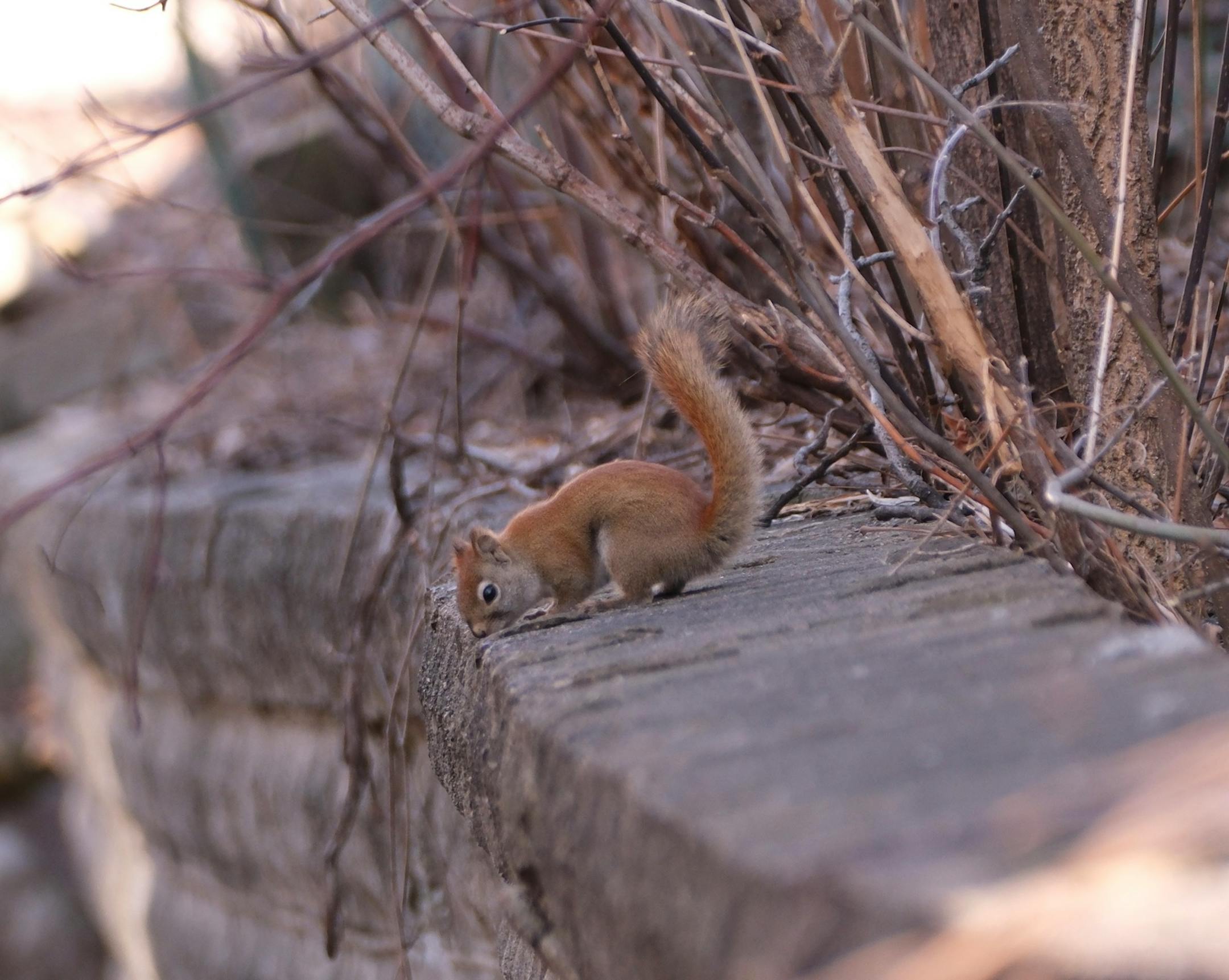
An advantage of their size is they’re less of a target for human hunters, who prefer larger gray and fox squirrels for meat. The DNR doesn’t have counts to estimate squirrel populations, but red squirrels do well across most of the state. They can adapt to any forest and usually favor coniferous trees.
Red squirrel’s speed, hypervigilance and agility help them evade predators such as weasels, pine martens, raptors and fishers. For protection and warmth, they burrow into nests in the cavities of trees, hollow logs, or even in birdhouses or dwellings they’ve managed to invade.
By February, red squirrels will be chasing one another as mating season begins. Litters are born in the spring when food such as flowers, mushrooms, tubers and bird eggs can replace the dwindling food they defended all winter.


