
$1 billion aerospace testing facility coming to Rosemount, with some controversy

North Wind’s plan to build an “unmatched” hypersonic-wind testing lab has drawn protests by U students objecting to the company’s close military ties.

The Minnesota Star Tribune
November 5, 2025 at 12:00PM
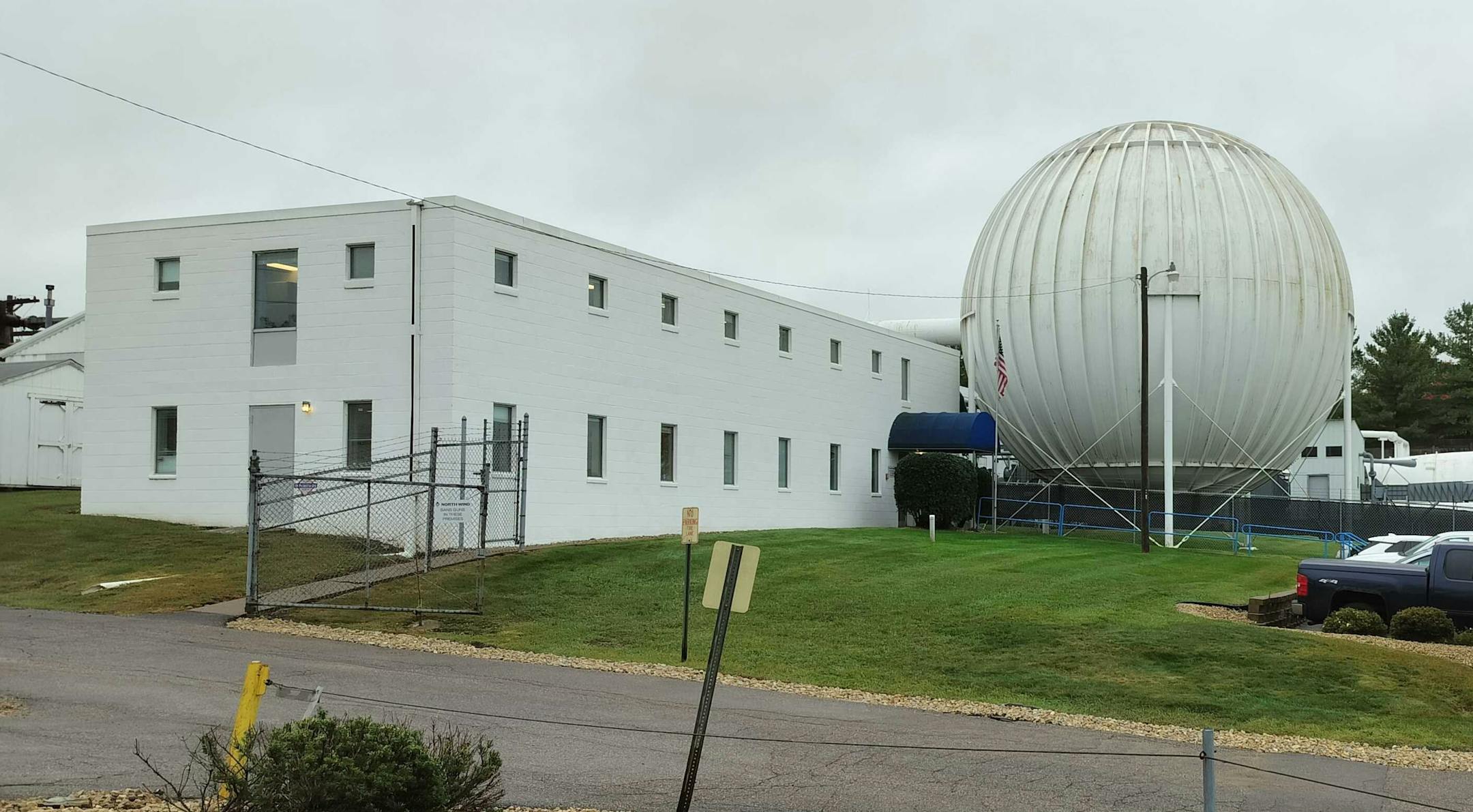
Aerospace company North Wind’s Plymouth facility. North Wind will build its Minnesota Aerospace Complex on 60 acres purchased from the University of Minnesota, which will partner with St. Paul-based North Wind on the hypersonic-testing facility. (Erin Adler/The Minnesota Star Tribune)

Construction will soon be underway on a controversial $1 billion aerospace project in Rosemount that will feature wind tunnels to test how aviation and space vehicles perform while traveling at the speed of sound — and far faster.

The Minnesota Aerospace Complex (MAC) is already prompting both excitement and outcry because of its links to the U.S. Department of Defense and how the technology it will help develop could be used.

Aerospace company North Wind will build the complex on 60 acres purchased from the University of Minnesota, which will partner with the St. Paul-based company and have space on-site where U students can work and learn.

Students for a Democratic Society, a U student group, protested the land sale outside a June Board of Regents meeting because North Wind was working with the military, and they believed the facility would design or test missiles. Four regents’ homes were vandalized over it; the group denied involvement.

North Wind received a $50 million forgivable loan from the state two weeks ago; the project’s funding also includes a $99 million U.S. Army contract and an $85 million investment from the company.

The 250,000-square-foot aerospace hub dedicated to hypersonic testing will be built in phases. When complete in 2030 or ’31, its three wind tunnels will blow streams of air at high speed ― “hypersonic” means five times faster than the speed of sound, or a mile per second ― at stationary items like engines, model planes or different materials to determine how they will react when in flight.

North Wind officials say it will be “unmatched by any other aerospace testing site in the nation.”

“This country has not built a brand new, state-of-the-art [wind] tunnel in 50 years,” said Artie Mabbett, North Wind’s CEO. “We’re just now moving into this ... revitalization of our national test infrastructure.”

Purpose of hypersonics questioned

More recently, concerns have emerged about the facility’s broader purpose.

“The real focus of the aerospace complex is looking at dual-use technologies,” Mabbett said during a tour of North Wind’s Plymouth facility in October. “It’s technologies that might have a specific aerospace purpose that then can be applied to a number of other areas.”

In Plymouth, Mabbett pointed out an engine sitting in front of a wind tunnel machine, later explaining that the company’s engine testing could apply to “everything from military aircraft to commercial aviation.”

Materials that can withstand high temperatures, which the complex will test, also have many uses, he said.

He said there wouldn’t be “any weapons systems produced here [in Plymouth] or at the MAC,” but added they would test for “various things that support national security.” How their customers use the technologies North Wind tests is up to them, he said.

But emails from U officials obtained by the Minnesota Daily and referenced in a recent article call those uses into question. In emails obtained by the campus news site, Andrew Alleyne, dean of the U’s College of Science and Engineering, said in April 2024 that “Unfortunately, there really is no dual use for hypersonics.”

“We can try to pull the wool over someone’s eyes, but I’d not be super comfortable with that,” he said.

Alleyne and Shashank Priya, the U’s vice president for research and innovation, were discussing how to present hypersonics in a U budget request to the state for a project that would later become the MAC. Priya wanted to include potential civilian and commercial uses.

Alleyne added that some digital tools related to hypersonics could have non-military uses.

But Mabbett said he believed there was miscommunication in those emails and that “the way it was stated was factually incorrect,” because hypersonic systems have many applications.

“In order for [any] space shuttle to even exist, we had to do research on hypersonics,” he said.

In North Wind’s contract with the Army, the second mention of “hypersonics” references developing hypersonic weapons. “Counter-hypersonic systems,” which intercept and neutralize missiles, were mentioned next.

Mabbett said the language is general and is included at the top of many other government contracts.

Students for a Democratic Society did not return calls for comment.

Working with NASA, SpaceX

The project’s preliminary and final plats were approved by Rosemount’s City Council in February. The complex, which is near a Meta data center, required rezoning from agricultural.

Final site and building plans and their development agreements still need approval, said Adam Kienberger, Rosemount’s community development director.

“Rosemount supports new industry investment, jobs and tax base created from land previously tax exempt under U of M ownership,” he said when asked for the city’s thoughts on the complex.

It will create 40 new North Wind positions, Mabbett said, plus hundreds of temporary construction jobs. Later, other companies and their workers may also work at the complex.

In January, a Rosemount planning commission member said they were excited to see collaboration on the land’s clean-up, meeting minutes said. The property, sold by the U to North Wind for $8 million, was part of UMore Park, a polluted expanse where smokeless gunpowder was made during WWII.

North Wind hired a local contractor to remediate the soil before they break ground, Mabbett said.

The U “is at the forefront of the research and development of next-generation simulation methods to advance the field of hypersonic flight,” and the U’s role in the complex is “academic and research driven,” according to a U statement.

North Wind and U officials are still working out details of the collaboration, said Graham Candler, a U professor of aerospace engineering and mechanics who studies aerodynamics and high-temperature gas dynamics.

Candler’s research involves modeling and simulating how aircraft and spacecraft will act in flight conditions. He tries to forecast things like pressure distribution, lift and drag, and how quickly a vehicle will heat up.

“I write computer code to solve the governing equations to describe [air] flow over some high-speed object,” he said. “Then we predict what happens.”

He’s working with NASA to predict heating on the heat shield for Artemis, NASA’s moon-exploration vehicle. His computer codes are used for SpaceX capsules, too.

Having good data from wind tunnel tests will help him understand where his predictions are working and where they’re wrong, he said. Each test is costly; if he and his students can make them better, that saves money.

His MAC work will likely be the most important of his career, he said.

While only “very early concepts” will be tested there, he acknowledged that someone else could use the technology for weapons. But hypersonic missiles can also be used to “shoot down missiles that are shot at us,” he said, and without “a credible deterrent,” the U.S. is vulnerable.

There are “absolutely” multiple uses for hypersonics, he said, and we don’t know yet exactly how any new technology will be used.

“I don’t work on weapons,” he said, adding that his whiteboard is filled with equations. “That’s not what we do.”

about the writer

about the writer

Erin Adler

Reporter

Erin Adler is a news reporter covering higher education in Minnesota. She previously covered south metro suburban news, K-12 education and Carver County for the Minnesota Star Tribune.

See Moreicon

More from News & Politics

See More
card image
Richard Tsong-Taatarii/The Minnesota Star Tribune

Democrats argue they can win big in the 2026 midterms if the party focuses on affordability and fighting Trump’s agenda.

card image
card image