

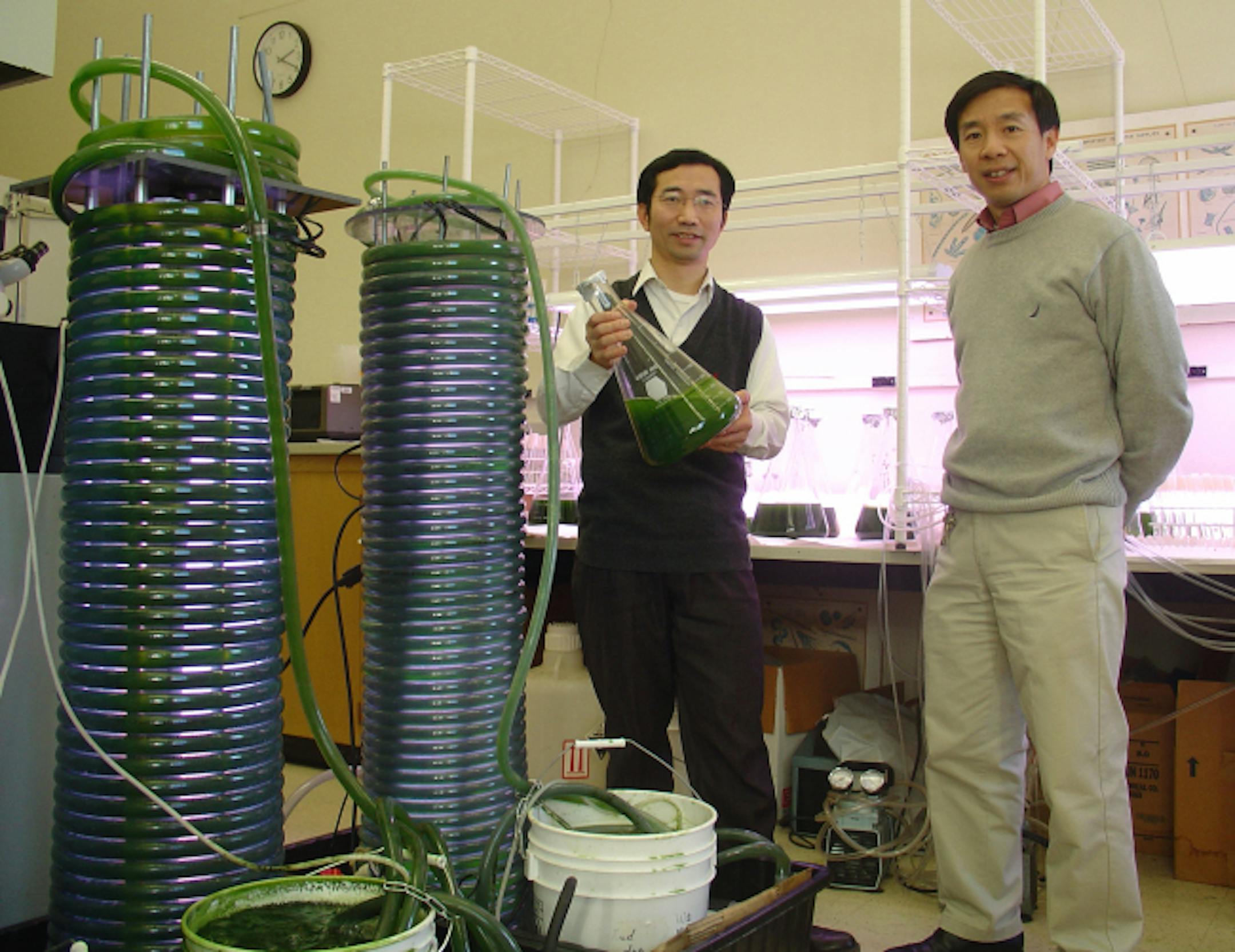
That floating green stuff atop the neighborhood swamp may not just be "pond scum" anymore.
In fact, it could be the key building block of a new fuel that potentially could help quench the country's thirst for imported oil, according to preliminary research at the University of Minnesota.
"The success of this technology is extremely significant, since algae could completely replace our petroleum fuel use and improve our environment simultaneously," said Roger Ruan, a U researcher.
After several years of laboratory experiments, Ruan is about to begin a pilot project using wastewater from a sewage treatment plant south of St. Paul on the Mississippi River.
"Harvesting algae for the cosmetics and pharmaceutical industry is already done," Ruan said.
This morning, Xcel Energy Inc., in cooperation with the university and the Metropolitan Council, will announce a $150,000 grant toward Ruan's algae-to-biofuels research. The Minneapolis-based utility, the nation's leading supplier of wind-generated electricity, has invested $4.5 million toward algae and other alternative energy work through the university's Initiative for Renwable Energy and the Environment (IREE).
Ruan estimates that it costs him about $20 to produce a gallon of oil-equivalent product now. But he expects costs to drop markedly as he expands to field testing.
The study will start small, using about 200 gallons of wastewater daily to grow and harvest algae, out of about 250 million gallons of wastewater that flows to the plant for processing daily. Ruan, fellow researcher Paul Chen and scientists at the sewage treatment plant see potential for cultivating "vast amounts" of energy-producing algae using increasing amounts of effluent.


