

my job
By Laura French • jobslink@startribune.com
At 23, Dallas Hansen was "ready to die". At 24, "I got a DUI. I spent a week in a psych ward. I decided to change my life."
Hansen went through treatment at Hazelden, where a counselor in a group session asked what made him different from anybody else in the room. "I couldn't give a good answer," Hansen said. "I am like everybody else that I was in treatment with. They all had something going on that made their life chaotic. I started to open up for the first time."
Since counseling was key to his own recovery, Hansen "saw that as an opportunity for myself." He got an Associate Degree in addiction counseling from Metropolitan Community and Technical College (MCTC) and followed that with a Bachelor's Degree in psychology from Metropolitan State University. While in school, he had two internships — one of which led to a job as a residential treatment counselor.
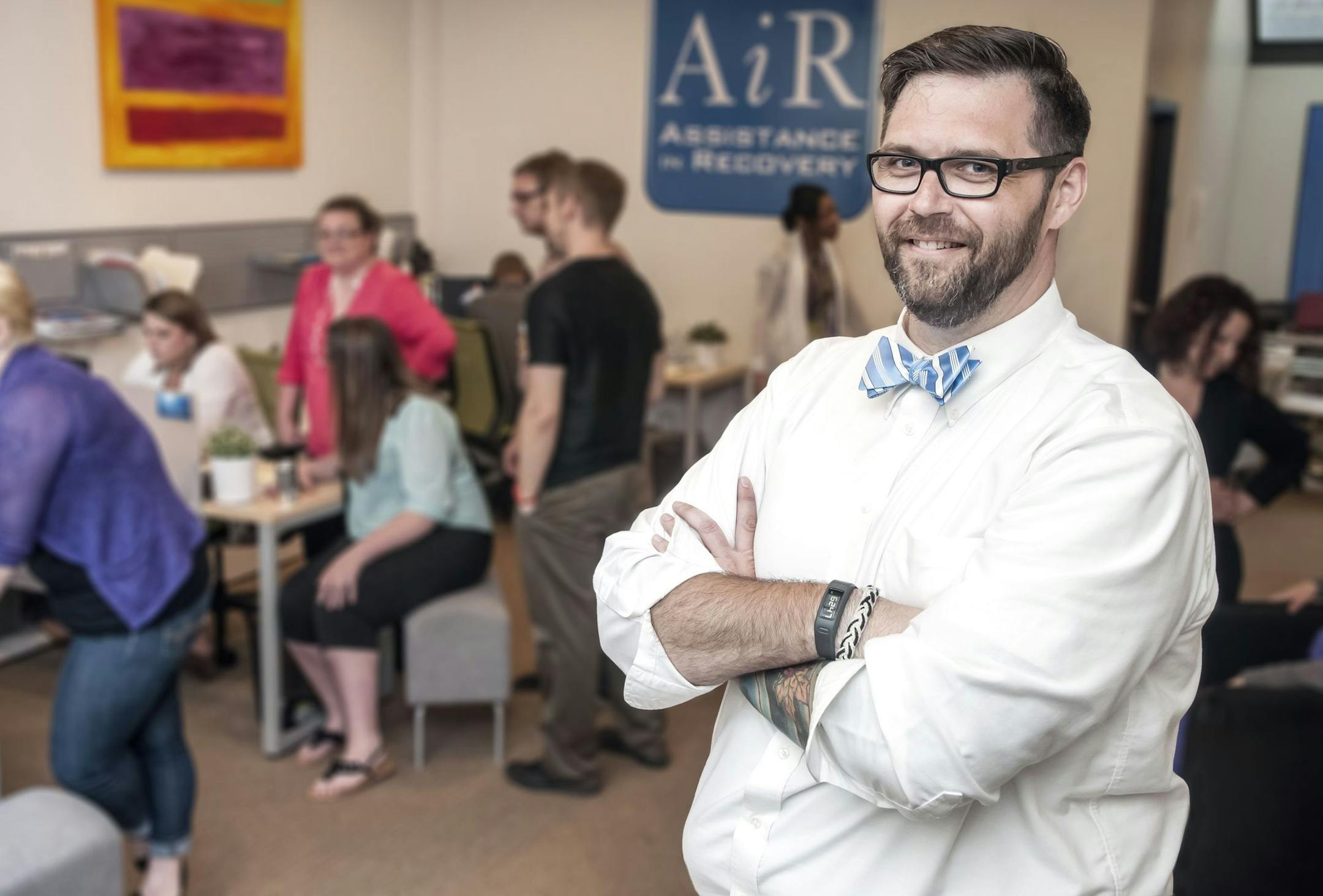
He started at AiR in September 2014. "We work with large treatment centers on the continuing care plan they create," Hansen said. "We do a lot of case management. I use my skills as a counselor, but our main job is to make sure they're seeing the therapist in their hometown. Our average call is around 20 minutes. We do a lot of e-mailing. We also do text messaging. Twenty-somethings don't like to get on the phone and talk."
He makes a first-time contact while clients are still in treatment, then provides weekly contact for six to eight weeks, followed by less frequent contacts for a full year. He also works with family members to help them find a therapist or support group.
Hansen said AiR's unique structure helps to prevent burnout.
"When I first got into counseling, I was told the average length of time before burnout is two to two-and-a-half years," he said. "We have people who will call us to tell us they've relapsed or they're feeling suicidal. A 20-minute conversation about making sure they're seeing their therapist is different from sitting down and doing the therapy with them."


