

Opinion editor’s note: Strib Voices publishes a mix of guest commentaries online and in print each day. To contribute, click here.
•••
Dear America,
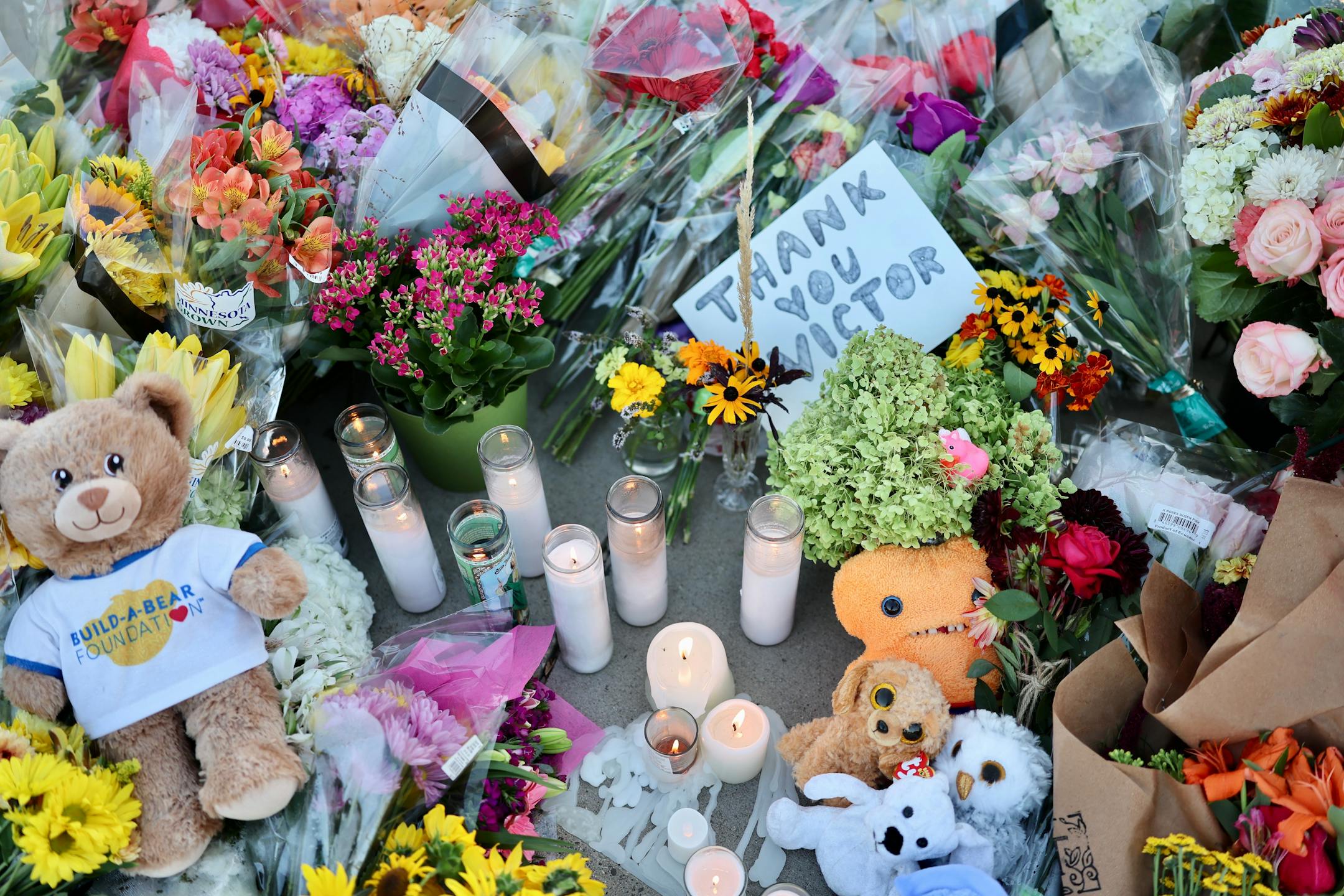
A few weeks ago, I met one of the most remarkable individuals I have ever had the pleasure of meeting. You may know him as Weston Halsne, the articulate 10-year-old child who described the Annunciation school shootings from his vantage point under a church pew. He described how his friend Victor lay over him to protect him. He described how his friends around him were shot, and how he escaped with only some “gunpowder” on his neck.
He showed up with his family to my pediatric ENT and facial plastic surgery clinic at Children’s Minnesota to evaluate a small nick in his neck that, although it initially bled, was orders of magnitude less than the violence his friends were dealing with, so he waited until the day after to pursue care. His pediatrician had ordered an X-ray to make sure nothing was in his neck. After identifying a small metallic object on X-ray, the pediatrician called my team and I got him the next available spot in my clinic. I spoke to the family about what happened and listened to this remarkable child recount his harrowing story.
We attempted to understand the trajectory of the bullet and what his options were for removal. Together, we reviewed the typical strategy for retained bullets in the neck, which often, if they are small enough and not causing any problems, is to simply let them be. The other option, of course, being to cut it out. We obtained a CT scan to identify exactly where this bullet fragment existed among the other vital structures of his neck. As I scrolled through his CT scan, I watched the trajectory of this bullet stop the moment it touched his carotid artery, the main blood vessel to his head and neck. I will remember that moment, sitting alone in my office as I realized the gravity of his situation, for the rest of my life. The bullet fragment made a straight line from his entry wound to the life blood of his neck and ran out of momentum immediately prior to injuring this critically important structure. I called his family and described this miracle to them. I also described that the surgery to remove this would require intricately pulling the bullet off the carotid artery without disrupting its flow, a location with life-threatening complications.
Weston described how this bullet fragment represented something that killed his friends and he wanted it gone. We discussed, with his family, how it was important to them, for their own grieving, to remove this evil from his neck. As a surgeon, it’s moments like this that make what I do worth it. Some families enjoy hearing all of the intricate surgical complexities that allow me to do what I do. However, today, my job was to make Weston’s life simpler. I made a promise to him the afternoon I met him to not let this bullet fragment be something that he would have to physically carry for the rest of his life. I didn’t want him to be reminded of that terrible day every time he undergoes an MRI and is asked if he has metal in him; if he plays sports and his neck starts to hurt spontaneously; or if he goes on a roller coaster and has doubt about whether this thing moved. This innocent child is already carrying the weight of the world on his shoulders as the news media’s appointed, yet unintended, face of this tragedy, immortalized by his viral description of that dreadful day.
A team of amazing individuals and I made Weston’s life simpler by successfully removing the bullet fragment from his carotid artery at the Children’s Minnesota Minneapolis hospital. I expect Weston to make a full recovery.


