
Opinion | For MPD, policing through federal siege is a no-win job

Minneapolis Community Safety Commissioner Toddrick Barnette on what best guides authorities and the population through this moment.

January 21, 2026 at 10:59AM
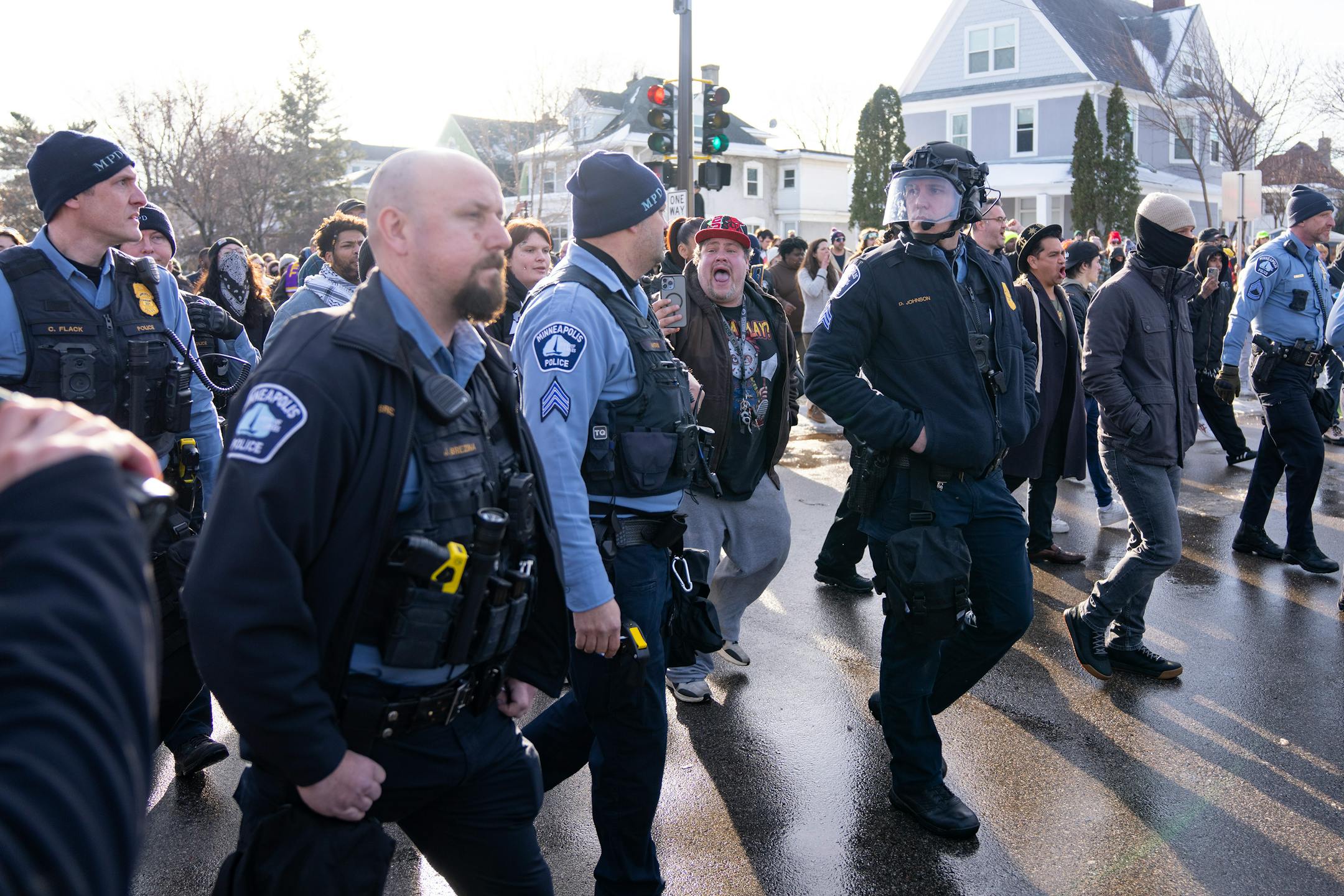
Community members and protestors yell at Minneapolis police officers as they begin to leave the scene where federal agents shot and killed Renee Good earlier on Jan. 7. (Alex Kormann/The Minnesota Star Tribune)

Opinion editor’s note: Strib Voices publishes a mix of guest commentaries online and in print each day. To contribute, click here.

•••

Thousands of masked and heavily armed federal agents have descended into our neighborhoods — without local consent, coordination or care for the destabilizing impact on every aspect of our lives. Agents are using intimidation and force — not just in pursuit of their targets, but against people who are lawfully present to observe, document and protest peacefully.

There is no doubt this federal presence is hurting public safety, not helping it. Everyone feels like a potential target simply for being in public spaces, whether exercising First Amendment rights or just dropping the kids off at school. The fear and trauma being inflicted on our city are impossible to fully quantify.

Given this volatile reality, it is understandable that residents are asking what Minneapolis police can — and will — do to protect people in the face of Immigration and Customs Enforcement’s aggressive operations.

The answer is complicated because this moment is unprecedented. More than 2,000 federal agents — operating under the assertion that they are beyond the reach of state or local law — are running roughshod in our streets. Outnumbered several times over, Minneapolis police officers are forced to make rapid decisions in fast-moving situations they did not create and do not control.

Before explaining how those decisions are made, it’s important to explain why this moment feels so familiar to many of us.

I was born in 1966 — an African American man coming of age while this nation was still struggling through the civil rights movement. My mother was born in 1945; my grandmother in 1925. Together, we have lived the history of America’s long arc through segregation, overcriminalization, mass incarceration and now the occupation of neighborhoods by paramilitary forces.

We can disagree about immigration policy. But we cannot look away from the brutal tactics being used to target and terrorize the people of our city.

History matters because we are watching it repeat itself. My mother and grandmother had a front-row seat during an era when peaceful protesters were labeled agitators, when dissent was framed as a threat to “law and order,” and when law enforcement tactics were too often designed not to protect constitutional rights, but to suppress them. The language of public safety has, at times, been used to justify fear, force and control.

Today, the operations of federal immigration agents increasingly resemble the tactics that scarred my grandmother’s and mother’s generations. History tells us something else as well: When government force is disproportionate and inhumane, it produces resistance — not compliance. And when resistance is met with escalation, violence becomes difficult to contain. That is how societies fracture.

Of course, the civil rights movement did not lack for urgency or anger. But it succeeded because it mastered restraint. It exposed injustice so clearly that those who escalated violence ultimately condemned themselves in the eyes of the nation.

That lesson guides how Minneapolis is navigating this moment.

Our city has clear policies — rooted in our separation ordinance — that govern police response to federal immigration enforcement. Minneapolis police do not participate in or assist federal immigration enforcement activities. Our officers cannot override a federal agent’s decision to arrest someone under federal law. But it is our job to protect life, prevent serious harm and preserve public order — on behalf of everyone and regardless of immigration status.

If a situation becomes life-threatening, involves actual or imminent violence, or involves destruction of property, Minneapolis police may respond to protect public safety. Any request for assistance from a federal agency is reviewed by a senior supervisor, and officers are deployed only if those thresholds are met. To be clear, when officers respond to reported assaults involving federal agents, it is not to aid in immigration enforcement, nor is it an endorsement — it is part of their job to prevent harm.

Officers also have a duty to intervene if they observe clearly excessive force, and we will document injuries or property damage caused by federal agents just as we would in any other case. All engagement decisions are reviewed at the command level or by the chief of police. In every instance, the goal is de-escalation.

What concerns me most is that the aggressive posture of federal agents is eroding trust in local policing and diverting attention from the everyday work of community safety. It is making an already difficult job harder — and our city less safe. Our officers are here to serve and protect their community. And contrary to the message being promoted by the president and his team, they do this job well: In the past five years, shooting victims are down 50%, homicides are down 30% and carjackings are down 61%.

The reckless and excessively violent conduct our community has experienced at the hands of federal immigration agents is unacceptable and must stop. We are pursuing every lawful avenue to end this incursion, including litigation challenging unconstitutional attacks on the basic welfare of our community. But we must do so through the rule of law — not through violence in our streets. Law enforcement agencies fighting one another would only deepen and prolong this crisis.

As we honor the Rev. Martin Luther King Jr. this week, his lesson is clear: Preventing civil unrest does not mean silence. It means responding with discipline, lawfulness and peace. Stand up to ICE by refusing to be drawn into chaos. If history is repeating itself, then so must our restraint — because justice is not advanced by escalation, but by moral clarity that makes injustice undeniable.

Toddrick Barnette is the Minneapolis commissioner of community safety.

about the writer

about the writer

Toddrick Barnette

More from Commentaries

See More
card image
Jeff Wheeler/The Minnesota Star Tribune

Efforts by the MPD to hold federal agents accountable would deter unlawful conduct and help restore confidence that the law applies equally.

card image
card image