

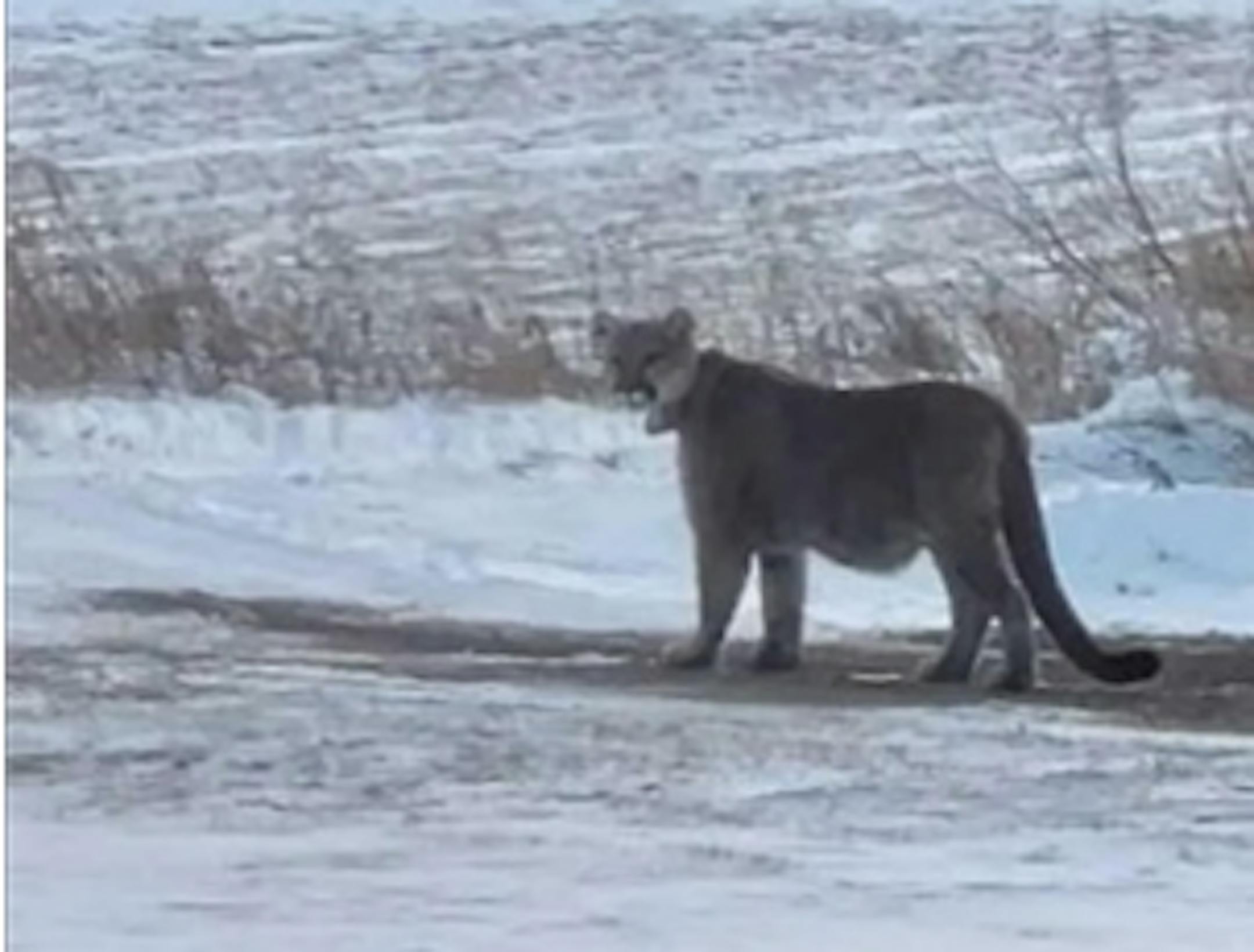
The mountain lion that prompted school lockdowns in the city of Duluth on Dec. 3 provided good evidence of just how far this wild cat will roam.
“That one cat has been detected 15 to 20 times,” said John Erb, a furbearer/wolf research scientist with the Minnesota Department of Natural Resources. It popped up on trail cameras in Fergus Falls, Park Rapids, Wadena, Nisswa, Leech Lake, Tower and the North Shore.
While the cat’s radio collar was no longer active, scientists believe it had roamed from a population in northwest Nebraska. Most mountain lions that are spotted in Minnesota are young males passing through on a search for a mate — and for food, such as deer, raccoons, porcupines and other mammals.
One of the most famous wanderers came from South Dakota’s Black Hills population and was spotted in Minnesota and Wisconsin in 2009 and 2010 before it was found dead after being hit by a car in Connecticut in 2011. In December 2023, a mountain lion roamed through Minneapolis’ Lowry Hill neighborhood. It also died after being hit by a car, on I-394.
Also known as pumas, cougars, catamounts and panthers, these solitary animals usually stick to remote locations and shy away from people. They average about 140 pounds, stretch more than 6 feet from nose to tail and have fur that ranges from grayish to reddish brown. Their tails, which are about a third of their body length, are typically tipped in black.
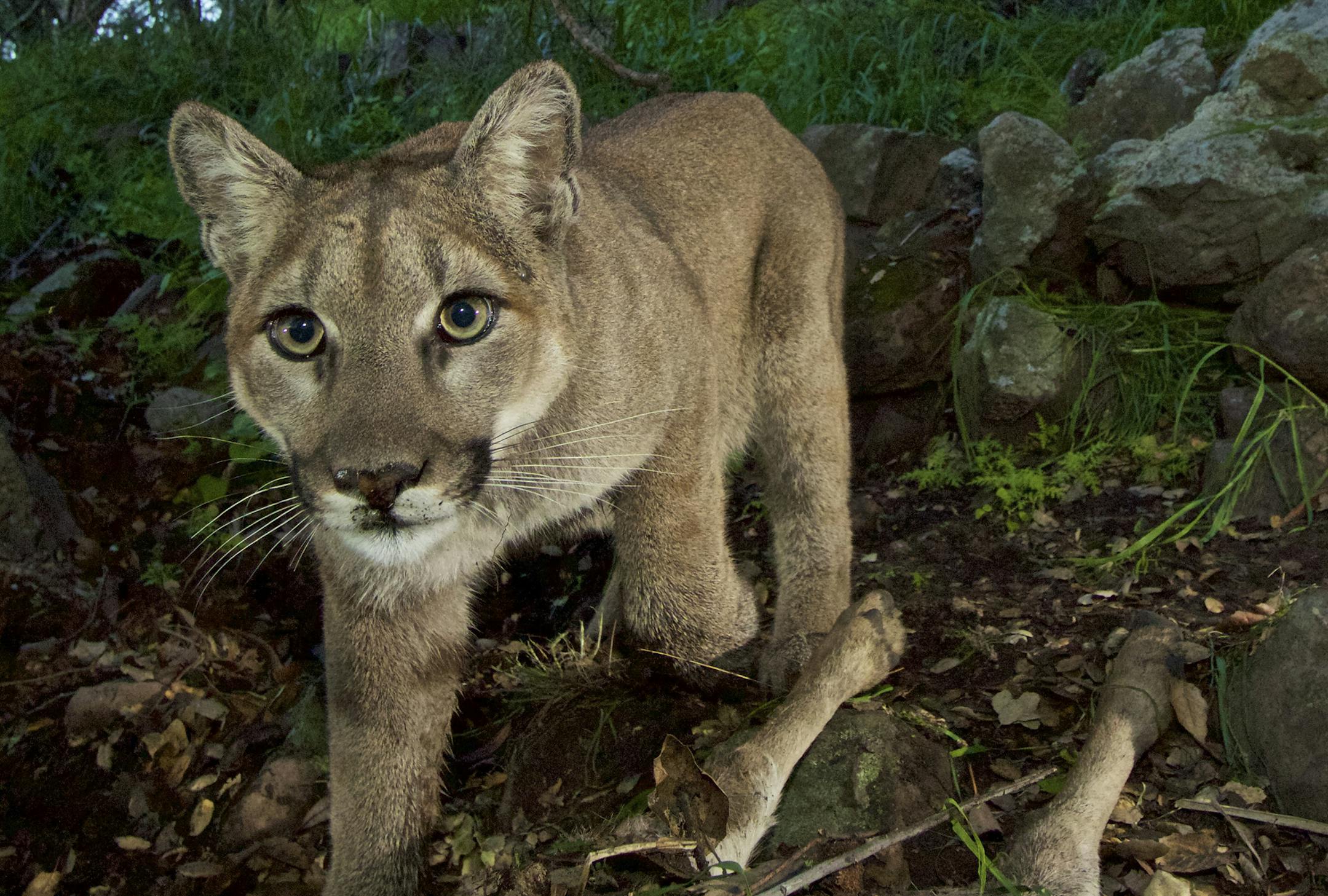
The rise in security and trail cameras have led to more reports of mountain lions, but many turn out to be bobcats, lynx, feral domestic cats or even a tawny-colored dog on the loose. A few have escaped from captivity where someone has declawed them. There’s also a rise in fake reports that blow up on social media, Erb said, so sightings need verification, which might include testing evidence such as scat or fur.
It’s possible there could be five or six mountain lions in the state at any one time, he said, and while a couple of them might opt to stay in Minnesota, there is no evidence of any finding a mate and having kittens.
To see where mountain lions have been verified across the state, check out this DNR page. To report a sighting or evidence such as tracks or scat, contact your nearest regional DNR office or DNR headquarters at 651-296-6157. There’s no record of a mountain lion attacking a human in Minnesota’s modern history, Erb said.


