Modern speakeasies in the Twin Cities are spilling their own secrets

October 18, 2025
Bessie Snow, new owner of Volstead’s Emporium in Uptown, wants patrons to make a night out of coming there. That means promoting shows and putting up signs, directing patrons to Volstead’s back-alley door with its red light. (Jeff Wheeler/The Minnesota Star Tribune)

With consumers more cautious about spending, social media has become a way to tempt those looking for a not-so-secret experience.

For the Minnesota Star Tribune

Whatever light finds its way into the Farmer’s Cellar is softened by stained glass, just enough to give guests a sense of the gas station parking lot outside, and of the world oblivious to the hidden watering hole where they sit.

“It’s a place you don’t just find — you discover,” the not-so-hidden speakeasy boasts on its website.

The speakeasy revival is nearing a decade old in the Twin Cities — nationwide, it’s old enough to drink. But hidden bars are now shedding some of their secrecy, hoping to trade it for more foot traffic.

The Farmer’s Cellar in Lakeville promoted its April opening on Instagram, where it posts to more than 10,000 followers. Billy After Dark in the North Loop has an account, too. And Volstead’s Emporium, the famed Uptown speakeasy, plans to add signage to its signature alleyway that has deceived guests for a decade, according to new owner Bessie Snow.

It’s symptomatic of what some bar owners describe as a loss of spontaneity in nightlife, where guests — who drink less and are more judicious with their cash — look to vet bars online rather than show up and risk disappointment. As a result, hidden bars in the Twin Cities have turned themselves into a contradiction, their exteriors still couched by rusted doors or nondescript facades but the interiors flashing across social media.

“If people are trying to find us, I need them to be able to find us,” Snow said. “I want the experience to begin with a knock on the door. It’s not the experience beforehand of ‘Where is it? Where is it?’ anymore.”
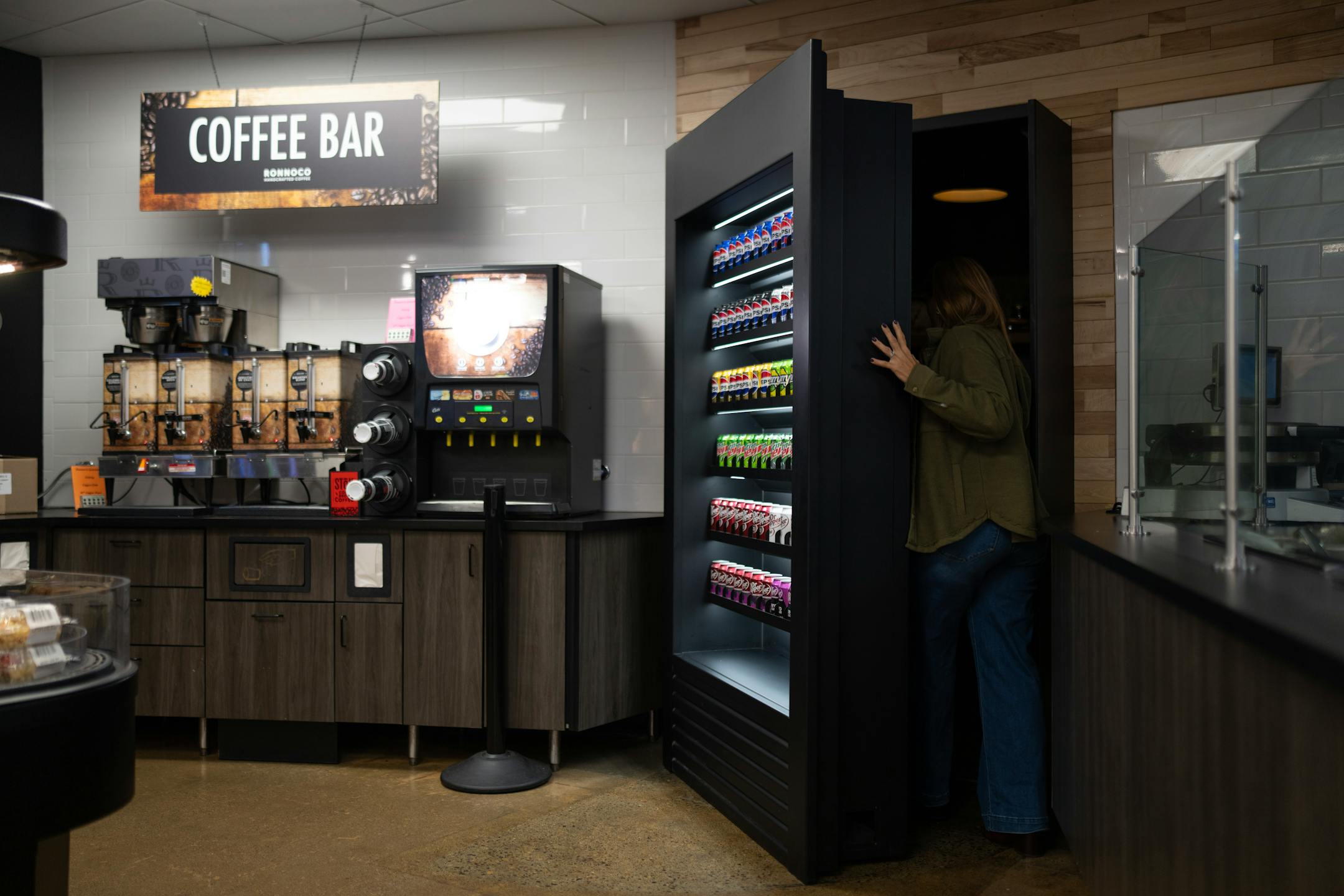
Part of a speakeasy's appeal has been trying to find it. The entrance to the Farmer’s Cellar is hidden behind a faux beverage cooler at a convenience store in Lakeville. (Jeff Wheeler/The Minnesota Star Tribune)

The entrance to the Farmer’s Cellar is behind a soda fridge in a gas station, and the bar is made to make you feel like you’re in on a secret no one else can figure out. The stained glass must have come from some old church, Nicole Vang imagines, as she tries to make out its gothic lettering from her table.

Her husband, Aaron Vang, basks in the Prohibition aesthetic. You can almost imagine being a baron who struck it rich in the Roaring ’20s, he said.

“Metaphorically, you can walk away from the world through that pop machine,” Aaron Vang said, nodding toward the entrance.

An economic indicator

Mystery drives the business model of the speakeasy, said John Braun, who founded Volstead’s before selling it to Snow this month. When Braun opened Volstead’s in 2016, he did it without a website or promotion — just a red light above a back-alley door.

But after the pandemic, Braun greenlighted comedy nights, and Snow ran burlesque shows, promoting them on the bar’s new Instagram.

Fewer people were ambling down Volstead’s dark alleyway; even fewer were satisfied with just a drink and a cozy spot to have it. Braun figured Instagram was a way to tempt them back.

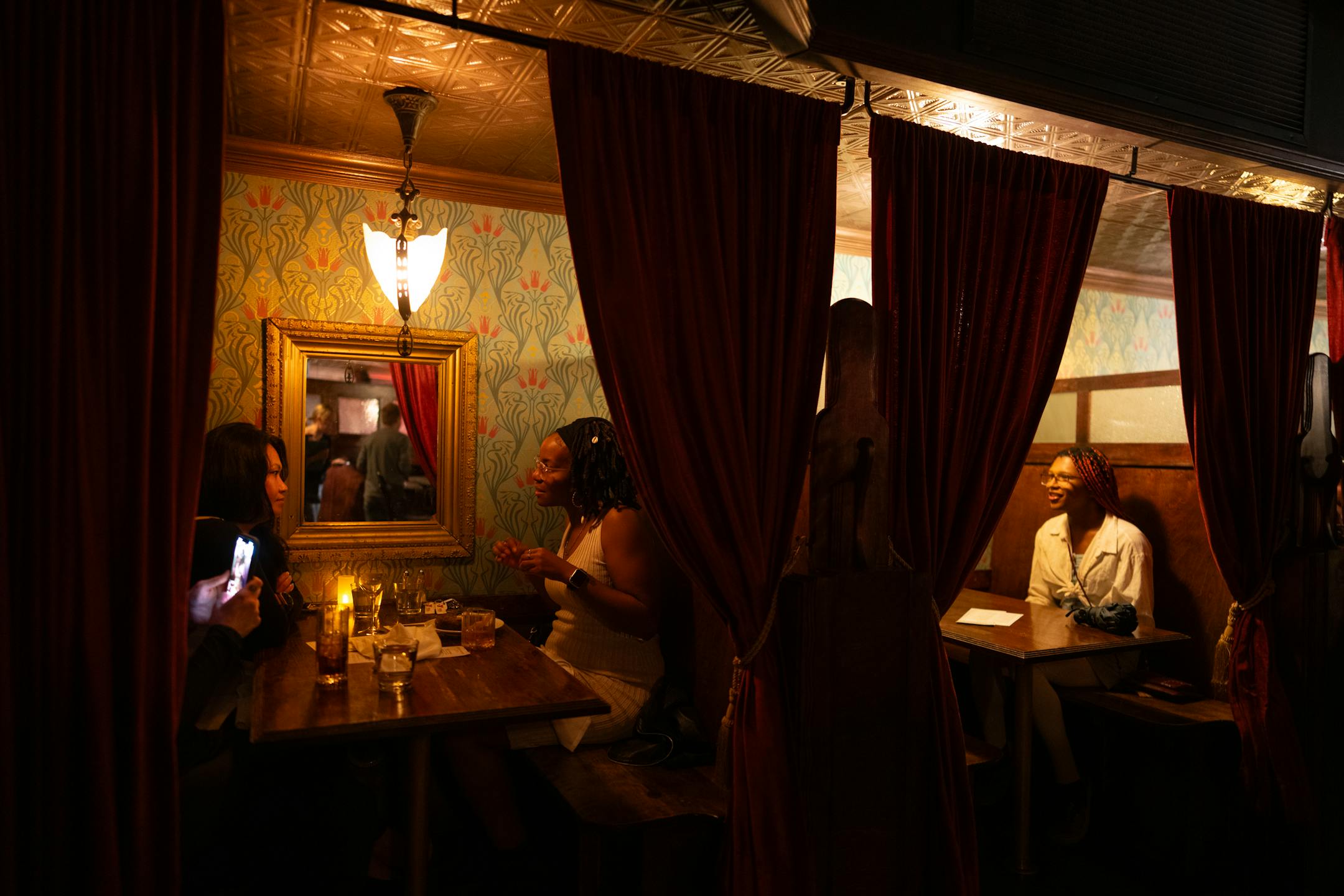
“If people are trying to find us, I need them to be able to find us,” said Bessie Snow, the new owner of Volstead's Emporium, who also performs in a burlesque show she emcees every month at the Uptown speakeasy. Ananda Bates and Esra Kucukciftci wait to be admitted to Volstead's, which was one of the first speakeasies on the Twin Cities scene about a decade ago. It's named after Andrew Volstead, a Republican congressman from Minnesota who championed legislation that enforced Prohibition. Rachel Eaton and Dan Condon sit under his portrait. (Photos by Jeff Wheeler/The Minnesota Star Tribune)

“It didn’t take reading the tea leaves to know that the place needed to be a little more destination-oriented,” Braun said.

His sense was right: Fewer Americans are drinking, a recent Gallup poll found. And those who do are consuming just 2.8 drinks per week, down from 5.1 in 2003. But they are spending more.

Those shifts have changed the way people look for a night out, said Allison Murn, a marketing lecturer at the University of Minnesota. Bars have had to become destinations for consumers, pairing drinking with other activities like shows or events.

“I think past generations may have said, it’s about getting a night out to relax or blow off steam,” Murn said. “Gen Z is really about that experience.”

Grant Mohwinkel, head of the bar program at the Farmer’s Cellar in Lakeville, knows how to add drama to pouring a drink. He used liquid nitrogen to chill a glass while preparing a cocktail called a Rock & Roll. At Volstead's, server Arthur Carson checks in on Dee Burling, Samantha Francis and Dalesha Henry, who were at the speakeasy to celebrate Burling’s birthday.

Making dollars count

In Lakeville, drinks at the Farmer’s Cellar come with a performance. A jet of chilled carbon dioxide plumes above the bar, freezing glasses before they receive their contents. You can watch a bartender spill an Aviation from pitcher to pitcher through a cloud of liquid nitrogen, morphing it into a glassy whip that resembles gelato. For $30, you can scoop it out of its glass.

Tom Spencer sat at the corner of the Farmer’s Cellar bar on a Thursday night, his eyes fixed on bartenders freezing mint leaves in liquid nitrogen for a mojito. He sipped his Manhattan. Spencer, 67, said he’d come across the bar on Facebook, and he’d been eyeing the gas station on 210th Street for a few weeks.

“You have to be on social media to find out what it was,” Spencer said.

Most guests on this night trod a similar path there — Instagram or TikTok for the younger patrons, Facebook for the older ones. The social media scour has become more central to the way people go out, Murn said, especially as prices rise.

Consumers, also facing hikes in housing and food costs, are planning to cut back on entertainment spending as those prices rise, according to surveys from business consultants McKinsey & Co. and PricewaterhouseCoopers.

Simply put, people have less money — and tolerance — for a bad night out. The onus is now on bars to prove their merit, and Instagram lets potential patrons get a sense for a spot without having to commit cash to it, Murn said.

Paige Lenzi, a Farmer’s Cellar bartender, said she’s sensed nightlife move away from spontaneity since the pandemic. She rarely goes out anymore, and if she does, she’s either vetted the place in advance or ends up at the same Cajun spot in the next suburb over.

“It’s less of a ‘oh, let’s go out for a drink,’” Lenzi said. “I think it’s about making sure you’re spending your money on something you enjoy.”

Loss of mystery

Eight months ago, if you wanted a reservation at Billy After Dark — hidden underneath Billy Sushi in the North Loop — you needed to get past a website pretending to be a financial scam. For two years, it was fine, said owner Billy Tserenbat. But the website started scaring off enough people that he launched a “clean” version about seven months ago.

“People are always questioning things. They need to just stop questioning and just experience things. Everyone is so scared of experiencing something bad,” said Tserenbat.

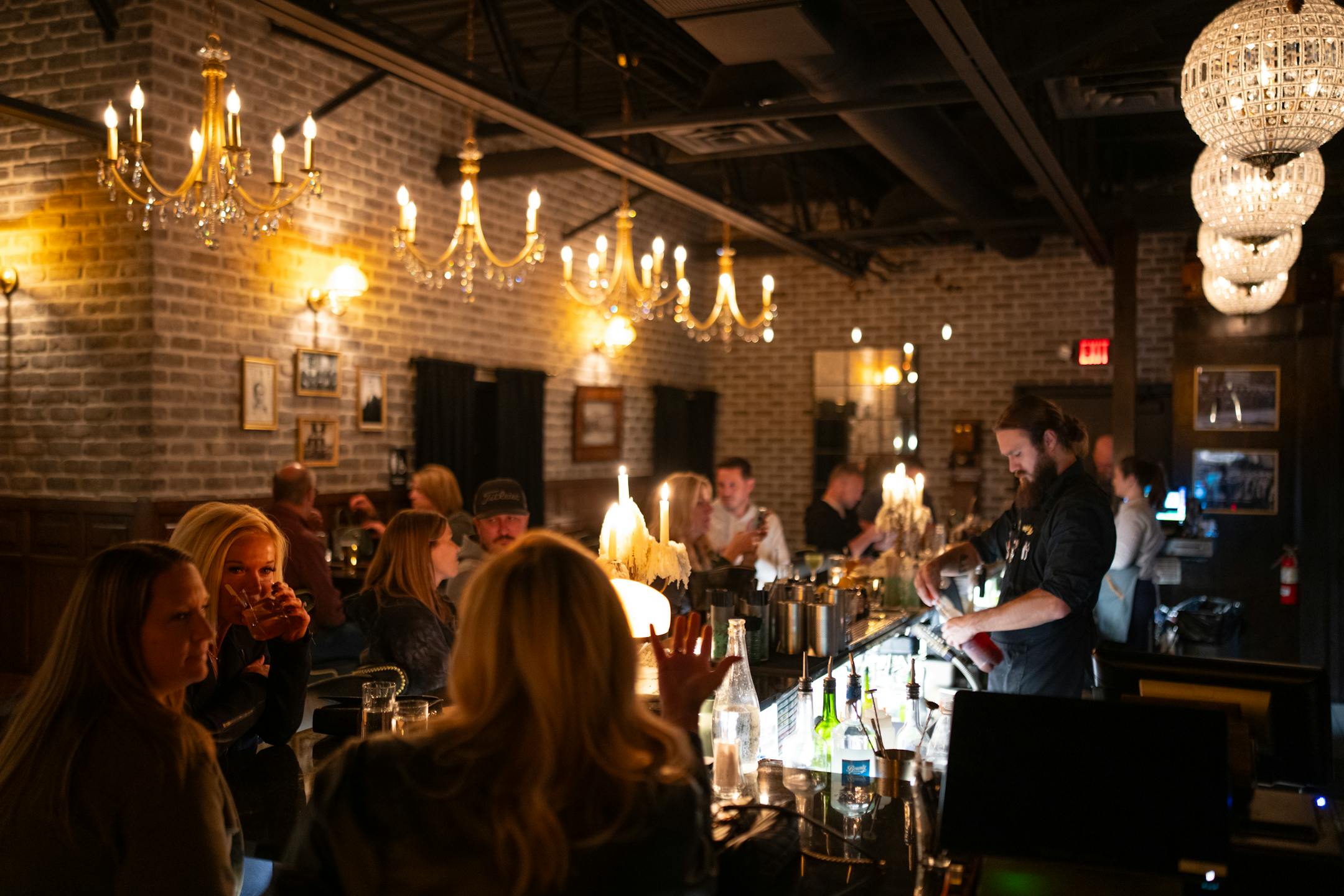
Speakeasies such as Farmer’s Cellar in Lakeville have turned to social media to attract customers. (Jeff Wheeler/The Minnesota Star Tribune)

Snow, Volstead’s new owner, said her vision is for the bar to become a venue where people make a night out of coming there. That means promoting shows and putting up signs, directing patrons to Volstead’s back-alley door with its red light.

A security camera points out over Volstead’s entrances; you can watch guests crisscross the alleyway, sometimes giving up and heading to a different bar down Lake Street. Snow likes to think that Braun would chuckle as he watched confused customers not clever enough to find Volstead’s.

But to Snow, they look like revenue she can’t afford to walk away. Sacrificing mystery might just be the cost of doing business nowadays.

“I’d rather have it lose a little bit of that to make sure this place lasts,” Snow said.

about the writer

about the writer

Cole Reynolds

intern

Cole Reynolds is an intern for the Minnesota Star Tribune.

See Moreicon

More from Eat & Drink

See More
card image
Nancy Ngo/The Minnesota Star Tribune

New Mexican, Japanese and health-minded eateries, plus tried-and-true road trip and dim sum staples.

card image
card image