

Opinion editor’s note: Strib Voices publishes a mix of guest commentaries online and in print each day. To contribute, click here.
•••
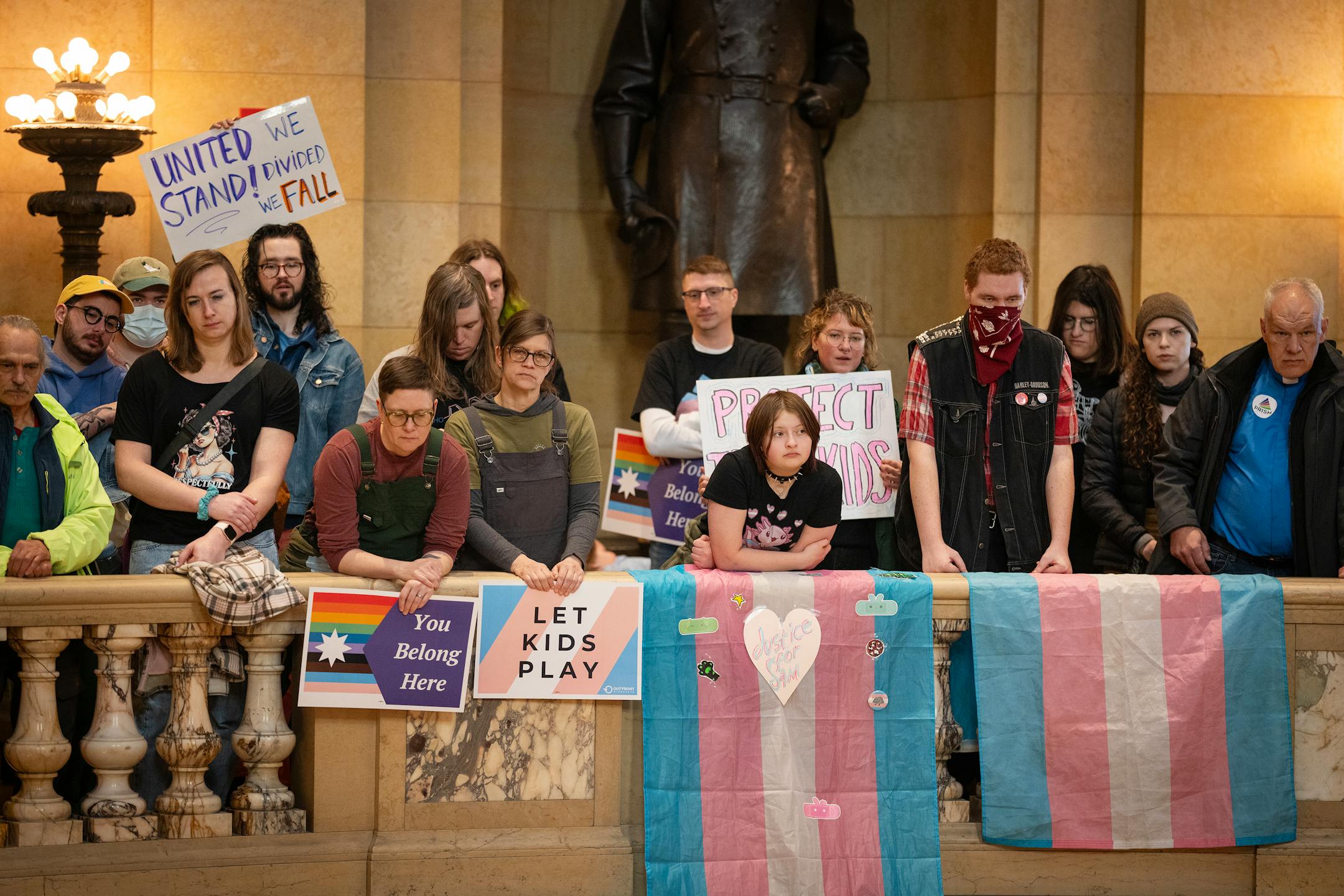
Minnesota has continued to stand as a prominent protector of transgender civil rights, but there is one battleground that we are currently neglecting: participation in women’s sports.
In February, President Donald Trump signed Executive Order 14201, which promised to strip federal funding from any schools or universities who allowed transgender athletes to participate on women’s teams. Following this, the National Collegiate Athletic Association (NCAA) updated its policy to comply with the order. If you are a collegiate transgender athlete, you are allowed to practice on women’s teams, but not to compete in any division competitions. This effectively excludes trans athletes from any sports scholarships that select applicants based on participation, awards or records, as well as the opportunity to develop an athletic career in secondary education.
The implications of NCAA policy and E.O. 14201 are that it is inherently unfair for transgender women to participate alongside cisgender women in any athletic setting. There are factors that complicate this argument. One can cite studies that indicate athletic performance is tied to multiple factors, such as high androgen levels, high levels of hemoglobin and genetic variation (Anawalt et al., 2019; Oberlin, 2023). One can also point to studies that have indicated transgender women perform about the same or worse than cisgender women in athletic performance (Hamilton et al., 2021; Hamilton and Montagner-Moraes, 2024). One could open the door to the discussion of how regulating athletes based upon testosterone levels has resulted in multiple women of color being restricted from Olympic Games, and how this is only ever policed in women’s sports, never men’s (Patel, 2021; Office of Transgender Initiatives, 2025). Each of those conversations is important and deserves acknowledgment.
However, for those who find those arguments unpersuasive, consider where the NCAA’s policy has limitations. For one, current NCAA policy states that “student-athlete[s] assigned female at birth who [have] begun hormone therapy” are still eligible for women’s teams, which undercuts concern that transgender women are being banned for their “inherent advantages.” Additionally, NCAA policy acknowledges that state laws supersede the association’s own rules.
Minnesota Attorney General Keith Ellison is currently in a lawsuit to determine if E.O. 14201 is enforceable in the state. We still do not know if it is legal to comply with NCAA policy. The Minnesota Human Rights Act explicitly prohibits discrimination based upon gender identity in education programs, but has an exception for sports teams, provided there is an equal opportunity to participate in some form. One could argue that at this time equal opportunity is questionable for many transgender students.
You’ll find that many Minnesota college and university programs are complying with NCAA policy, as many answer to sports associations who are NCAA-compliant. Feel free to look up your local college’s athletic policies. I am a current graduate student at St. Catherine University, a women’s college that welcomes transgender and nonbinary students. As a Division III school, St. Catherine University is currently NCAA-compliant, meaning the school’s athletic program with exclusively women’s teams has no place for the transgender students it has welcomed to participate in sports competitively. Where are their equal opportunities?


