
Burcum: ‘Who the hell is going to do something?’

The mother of an Annunciation shooting victim is demanding action, and Minnesota doctors are pressuring Walz for real gun reform.

Columnist Icon
The Minnesota Star Tribune
September 9, 2025 at 11:00AM
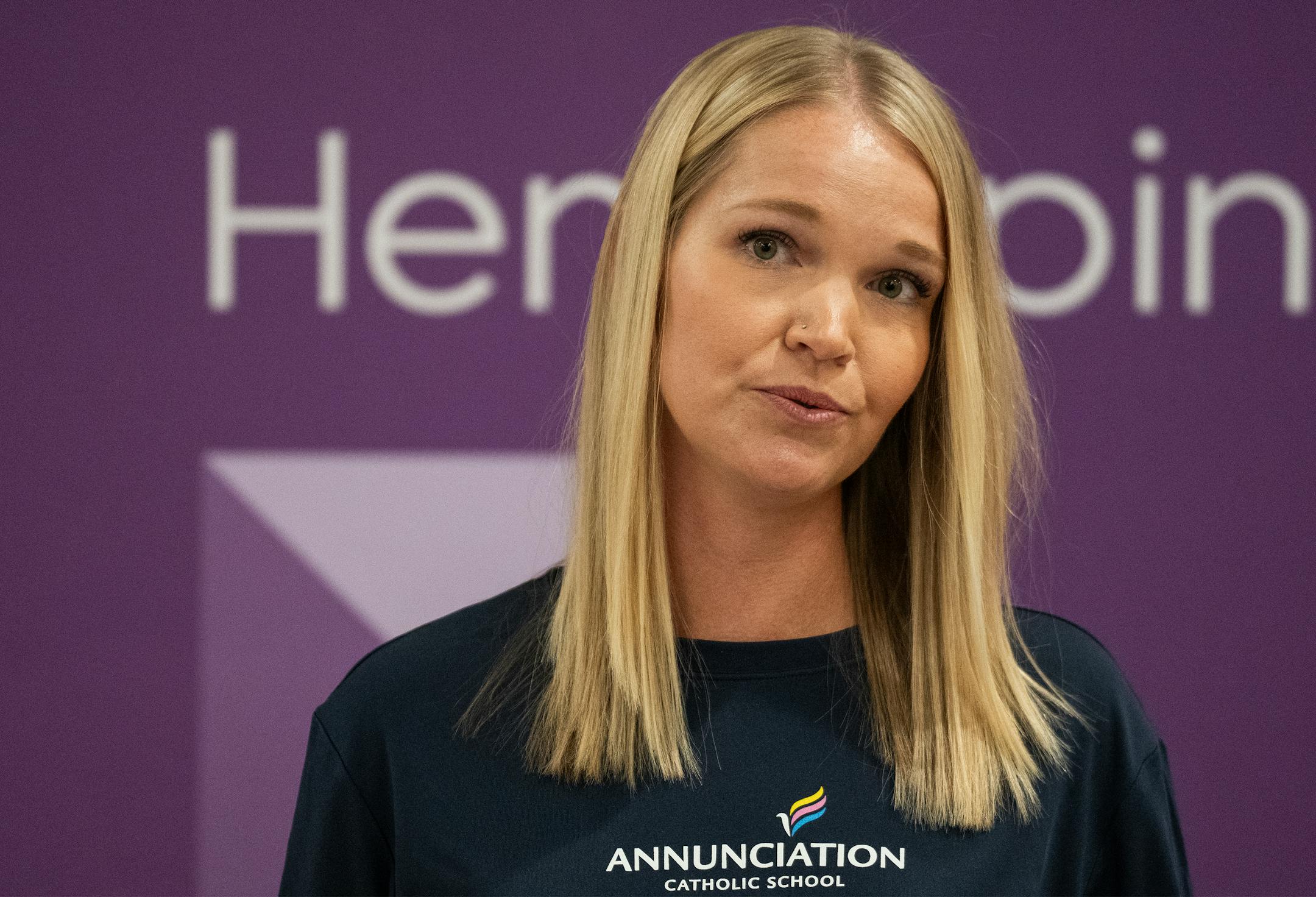
Malia Kimbrell, mother of Vivian St. Clair, reads a statement about the recovery of her daughter, who was injured in the Annunciation Church shooting in Minneapolis. (Richard Tsong-Taatarii/The Minnesota Star Tribune)

Opinion editor’s note: Strib Voices publishes a mix of commentary online and in print each day. To contribute, click here.

•••

Malia Kimbrell channeled her sorrow and anger into a heck of a haymaker late last week, aiming her punch directly at the midsections of Minnesota’s elected leaders.

Kimbrell is the mother of Vivian St. Clair, 9, who took two bullets to her back and one to her arm in the horrific Aug. 27 shooting at Annunciation Catholic Church’s back-to-school Mass. A nurse at Hennepin County Medical Center, a steely Kimbrell spoke out Thursday with palpable anger:

“To our lawmakers and people in power: Who the hell is going to do something? Who’s going to make meaningful change and take tangible steps to break the cycle?”

So far the answer remains elusive. It’s unclear when Gov. Tim Walz will call legislators back to St. Paul for a special session and what measures his party will pursue to keep firearms out of the hands of those who shouldn’t have them. State Republicans have proposed some school safety solutions but sidestepped gun control.

On Monday morning, Kimbrell got a pointed assist from her colleagues in health care: the state’s doctors, who commendably banded together to call for “evidence-based firearm policies” to protect all Minnesotans, but especially children.

“The leading cause of death for children in the state of Minnesota is not cancer, car crashes, or overdose — it is firearms," said the letter to Walz from the Minnesota Medical Association and four other physician professional organizations.

Just like Kimbrell, the doctors didn’t pull any punches. They made a big ask:

  • A Minnesota-wide ban on assault weapons.
    • Banning high-capacity magazines here.
      • Requiring firearms in storage to be locked, unloaded and in a separate place from ammunition.
        • Eliminating a prohibition that prevents localities from “enacting stricter firearm regulations than the state.”

          In addition to the Minnesota Medical Association, which represents more than 10,000 state doctors, signatories included the Minnesota Academy of Family Physicians, and the Minnesota chapters of the American Academy of Pediatrics, the American College of Physicians and the American College of Obstetricians and Gynecologists.

          This list is a who’s who in Minnesota medicine, and their demands are noteworthy. Their members are the ones who care for bodies shredded by gunfire and for the families and communities torn asunder by gun violence. We entrust these medical providers with caring for ourselves and our loved ones. We ought to take seriously their diagnosis of what’s wrong and what prescriptions are needed.

          The doctors’ outspoken leadership is appreciated and needed given how little progress has been made in preventing tragedies like the Annunciation shooting, which left two children dead, others fighting for their lives and families who will deal with the trauma for a lifetime.

          Will their medical advice be heeded? I wouldn’t bet on it. The absence of gun control in state Republicans’ school safety remedies speaks volumes. I suspect one reason we haven’t heard more detail from Walz and DFL leadership on what they’ll propose is because gun regulation is likely something about which their members in vulnerable rural districts have qualms.

          That’s why Monday’s call to action by the state’s medical organizations is so important. It puts strong measures out there and sets a meaningful bar for Walz and lawmakers of both parties to meet.

          Will these steps be a tough sell in Minnesota’s closely divided Legislature? Absolutely. But let’s have that debate and force elected representatives to explain their priorities. And let’s do it soon, lest time chip away from the courage regrettably necessary to follow Minnesota doctors’ prescription or find other solutions.

          Taking action at the federal level is even more daunting. Republicans control both the U.S. House and Senate. With President Donald Trump in the White House, measures like those Minnesota’s physicians are advocating do not currently have a path forward in the U.S. Capitol.

          In the meantime, there are helpful steps that are possible now. One of them is restoring federal school mental health grants that were included in the 2022 Bipartisan Safer Communities Act, which was passed after the school shooting in Uvalde, Texas.

          “The bill, among other things, poured federal dollars into schools to address rising concerns about a student mental health crisis," NPR reported May 1. But earlier this year, the Trump administration announced “it will stop paying out $1 billion in federal grants that school districts across the country have been using to hire mental health professionals, including counselors and social workers.”

          The funding was intended to add 14,000 mental health counselors to schools across the nation. But NPR reported that the Trump administration determined that the grants “had somehow run afoul of Trump’s anti-DEI policy.” DEI stands for diversity, equity and inclusion.

          Ensuring access to mental health providers in schools is a pragmatic step to ensure that all who need this critical care can get it at an important time in their lives. The nation should be boosting dollars for this, not going backward by reversing what’s already been accomplished.

          As the name of the Bipartisan Safer Communities Act reflects, it had support from Democrats and Republicans. It shouldn’t be a big ask to simply restore the funding already agreed to, as well as weigh what else is possible.

          Fortunately, Minnesota Sen. Amy Klobuchar, a Democrat, is calling for this pragmatic fix.

          “We should be doing everything we can to support the mental health of our kids. This funding would improve access to the convenient, on-site support they need to lead healthier lives in and outside of school, and it was passed as part of bipartisan legislation. There is no reason to claw back this funding and it should be restored,” she said.

          Minnesota legislators could also add to the funding available for the existing school-linked mental health services program, which would pay valuable dividends in students’ health and well-being. It’s not the sweeping overhaul that the state’s doctors are calling for, but it would be a “tangible step,” one of many needed after the heartbreak at Annunciation.

          about the writer

          about the writer

          Jill Burcum

          Editorial Columnist

          See Moreicon