
Brown: From South Beach to Superior shore, bringing resilience back home to Duluth

If climate solutions don’t help people, they aren’t solutions after all.

Columnist Icon
The Minnesota Star Tribune
November 23, 2025 at 10:59AM
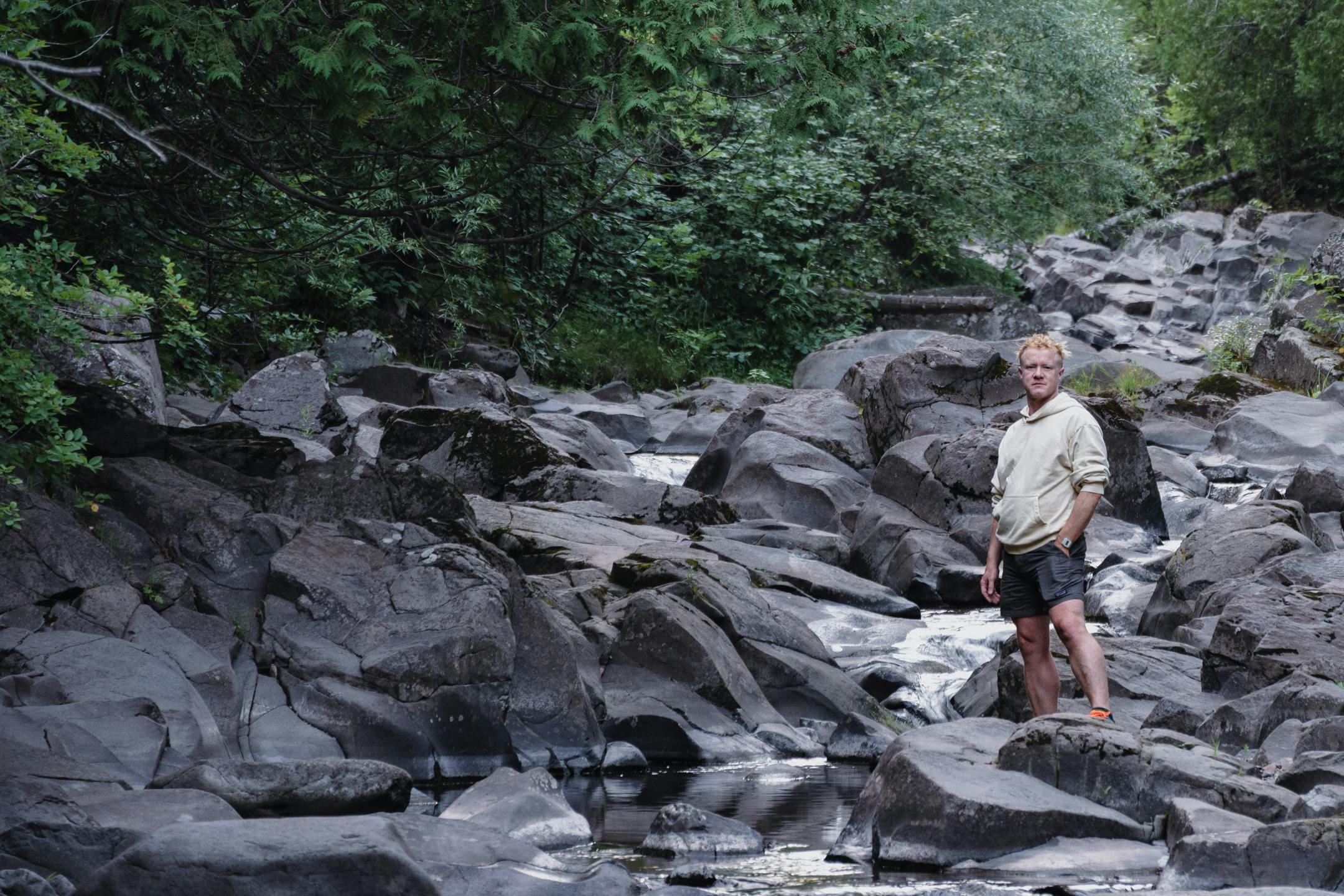
Galen Treuer, seen here at Amity Creek in Lester Park last summer, recently relocated to his hometown of Duluth after serving as a climate policy strategist for Miami-Dade County in Florida.
Galen Treuer, seen here at Amity Creek in Lester Park last summer, recently relocated to his hometown of Duluth after serving as a climate policy strategist for Miami-Dade County in Florida. (Matthew Bruno )

Opinion editor’s note: Strib Voices publishes a mix of commentary online and in print each day. To contribute, click here.

•••

Today, bureaucrats scan spreadsheets to cancel federal grants containing the words “climate change.” And yet, during a recent trip to Duluth, I saw work on a $3.15 million U.S. Army Corps of Engineers project to bolster the Canal Park shoreline. The new design responds to more frequent storms that have caused extensive damage to the popular lake walk in recent years.

Canal Park is now more climate-resilient; people are working, and taxpayers will pay less for repairs in the long run. It’s just fortunate that the word “climate” didn’t appear in the project title, or else it might have been laid low by the cool blade of Ctrl + F.

Climate change, renewable energy and developing industries will define this era whether we like it or not. But reactionary partisanship — perhaps best personified by laughing-face social media emojis — is changing how we talk about climate, especially its relationship to our economic well-being.

And maybe that’s a good thing in the long run.

Climate is about much more than carbon; it’s the way we live, as cultural as it is ecological. Climate solutions will improve people’s lives, or they aren’t solutions at all. That’s a challenging truth, but potentially a unifying one.

I made my way to a coffee shop in the Lincoln Park Craft District, a growing commercial hub in a historically distressed central Duluth neighborhood. There I met Galen Treuer, who grew up in Duluth’s hillside neighborhood and more recently spent almost six years managing climate and resilience strategy for Miami-Dade County in south Florida. He faced more frequent and powerful hurricanes, historic floods and the literal destruction of communities. Now he’s back home, with a new perspective on Duluth’s future.

“Resilience is a very flexible term, and it doesn’t mean climate change. It means the ability to come back from chronic stresses and shocks,” said Treuer. “It’s the ability to return and to sustain yourself over time. Climate change is a chronic stressor, and it causes bigger shocks. Those things go together.”

Treuer graduated from Duluth Marshall High School in 1997. An economics degree from Oberlin College in Ohio led to political disillusionment. He described hearing a speech by former U.S. Treasury Secretary and Harvard President Larry Summers about the positive aspects of foreign manufacturing and imported goods. Treuer said the speech didn’t sit well with him.

“I don’t know that getting T-shirts from Bangladesh is actually going to pay off for us,” he said. “We got cheap shirts but no jobs. I think we found this out.”

After a decade of successful theater and dance work in Minneapolis, Treuer returned to economic research, earning his Ph.D. from the University of Miami with emphasis on climate strategy. What he learned about climate economics connected the hardships of his old neighborhood with the very real threat of rising oceans in fast-growing coastal cities.

In both cases, economic disinvestment threatened the livelihoods and wealth of working people.

“Our community has lived through a series of booms and busts,” said Treuer. “And those busts are deeply unkind to the people who live there, particularly the less wealthy people, particularly the middle class who invested in real estate.”

Whether affected by a plant closure or a hurricane, people in stressed communities see rising costs, skyrocketing insurance rates and blighted neighborhoods that cause home values to stagnate or even drop.

“The climate crisis is an affordability crisis for most Americans,” said Treuer.

Building resilience takes time and doesn’t come easy. In Duluth and on the Iron Range, climate success might be measured by skilled professionals doing the work of mitigating past industrial failures and preventing new ones.

Treuer cited the success of the St. Louis River Estuary project in West Duluth as a good example. He remembers going to the river — polluted by decades of industry — for science field trips as a kid, unable to find any living things. Today, after decades of work and hundreds of millions of dollars in economic activity, the river is largely restored. What was learned there can be applied elsewhere, creating economic activity in a valuable environmental services sector.

“Let’s take pride in what we’re doing,” said Treuer. “Let’s have a diversified economy that has higher-value jobs and protects those assets that are a lot of natural resources, community resources and cultural resources.”

Treuer described Duluth as the de facto capital of a rural region that, depending on how you measure, includes about 500,00-700,000 people. If it were a state, it would be about the size and population of Vermont. This “state” has an international seaport, robust rail and strong highway infrastructure. It enjoys a creative economy, natural resources and a significant medical system.

“[The region is] poised to grow,” said Treuer. “We have the space. We can do it. If we can get the jobs here, housing will come. I’ve seen that happen in other places. But the rural community and the urban community are politically divided in ways that are deeply dangerous.”

This region’s divergent politics — mirroring those found statewide — brings us back to my original point: If the north central “reds” and Duluth “blues” can’t speak the same language about change, we won’t be able to solve problems that we otherwise could.

“This country is going to become more regional,” said Treuer. “If I am going to predict what happens in America, it would be that states are going to take more rights back.”

That means that local governments, backed up by the state, will solve economic and climate problems not because they want to, but because they must. The more we prepare, the better the chances of success.

In 2019, a Tulane professor wrote a paper referring to “Climate-Proof Duluth.” A 2023 New York Times article highlighted Duluth as a “climate refuge.”

Many locals see these claims as marketing at best, but for Treuer it’s very real.

“I moved here because of my family,” said Treuer, who bought a house four blocks from his parents on Park Point, a coastal island like his last home in Miami Beach. “But I feel so much more confident being here because I know our risk profile is so much lower, and this community knows how to get things done.”

Addressing climate resilience provides the very opportunity for economic resilience that leaders here have sought for generations. Success in Duluth could be replicated throughout Minnesota and should be at the forefront of any local economic agenda.

about the writer

about the writer

Aaron Brown

Editorial Columnist

Aaron Brown is a columnist for the Minnesota Star Tribune Editorial Board. He’s based on the Iron Range but focuses on the affairs of the entire state.

See Moreicon

More from Columnists

See More
card image
Carlos Gonzalez/The Minnesota Star Tribune

Nick Shirley’s viral video on X amplified outrage faster than verified facts could follow.

card image
card image