
Opinion | MLK didn’t hesitate to protest. Minnesotans shouldn’t either.

MLK Day was never meant to be comfortable. It was meant to remind us that progress comes when people stop complying with injustice.

January 19, 2026 at 6:27PM
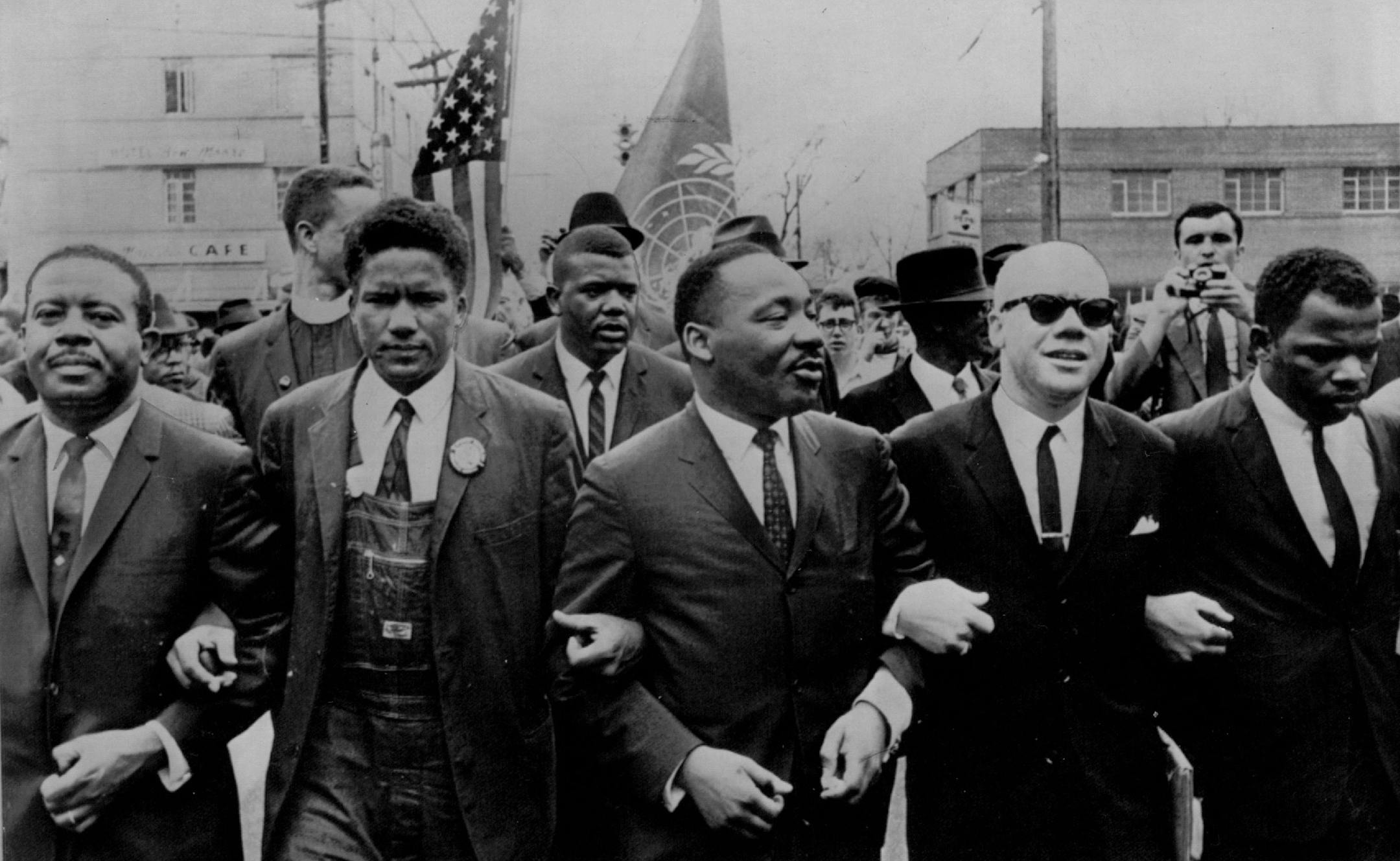
The Rev. Martin Luther King Jr., center, with the Rev. Ralph Abernathy, James Foreman, the Rev. S. L. Douglas and John Lewis marched in Selma, Ala., on March 17, 1965. (The Associated Press)

Opinion editor’s note: Strib Voices publishes a mix of guest commentaries online and in print each day. To contribute, click here.

•••

This is not a normal Martin Luther King Jr. Day. People are not ruminating on familiar quotes or revisiting speeches as historical artifacts. They are marching. They are filling streets. They are showing up because something fundamental feels broken.

A few days ago, I attended a hearing at the Minnesota Senate building. Twenty-eight members of Congress were present. That alone signaled the gravity of the moment. What is happening in Minnesota is no longer local, and it can no longer be ignored. Minnesota has become, in a heartbreaking way, the heartbeat of the nation.

What was described at that hearing was stark. Federal agents moving through neighborhoods and public spaces. Doors broken down without proper warrants. People stopped because of how they look or because of their accents. Families unable to locate loved ones. Attorneys unable to find their clients. Citizens detained and released hours later without charges or explanation, as described in testimony.

This is chaos imposed on people’s lives. Trying to make sense of it is painful because it should never be necessary in a society governed by law.

The Rev. Martin Luther King Jr. did not wait for permission. He did not wait for things to calm down. He acted when the law stopped protecting people and started threatening them. Selma did not happen because people were calm. It happened because the law had failed and people refused to cooperate with its abuse. Rosa Parks did not sit because she was tired. She sat because obedience had become immoral.

That is the moment we are in.

There are no layers or tiers of citizenship. There is no Constitution that applies fully to some and conditionally to others. The moment rights depend on who someone is, how they look or how they speak, the law loses its legitimacy. What we are witnessing now is fear being deliberately spread, communities treated as suspect, presence treated as provocation, silence and compliance encouraged.

People are rejecting that.

Minnesota is not passive. People are standing in the streets. They are documenting what is happening. They are refusing to accept that this is normal or lawful behavior in a constitutional democracy.

MLK Day was never meant to be comfortable. It was meant to remind us that progress comes when people stop complying with injustice and start insisting on dignity. The question before us is not whether this moment feels disruptive. It is whether we are willing to live with a Constitution that exists only on paper.

Minnesota has become a conscience for the nation in this moment. Celebrating the Rev. Martin Luther King Jr. without reckoning with what is unfolding around us would empty his legacy of meaning.

Zafar Siddiqui is a Twin Cities-based interfaith and civil rights advocate. He is the co-founder of Islamic Resource Group.

about the writer

about the writer

Zafar Siddiqui

More from Commentaries

See More
card image
Jeff Wheeler/The Minnesota Star Tribune

Rhetoric is hardening on all sides, and with every passing day the probability of a single bad decision — by a protester, federal agent or local authority — rises.

card image
card image