

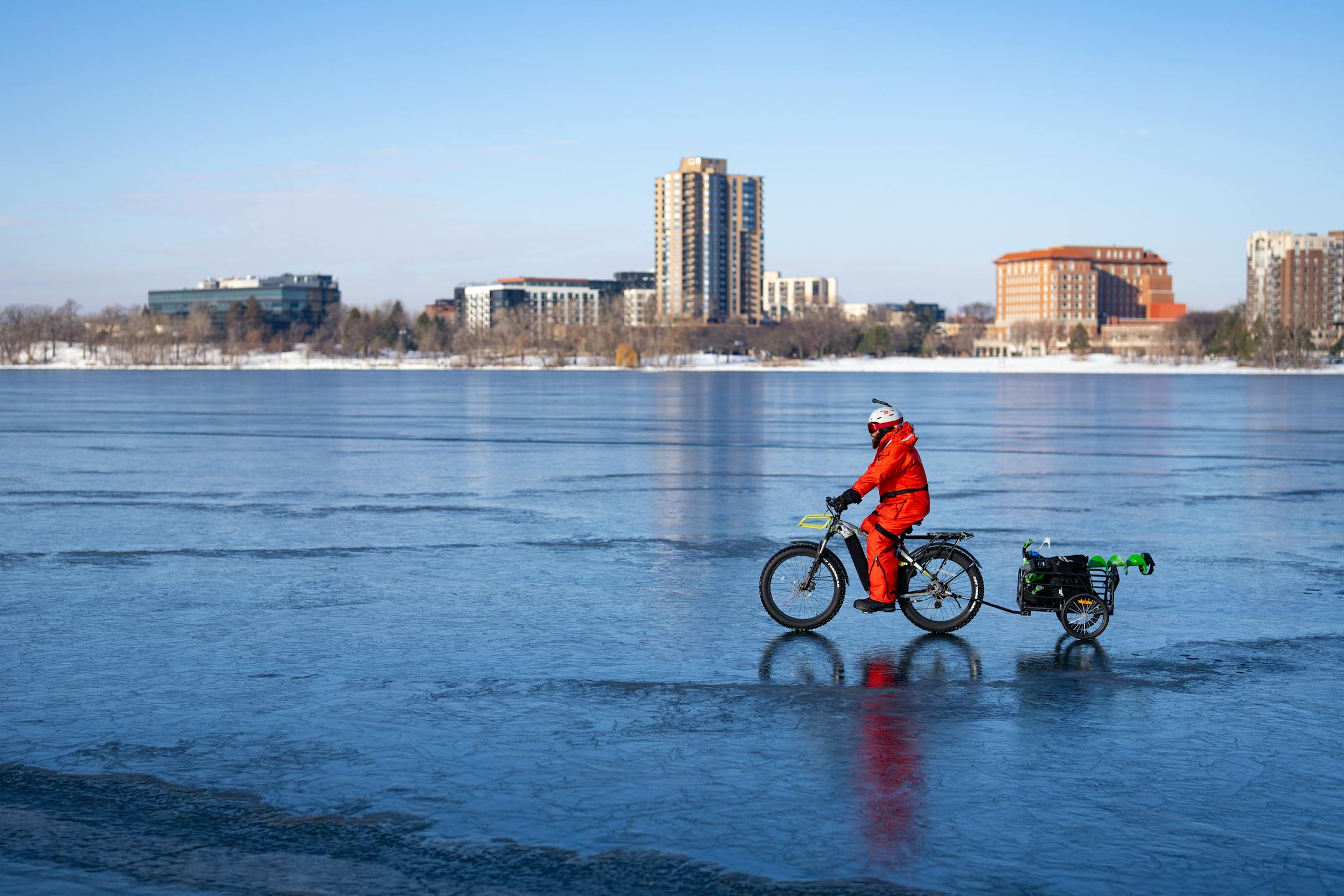
After months of long nights and moody, frigid weather, walking onto a frozen lake beneath a blue sky and full-on February sunshine can feel as beguiling as early hints of spring.
Ice often is at its peak in February, when there are events from kite-flying festivals to ice carousels still happening across Minnesota.
Exploring the state’s frozen lakes can be the safest when you’re participating in a community event where organizers have tested the ice thickness and law enforcement and first responders are nearby. Ice needs to be at least 4 inches thick for walking, 5 to 7 inches for snowmobiling, 9 to 12 inches for driving a car and 13 to 17 inches for driving a truck.
That said, the Minnesota Department of Natural Resources (DNR) warns that ice is never 100% safe. Two people died after falling through ice in the Twin Cities on Valentine’s Day weekend when temperatures hit record highs. And the first opening of Apostle Islands National Lakeshore’s ice caves in 11 years lasted only a day after winds ripped apart the shoreline ice shelf within hours on Tuesday, Feb. 17.
Enter lakes where others do or go with someone who knows where there may be natural springs, culverts or small creeks that can erode or destabilize ice from below. Ice near the shore, where rocks might soak up solar energy, can also be the first to degrade and break apart, especially when wind hits any open water.
River ice can be the most vulnerable as water flows beneath it, and rivers typically break up before lakes do. Avoid any areas of ice with large cracks or buckles, or where the ice looks darker than other areas.
The DNR has extensive safety tips online for using safety gear such as ice picks, checking ice thickness and escaping from vehicles that fall through the ice.
Winter ice plays a vital role in the health of lakes and rivers. Like a giant winter hat, ice sheets protect underwater plants, fish and amphibians by insulating them from winter’s arctic blasts and temperature swings.


