Minnesota will miss 2026 goal for total broadband access

Delayed federal grant money has extended the timeline for rural internet access across the state.

The Minnesota Star Tribune
August 6, 2025 at 6:38PM
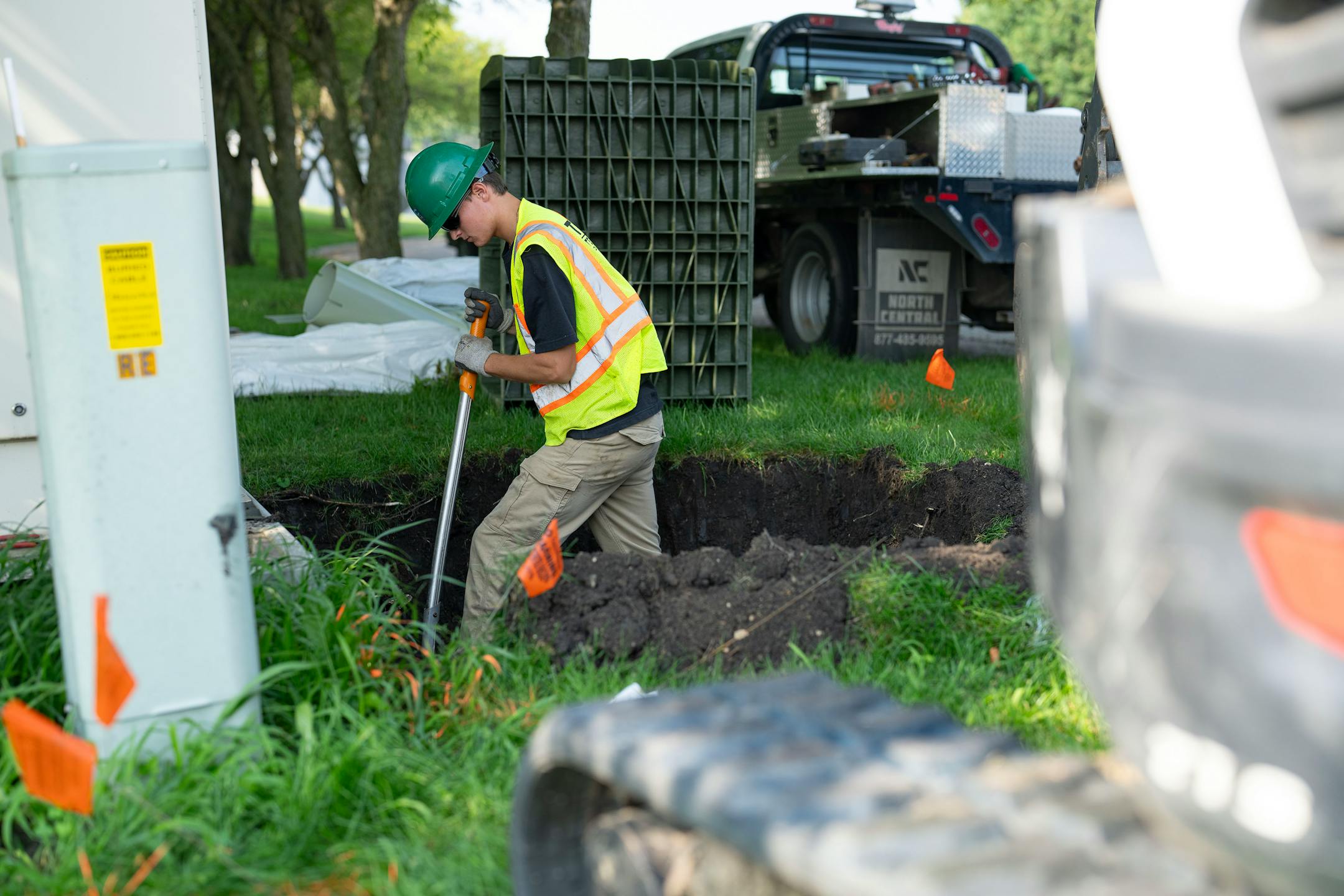
Blake Wakeling digs a hole for a fiber hub that will split fiber optic cables to get them into homes in St. Clair, Minn., on July 31. (Alex Kormann/The Minnesota Star Tribune)

Josh Mohr and his Pine County neighbors have been waiting years for strong internet connections.

When his three kids were distance learning during the pandemic, his broadband access at home was so bad he brought his kids to his office to get good internet access, but even that couldn’t keep up.

“It was a disaster, and I was very disappointed,” he said.

The Pine County Board of Commissioners chair said the problems with his internet have continued, but he remains optimistic his family of six will have more reliable internet soon to replace his current Starlink satellite service.

In 2019, Gov. Tim Walz set a goal for all Minnesotans to have access to broadband with download speeds of 100 megabits per second by 2026, which would allow two to four internet users per household.

But with four months until the goal’s end date, Mohr is one of many Minnesotans still without that speed.

Experts say the goal isn’t likely to be met, partially because of delays in federal funding.

“Almost every county has a portion that is rural and unserved,” said Sarah Davis, vice president for market development at broadband provider Consolidated Communications. “So, every county has a need.”

While the goals set by the 2019 task force on broadband are outdated, as many speeds are already much faster, the state Office of Broadband Development reported only 88% of residents had those speeds in 2023.

The state also missed its 2022 goal of a slower, 25 megabit download minimum speed for all Minnesotans, as some rural residents still don’t have the lower speed options. Nearly 92% of the state met the 2022 goal in 2023.

In 2024, 90% of the state was served by wireline service and had cables for broadband access rather than fixed wireless, which serves 95% of residents.

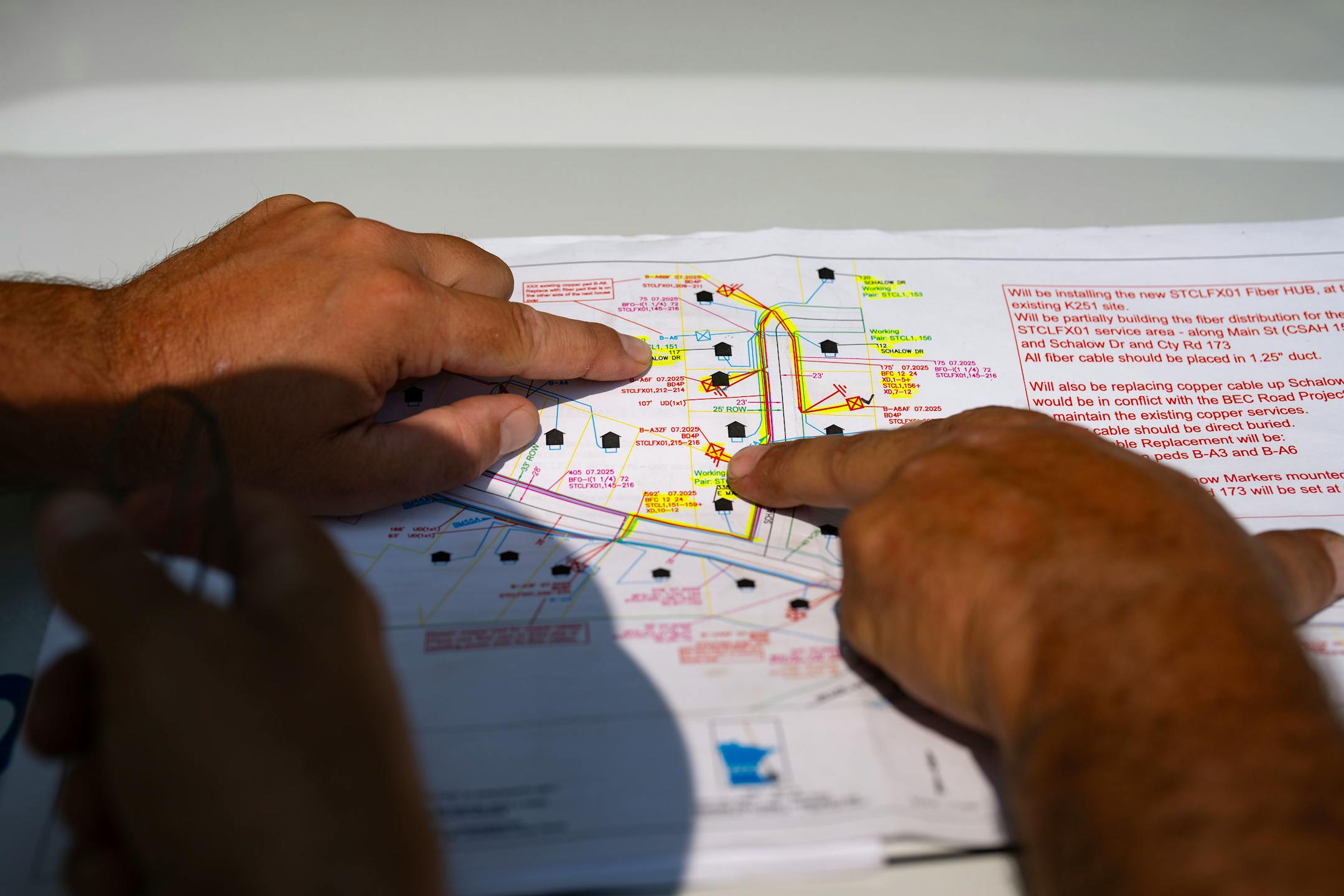
Blueprints are reviewed as part of Consolidated Communications' efforts to lay down fiber optic cables for broadband internet in St. Clair. (Alex Kormann/The Minnesota Star Tribune)

Waiting on federal dollars

Many stakeholders say one of the reasons broadband internet access remains limited in Minnesota is because of federal dollars from the Broadband Equity, Access and Deployment (BEAD) program being held up.

The program, which was created by the 2021 infrastructure bill, allocated more than $652 million to Minnesota out of $42 billion nationally.

Four years later, no money has been given to any state.

The program was delayed for the first few years because of inadequate mapping in several states and lengthy challenging processes to determine underserved areas.

The Minnesota Department of Employment and Economic Development have doled out more than $250 million in the past three years. Since the closing of the 2024 grant process, some broadband projects have been waiting on the federal funding without any additional state dollars.

“[BEAD] has derailed broadband deployment in Minnesota and other states,” said Brent Christensen, president of the Minnesota Telecom Alliance. “We already had a program that was working. We’re kind of stalled right now. We’re hoping we get back up and going. We don’t have a lot left, but we’ve got Minnesotans that don’t have it that need it.”

In May, Sen. Amy Klobuchar joined 11 other Democratic senators calling on President Donald Trump to release the BEAD funds. The letter said that states were ready to build networks and “rural and tribal communities cannot afford more delays.”

On June 6, the Trump administration restructured the BEAD program, changing and replacing some guidelines. Many broadband companies had already turned in their grant applications and were instructed to redo them. Consolidated Communications had to redo its applications in 90 days to meet the new administration’s guidelines.

They basically took a program that we have been working on for years and said you need to redo it," said Consolidated Communications’ Davis.

Minnesota Office of Broadband Development Executive Director Bree Maki said the BEAD program has delayed the office’s work.

“We had this big program that we really thought could maximize the state and federal efforts,” Maki said, “and the timing is just taking a little longer than anticipated.”

Davis said she believes the BEAD program’s goal of providing reliable broadband to all Americans over the next four years is possible. But that means some Minnesotans could continue to wait for internet until 2030.

Broadband work continues

Providers are continuing to expand broadband in various towns and communities, with new projects being constructed in the next year or two, said Andrew Curley, senior director for government relations at broadband provider MidCo.

It can be difficult and costly to lay underground fiber connections in some of Minnesota’s rocky terrain and crews have a short construction season before the ground freezes.

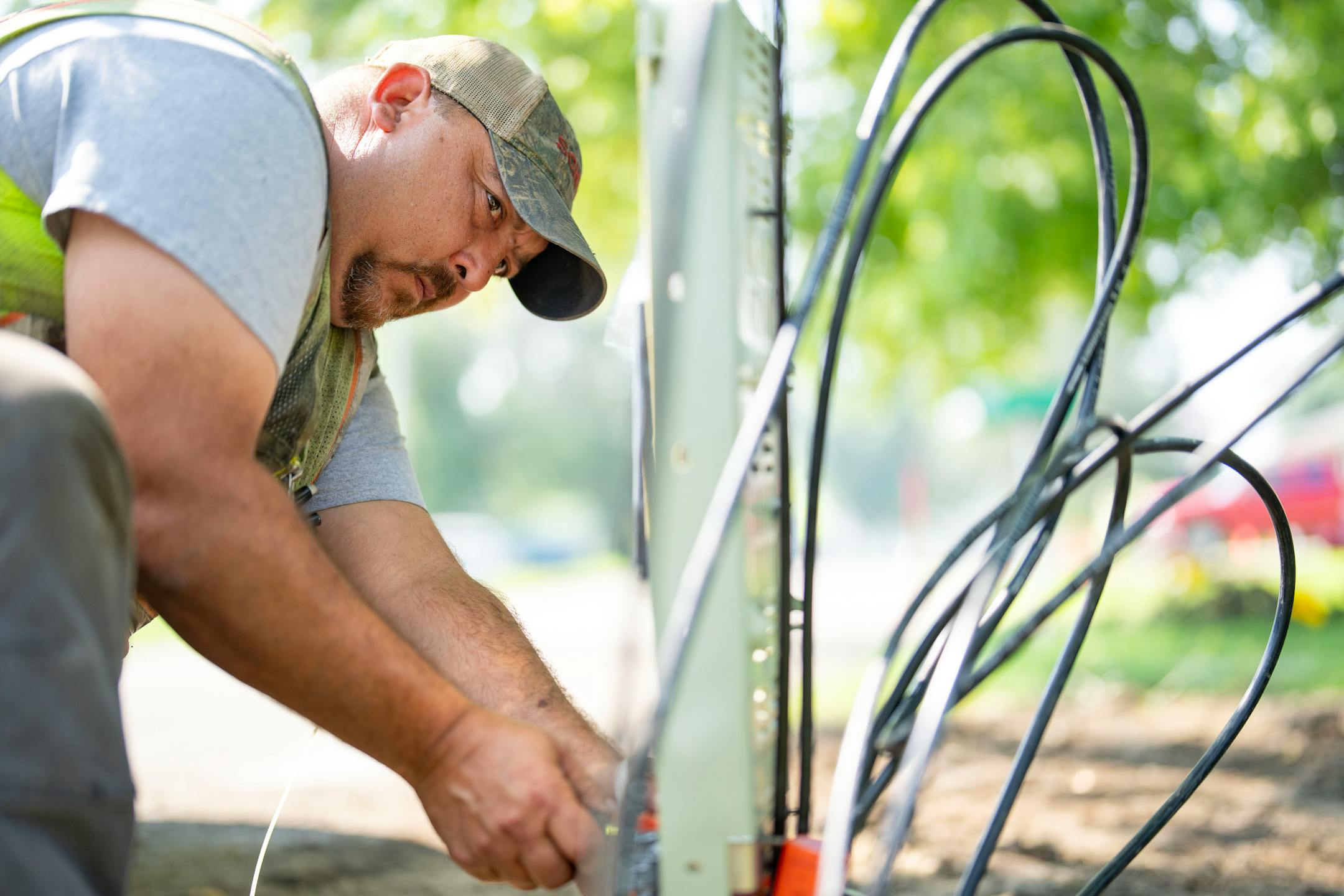
Matt Huper, with Consolidated Communications, splices cable as part of efforts to lay down fiber optic cables for broadband internet in St. Clair. (Alex Kormann/The Minnesota Star Tribune)

Melissa Wolf, executive director of the Minnesota Cable Communications Association, said the 2022 flooding in International Falls caused months of delays when the ground became too saturated.

“We actually had to wait for the ground to harden because we couldn’t get machinery up there,” she said. “That pushed a pretty big project back from when they wanted to start it.”

She said larger projects can take around 90 days to complete construction, after months or years of planning.

Broadband companies like Bevcomm also have to complete routine maintenance to the fiber cabling that’s already in the ground. CEO Jake Anderson said companies are also struggling to keep up with the necessary staffing.

“Because of all the federal programs, just getting enough help to get all the fiber in the ground is going to be an issue,” he said.

For Mohr, in Pine County, the connection is coming, he just doesn’t know when. Mohr’s auto parts business received broadband coverage in January.

Pine County is the county with the second least broadband coverage in Minnesota, leading to households and businesses not having reliable internet.

“Broadband is as important as electricity,” he said. “Our county is so big and rural that there’s still going to be a few spots that aren’t going to be taken care of. But they [providers] said in the next little bit of time it’s going to be knocked out. I’m very hopeful that that happens.”

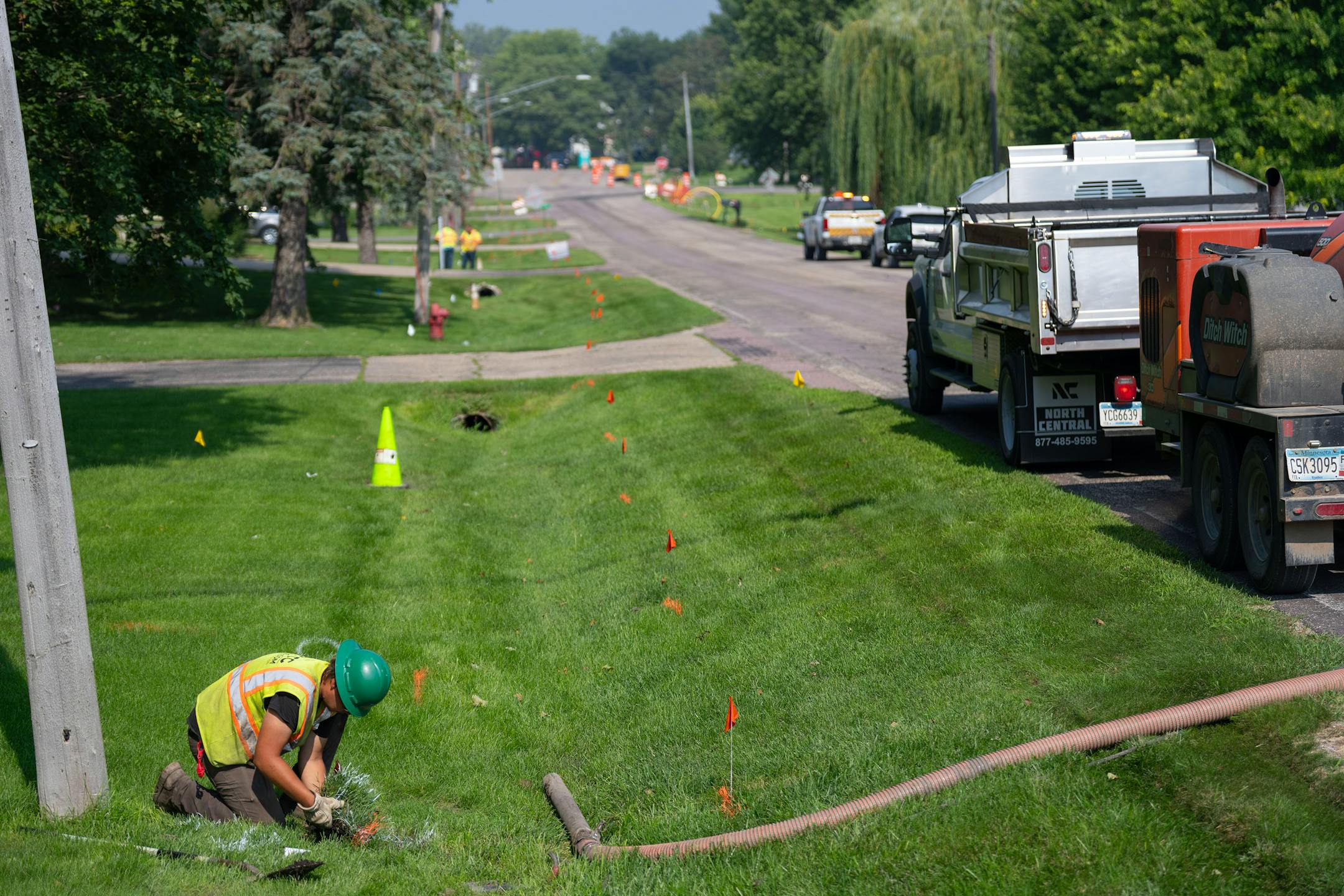
A worker prepares to hydro vacuum the ground to make it easier to lay fiber optic cables in St. Clair. (Alex Kormann/The Minnesota Star Tribune)
Correction: A previous version of this story stated that 2022 was the last year grant funding was delegated by the Minnesota Legislature. The article has been updated to include the 2023 and 2024 funding.
about the writer

about the writer

Eleanor Hildebrandt

Reporter

Eleanor Hildebrandt is a reporter for the Minnesota Star Tribune.

See Moreicon

More from Politics

See More
card image
Carlos Gonzalez/The Minnesota Star Tribune

Those charged Thursday reportedly scammed more than $11.6 million from housing stabilization and autism services programs.

card image