

Opinion editor’s note: Strib Voices publishes a mix of guest commentaries online and in print each day. To contribute, click here.
•••
As pastor and rector of the Basilica of St. Mary, I’ve seen how people from all walks of life find solace within our walls. Houses of worship are by their nature sanctuaries for grief and hope, places where pain is shared and prayers are whispered.
In addition to direct trauma, all of us in the Twin Cities are experiencing collective trauma. It’s best if we acknowledge this and chart a course toward healing and restoration. Faith communities in the Twin Cities have an important role to play in this regard. And while we may be a first stop in the immediate aftermath of deadly events, we can also continue to be a source of healing as our grief changes form.
In late August, as I was packing for a short trip to France, the news of a shooting in south Minneapolis flashed across the screen. I stopped in my tracks. Two young students from Annunciation Catholic School had been killed. The shock hit like a potent wave — another violent and senseless tragedy in the Twin Cities, and more beautiful lives taken from us. Once again, our city was thrust into mourning.
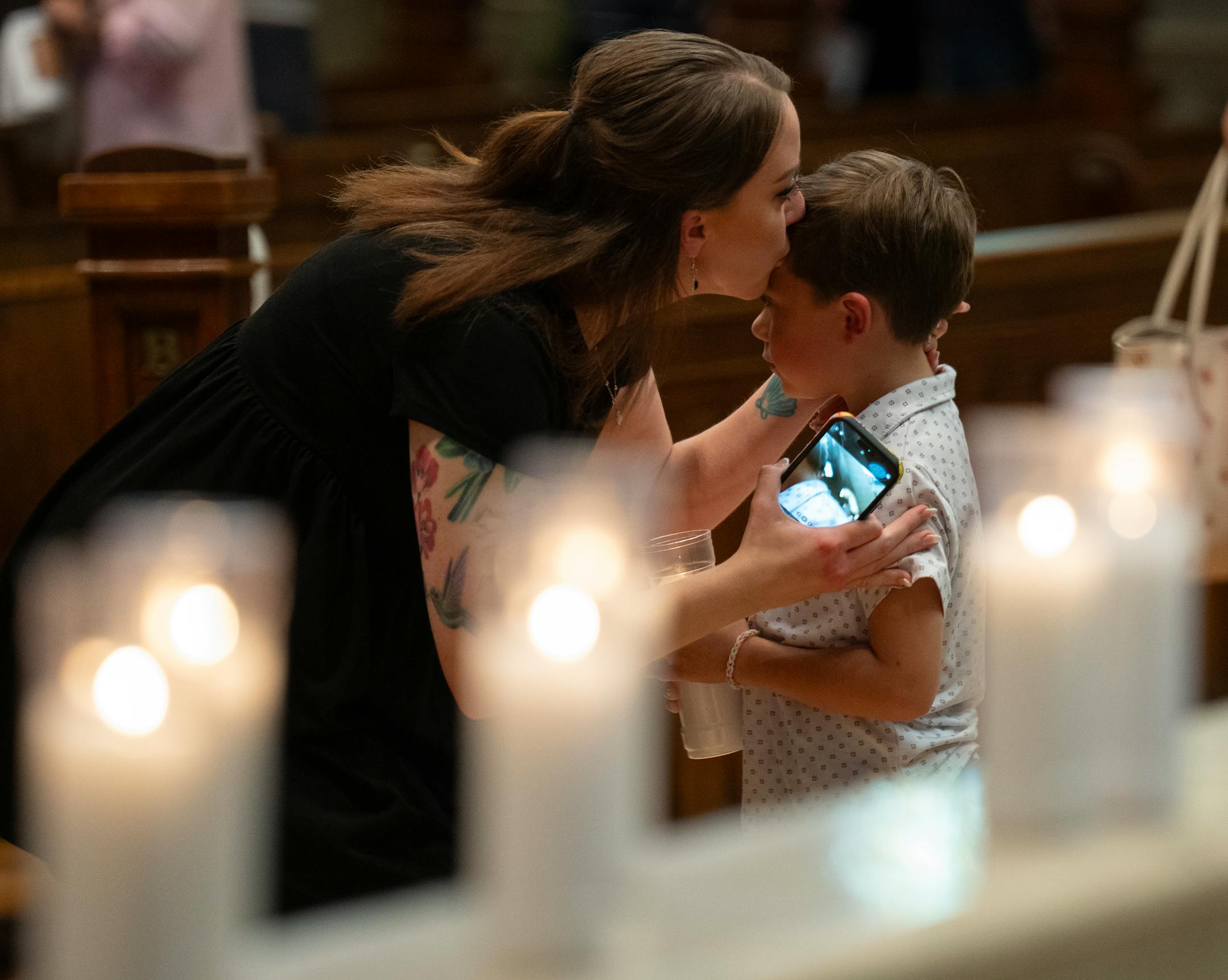
In the immediate aftermath, the Basilica offered familiar rituals that helped accompany us in the wake of this tragedy. The evening following the death of the students at Annunciation, we were blessed to host an interfaith prayer service — many were moved by the turnout and the beautiful words delivered by Rabbi Marcia Zimmerman and Archbishop Bernard Hebda.
Earlier this past summer, the Basilica hosted the funeral Mass of Melissa and Mark Hortman. The church was packed, the grief was palpable, and our community was honored to open our doors for such an important occasion.
There is nothing that compares to direct trauma — the Hortman family and the families of Annunciation bear the weight of incomparable grief and somehow have also manifested extraordinary grace and resilience in response.


