
Analysis: Did the Wolves forget how to win close games?

Two straight late-game collapses — Friday at Phoenix and Monday at Sacramento — make you wonder whether Minnesota learned anything from back-to-back playoff runs to the Western Conference finals.

Columnist Icon
The Minnesota Star Tribune
November 25, 2025 at 6:00PM
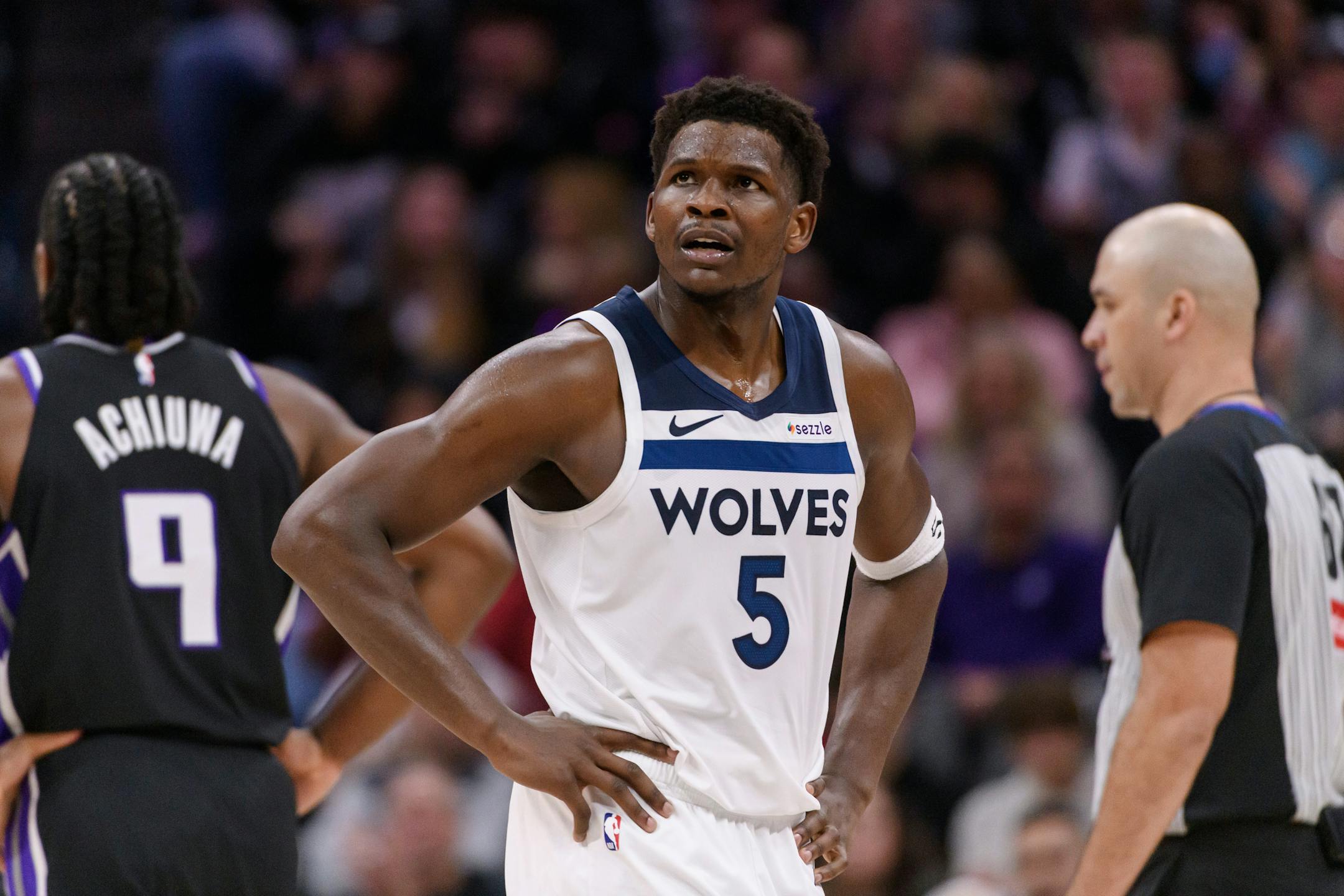
Despite dropping 41 and 43 points in back-to back-losses against Phoenix and Sacramento, Anthony Edwards committed late-game mistakes that led to fourth quarter collapses in both games. (Randall Benton/The Associated Press)

A nightmarish pair of games kicked off in Phoenix on Friday night, when Anthony Edwards and Julius Randle committed awful turnovers in the team’s final-minute meltdown.

In the end, an eight-point lead vanished in the last minute.

Then Monday, a 10-point lead went away in the final three minutes of regulation in a 117-112 overtime loss to the Kings.

It was a poetic ending, like a tornado circling back to the first block it hit. The Timberwolves haven’t learned anything about how to win close games.

If they have, they’re not showing it.

Last season, they were one of the worst clutch-time teams in the league, with a 20-26 record and the 25th ranked net rating in those games, defined by the league as games that are within five points in the last five minutes.

Now, they actually have the third-best clutch-time net rating, but don’t let that small sample size fool you.

Anyone who stayed up late to watch these two choke jobs knows this is not a team ready for big moments.

ADVERTISEMENT

Looking back, one of the most miraculous things about last season’s playoff run was that the Wolves actually played well in key moments in their series against the Lakers and Warriors.

They pulled out a number of close games (like Games 3 and 4 against the Lakers) or extended small leads in the final minutes, as they did on the road in Golden State in round two. Edwards, Randle and Chris Finch seemed like they had it figured out.

Now, everyone looks like they’re back at square one.

They were back to their old habits of standing around a lot on offense and hoping Edwards hits his difficult shots or they get an offensive rebound.

Edwards had 43 points against Sacramento on Monday night, but some of the contested isolation shots he took down the stretch and overtime, especially his first shot attempt of the extra session, an off balance three, weren’t ideal.

From that moment, you could tell the Wolves weren’t going to win Monday.

In addition, they’ve taken on a new alarming trend — making bad passes at the worst possible times.

Randle had two against Phoenix.

On Monday, it was Jaden McDaniels.

After stealing a pass from Russell Westbrook, McDaniels gave it right back as the Wolves tried to rush down the floor, and Keegan Murray hit a wide-open three as a result. Rudy Gobert also threw the ball away in the backcourt late in overtime.

Mentally, the Wolves looked lost, like close regular-season games on the road in November were too much to handle. Not like a team that for two seasons has won four playoff series.

But late-game offensive execution has not been a staple of the Finch-Edwards era so far, even two seasons ago, when they had a clutch net rating of -13.1 (22nd).

The Wolves and Finch also came into the season wanting to vary what they did in late-game situations on offense, like playing through Randle more, and not just rely on Edwards to make tough shots.

There wasn’t any variance in what they did Monday.

Finch told reporters after the game the offense has lost its rhythm that it had recently.

“We gotta get back to the way we were playing about a week ago when it comes to offense,” Finch told reporters. “A lot of things we were doing then we’re missing now.”

So perhaps it was no coincidence that Randle (5-for-13) and McDaniels (3-for-10) had tough offensive nights Monday. Randle helped create the great offense the Wolves were playing and McDaniels benefited from it.

After not putting in Jaylen Clark for the final defensive possession on Friday, Finch put him in as a defensive substitution late in overtime. But Clark ended up committing an away from the play foul on an inbound that led to a key free throw for Sacramento, who ended up with three points on that possession to grow its lead to four.

I tend to think the criticism Finch gets for his timeout usage is overblown, but even I would’ve used my timeouts a little more liberally in the fourth quarter and overtime. The buttons Finch is pushing right now (or choosing not to push) have come up empty the last two games.

Finally, let’s also be clear about the big picture.

Two games do not make a season, and perhaps losing in such disastrous fashion will inspire the Wolves to take a look inward at what they need to improve. Finch has always figured things out with his teams, even after rough starts to various seasons in his tenure.

This is, after all, a team with two straight Western Conference finals appearances.

But this was supposed to be a team with continuity, that had turned a corner and figured things out after last season’s strong finish and deep playoff run.

The last four days, they look like they haven’t learned much, and on Wednesday, a rematch with 17-1 Oklahoma City awaits. With the way both teams are playing now, that might ruin your Thanksgiving.

about the writer

about the writer

Chris Hine

Sports reporter

Chris Hine is the Timberwolves reporter at the Minnesota Star Tribune.

See Moreicon

More from Wolves

See More
card image
Bailey Hillesheim/The Associated Press

Brooklyn got to the basket early and often against a Wolves team that didn’t step up at either end of the floor.

card image