This Minnesota company leads all others in number of patents

Minnesota ranked fifth nationally in the number of patents per capita last year thanks to companies like Medtronic, Boston Scientific, Ecolab and Target. But one stands above.

The Minnesota Star Tribune
September 17, 2025 at 11:00AM
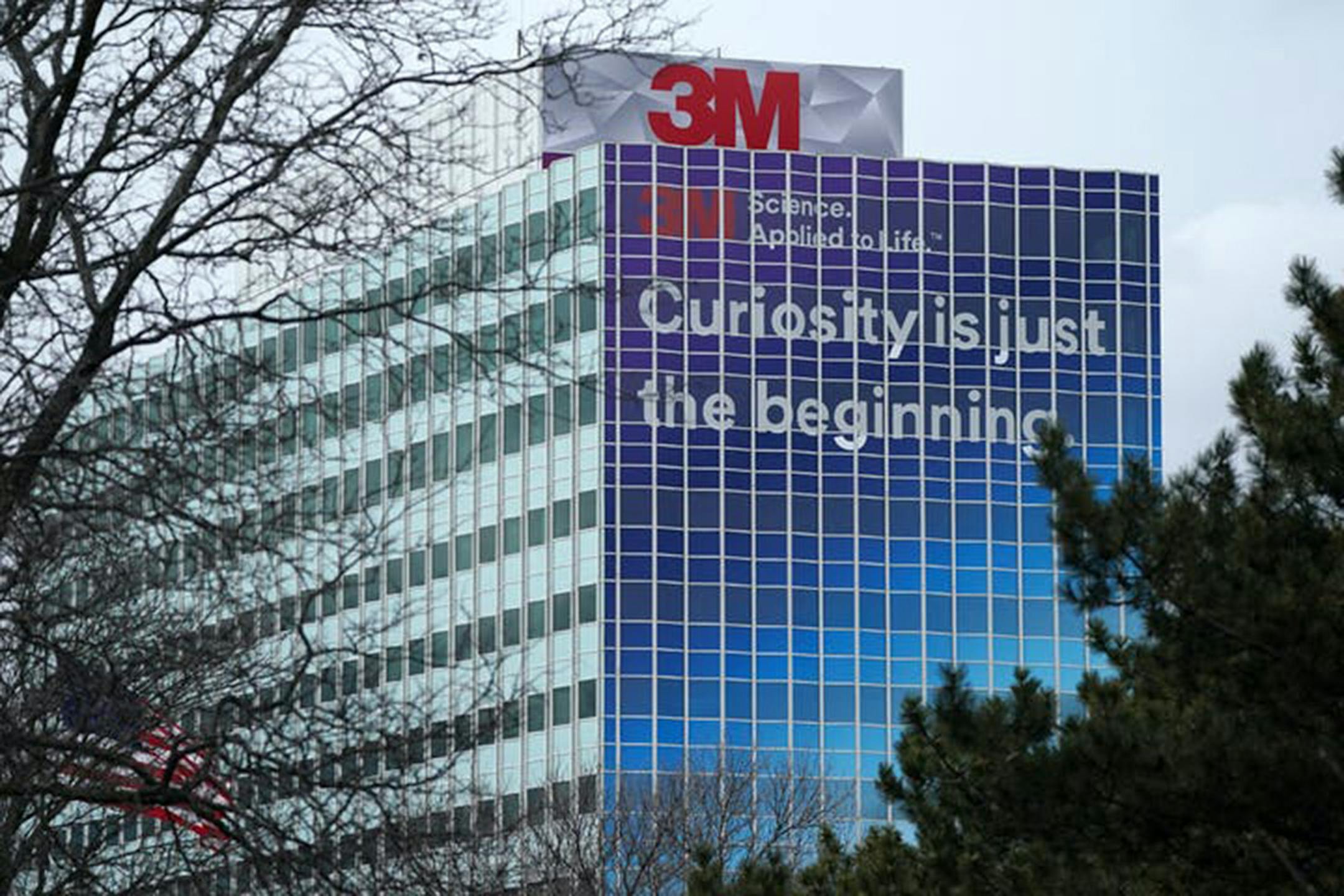
3M has been awarded the most patents among Minnesota companies the past three years. (Anthony Soufflé/The Minnesota Star Tribune)

Minnesota is a national leader when it comes to patenting new technology, and a few big companies are responsible for the lion’s share of that innovation.

In 2024, the state ranked fifth in patents per capita, according to U.S. Patent and Trademark Office data the Minnesota Department of Employment and Economic Development compiled.

Leading the way: 3M, which almost always tops the state list.

In addition to Maplewood-based 3M, where research and development (R&D) is the foundation of its business model, a strong medical device industry and several Fortune 500 companies help fuel an innovative culture in Minnesota.

The state leads the Midwest in the number of patents per capita. Minnesota also leads most Midwestern states in R&D investments, at 2.1% of gross domestic product (GDP), according to recent data from the U.S. Bureau of Economic Analysis.

The whole region falls well behind Washington, California, Massachusetts and New Mexico, where R&D investments stand at more than 5% of GDP. California, Washington and Massachusetts also perennially lead the patent race because of the tech and medical behemoths headquartered there.

Big names, big IP

The national patent office compiled a report for Minnesota’s patents during a three-year period for the Minnesota Star Tribune.

3M — through its intellectual property arm, 3M Innovative Properties Co. — has earned the most patents among Minnesota organizations in each of the past three years, averaging 432 patents per year.

3M CEO Bill Brown is leaning on innovation at the 123-year-old company to drive growth.

Medtech companies Medtronic and Boston Scientific have traded the second and third spots on the list the past three years.

While Boston Scientific does not headquarter in Minnesota, it has its biggest manufacturing base in the state, as well as its patent arm. Same with Medtronic, which is officially based in Ireland.

St. Paul-based Ecolab and Minneapolis-based Target Corp. round out the top five. Target also leads all U.S. companies with trademark applications in the past three years.

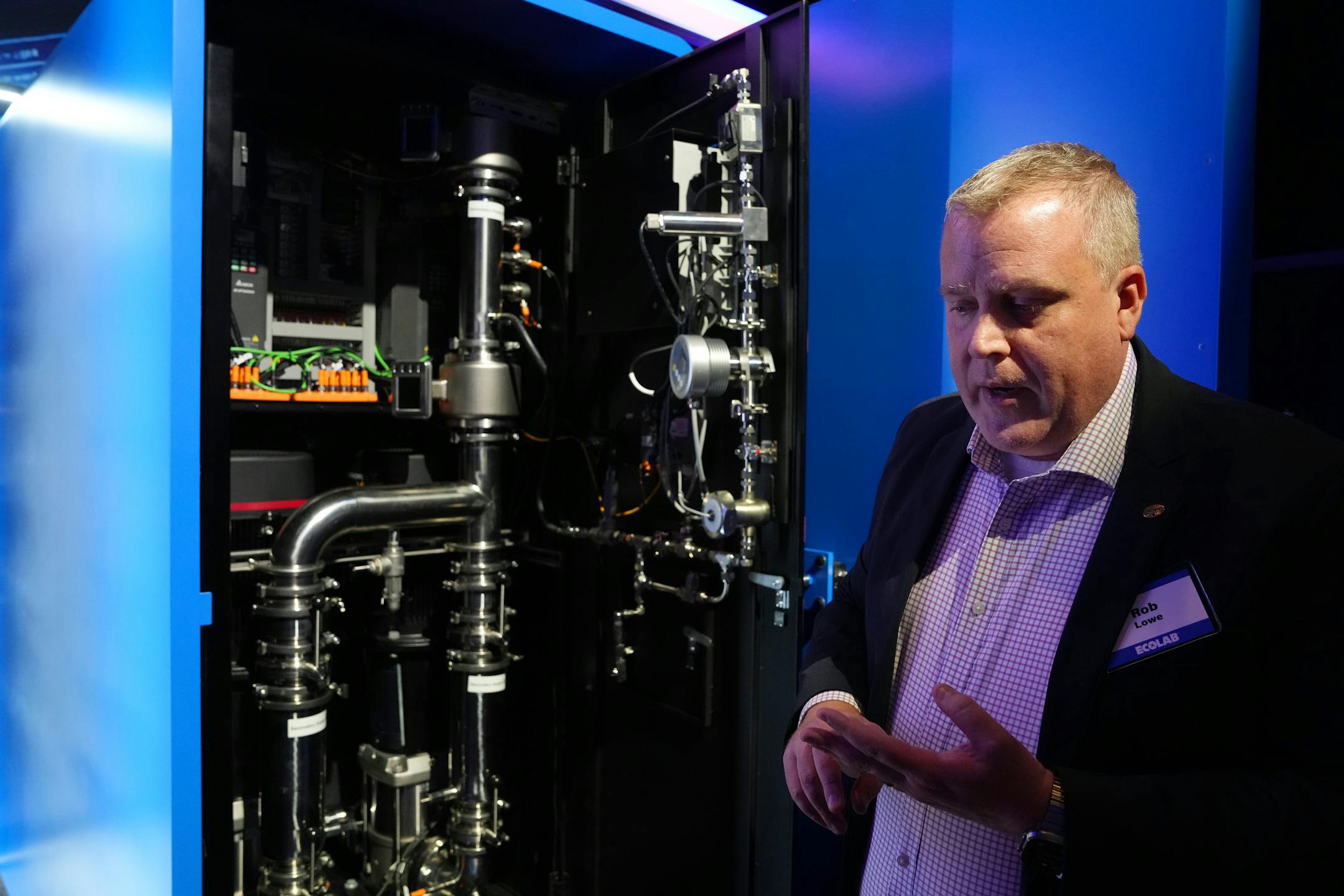
Rob Lowe, a customer technical specialist at Ecolab, shows the company's data center cooling innovations during an investor day event at Omni Viking Lakes Hotel in Eagan. (Anthony Souffle/The Minnesota Star Tribune)

To patent or not to patent?

Minnesota’s history of innovation dates back to its roots in milling, manufacturing, medical devices, lumber, railroads and retail.

Merchant & Gould, an intellectual property law firm, formed 125 years ago in Minneapolis because of Minnesota’s knack for new technologies and processes.

And the inventions continue, said managing partner Heather Kliebenstein.

“The level of innovation from the companies in our city is just tremendous,” Kliebenstein said.

While patents are at the heart of an intellectual property portfolio, she said, they aren’t a measure of all activity. And there are instances where companies might not patent new ideas.

In quickly developing industries, technology could be outdated by the time the two-to-five-year patent process completes.

A company receives 20 years of exclusivity once it secures a patent following an approval process that could cost anywhere from $8,000 to $25,000, according to Kliebenstein.

Also, once a patent expires, other companies are free to replicate that technology or process, which is a reason the formulas for Coke or Kentucky Fried Chicken are unpatented.

New product development matters

In early September, Ecolab hosted an investor day to highlight innovation in four growth areas at the company: pest elimination, life sciences, global high-tech and Ecolab digital offerings.

At the event, officials described how Ecolab is changing the way it looks at innovation, leaning less on minor product renovations and taking more swings at breakthrough innovations like artificial intelligence.

“Ecolab’s innovation pipeline is stronger than ever as we drive impact across diverse industries,” said Larry Berger, chief technology officer at the company.

New products are so critical to companies that they often measure success by the percentage of revenue earned from products introduced in the past three to five years. Many companies also recognize the designers, engineers and product specialists who obtain patents each year.

Earlier this year, Bloomington-based Donaldson gave Mikayla Yoder, an advanced research and development manager, its emerging innovator award. The chemist, who has a bachelor’s degree from Bradley University and a Ph.D. from the University of Illinois Urbana-Champaign, joined Donaldson in 2019 and now has 69 patents to her credit.

Her award this spring recognized her contributions in developing new membranes used in consumer packaged goods. Her work on both patented and proprietary technologies is mainly for filtration membranes that help protect hearing aids, ostomy bags or other medical devices from moisture, particles or oil.

Mikayla Yoder, advanced research and development manager at Bloomington-based Donaldson, won the company's emerging innovator award this year. (Donaldson)

As a scientist, Yoder said she thrills in the creativity and science of how things work and applying that to novel products; sometimes that leads to her name on new patents.

“I’ve had some freedom in my ability to find cool technologies,” she said, “and figure out where they might be applicable to Donaldson products.”

about the writer

about the writer

Patrick Kennedy

Reporter

Business reporter Patrick Kennedy covers executive compensation and public companies. He has reported on the Minnesota business community for more than 25 years.

See Moreicon

More from Number Crunch

See More
card image
Richard Tsong-Taatarii/The Minnesota Star Tribune

Shareholder advocates frequently urge companies, including Target and UnitedHealth Group, to split the role in support of good governance.

card image
card image