

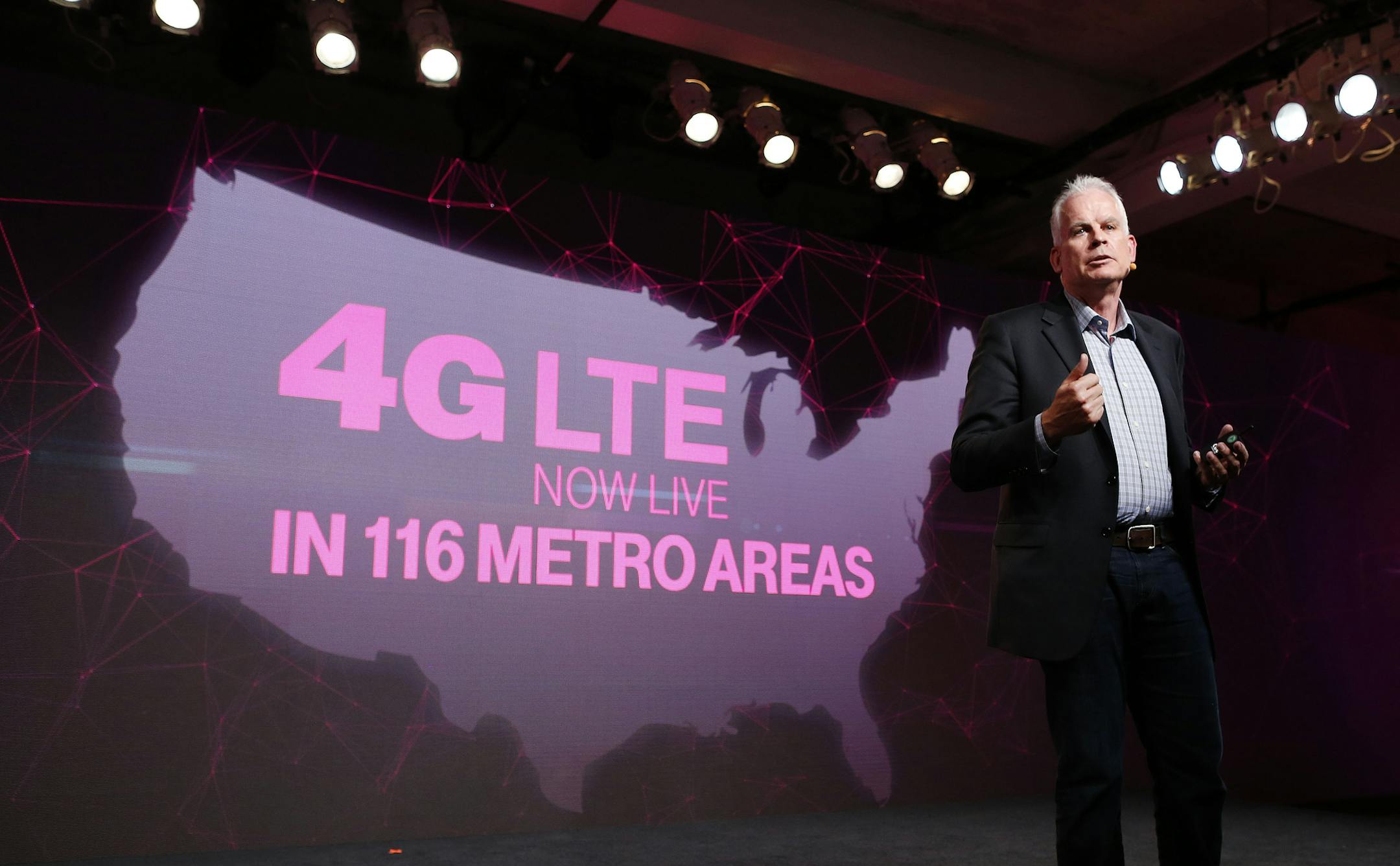
There's change in the air, and the big cellphone companies are trying to make the most of it.
The change is 4G, or fourth-generation, cellphone service, made possible by a technology called LTE, or long-term evolution, which makes data travel through the air about 10 times faster than the previous 3G service.
The result is better video and improved Web browsing for phones and new services such as video surveillance and Internet access in moving cars.
LTE, which has been deployed across the country over the last four years, is now the driving force behind sales of smartphones. LTE-capable phones now account for half of U.S. cellphone sales, said research firm Strategy Analytics.
"The main attraction of LTE for consumers is faster download speeds," said Neil Mawston, an analyst at Strategy Analytics. "LTE is broadband in your pocket."
There's clearly something in it for cellphone companies, too.
"A main attraction of LTE for operators is more network capacity and a chance to upsell higher-priced data plans or devices," Mawston said.
The companies with the most national LTE coverage are Verizon Wireless, AT&T, T-Mobile and Sprint, in that order, Mawston said.


