
Minnesota national park units remain open, but visitor centers are closed, research disrupted

Some nonprofit partners cite public confusion, lack of information during goverment shutdown.

The Minnesota Star Tribune
October 15, 2025 at 9:33PM
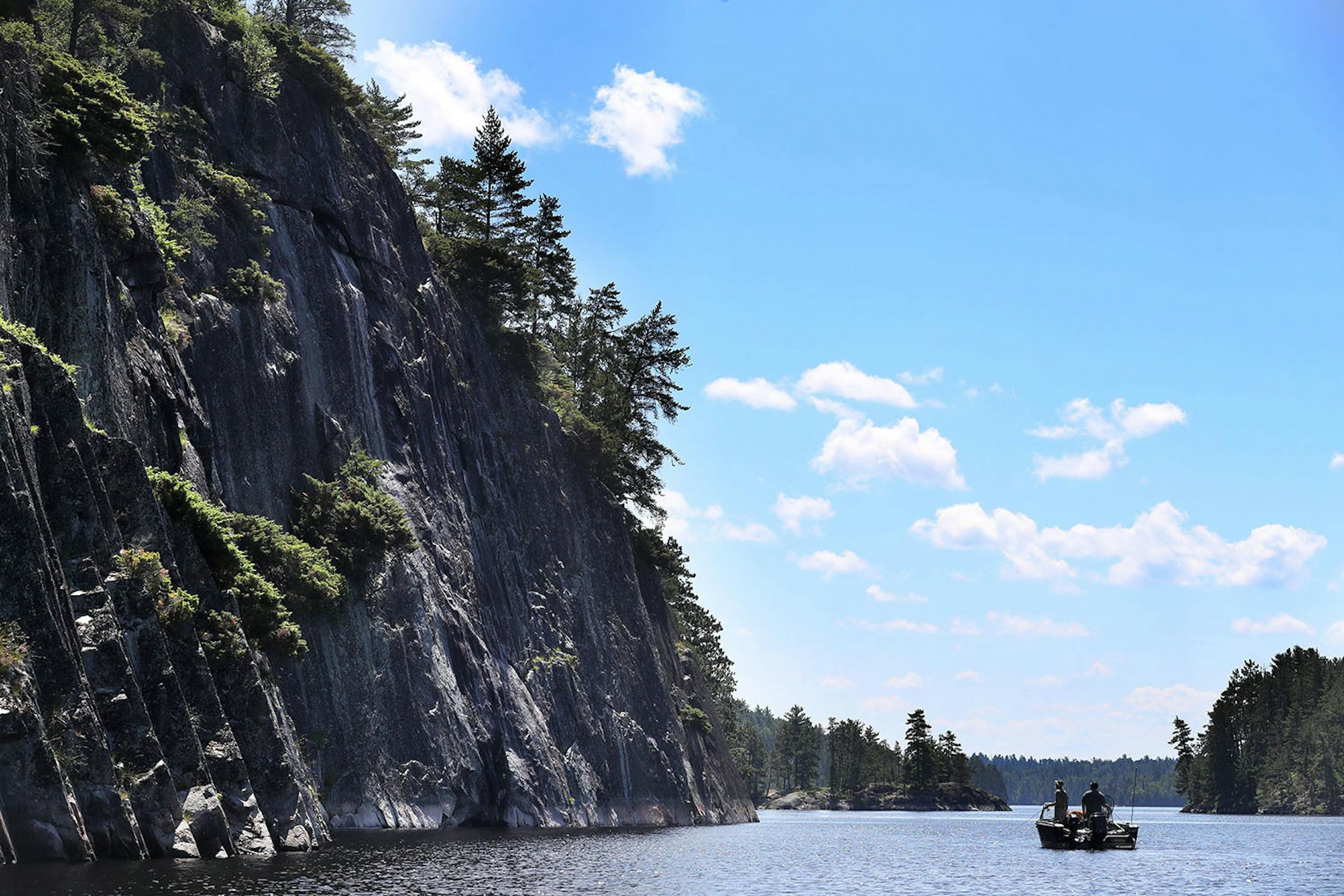
Fishermen float near the Grassy Bay Cliffs in Sand Point Lake in Voyageurs National Park.
Units of the National Park Service in Minnesota, including Voyageurs National Park, remain open to visitors during the federal shutdown, but visitors centers are closed and most programs canceled. (Tom Wallace/The Minnesota Star Tribune)

As the federal government shutdown enters its third week, Minnesota’s six National Park Service (NPS) units are open but visiting them isn’t the experience the public might expect.

Visitor centers and other buildings are closed, and only essential staff like law enforcement are working. The NPS also has canceled public events, programs and suspended wildlife research projects, according to some of the units’ official nonprofit partners.

“It is difficult to get information,” said Crystal Davis, National Parks Conservation Association senior Midwest regional director, whose units include Minnesota. “There are parks that have been told not to talk.”

An NPS spokesperson said the agency “will keep parks as accessible as possible. ... Critical functions that protect life, property and public health will remain in place.”

Here is an update on Minnesota’s Park Service sites:

Voyageurs National Park

Fall color lovers are showing up at the park up north, with some caught off-guard by closed meetup areas, said Christina Hausman Rhode, Voyageurs Conservancy executive director.

Like park headquarters in International Falls, the Rainy and Kabetogama lakes visitor centers are closed. She said the federal government was late to post closure signage after the shutdown began, and that confused visitors. The shutdown also has choked off communication. The park last posted on its Facebook page Oct. 1, the day the shutdown began.

Long-term wildlife studies are on pause, too, she said. One involves the 3,000 beavers that dwell in the park and how they shape its wetlands and forests.
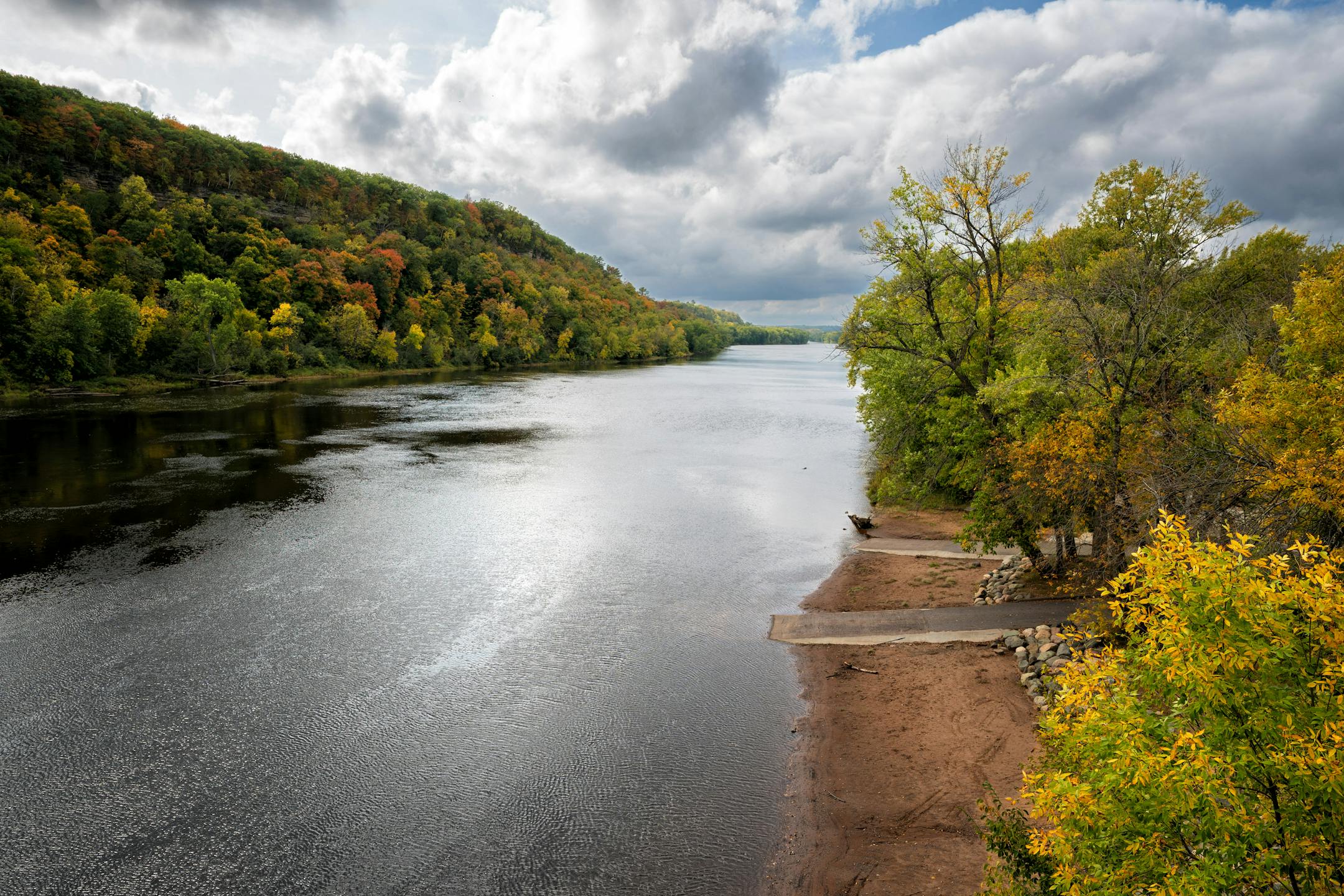
The St. Croix National Scenic Riverway includes the St. Croix, shown above, and Namekagon rivers. (Glen Stubbe/The Minnesota Star Tribune)

St. Croix National Scenic Riverway

Wild Rivers Conservancy, the NPS unit’s nonprofit partner, has canceled and reorganized field trips for elementary school students across the St. Croix Valley, said Matt Poppleton, the group’s executive director.

The group has been leading programs at least once a day since the beginning of the school year. Its staff has been spread thinner because of the absence of NPS rangers to help teach some programs in its Our Rivers Are Alive curriculum.

The conservancy recently had to cancel its involvement in a field trip along the St. Croix River for 120 students from Lakes International Language Academy of Forest Lake, and instead devote its staff to another program with Shell Lake, Wis., students. It also couldn’t meet at the scenic riverway’s visitors center in Trego, Wis. The center is closed.

Interstate State Park staff in Taylors Falls, Minn., pitched in to help the Language Academy teachers and students.

“It is all hands on deck to see how we can preserve some of these field trips,” Poppleton said. Programs related to the Rivers Are Alive curriculum run through October.

The shutdown also has also set back collaborative research work.

The group works with rangers to monitor for zebra mussels in the St. Croix River watershed. They pull up special plates to test for the presence of invasive species. Normally, NPS technicians and their boats would take them to the research sites. Poppleton said the group is scrambling to continue to collect the data this week.

“If we weren’t here for that, those [samples] would inevitably wait until next year,” Poppleton said. “We’d miss a year of data, and it just compromises all the priorities we have in monitoring the invasive species.”

Mississippi National River & Recreation Area

This national part unit is a 72-mile-long swath of parks and public lands running through the Twin Cities.

The Mississippi Park Connection, the river recreation area’s nonprofit partner, has canceled 12 events, mainly youth education programs but also a birding event and a ranger-led walk.

At least 12 more events in the next two weeks also are in jeopardy in the unit, said executive director Ellen Reed said.

Reed said she also is concerned about reports of trash and off-leash dogs at Coldwater Spring in south Minneapolis, a center of long-term habitat restoration.

“We’re asking people who choose to visit Coldwater Spring during this time to make extra efforts to leave no trace and comply with important rules that protect this beloved park,” she added.

The visitor center at the Science Museum of Minnesota and Kellogg Square park office in St. Paul are closed.

View post on Instagram
 

Pipestone National Monument

The park unit at the far southwestern corner of the state near Luverne is known for its soft red rock, sacred material to generations of Native tribes, including the Dakota and Lakota.

The visitor center is closed. Other areas of the park are open, including the Circle Trail that courses past some of the pipestone quarries, and restrooms attached to the visitor center.

A gift shop at the visitor center, run by the Pipestone Indian Shrine Association, also is closed. That has affected the income of four pipestone demonstrators who, until Oct. 1, were presenting their skills and their wares seven days a week to visitors, said office manager Jeannie Swenson. They were scheduled to work through the end of the month. The shop clerk also is out of work for now.

A second gift shop in Pipestone is unaffected.

“Visitors … are expected to protect park resources by following all regulations and ‘Leave No Trace’ practices,” read a message on the unit’s NPS webpage.

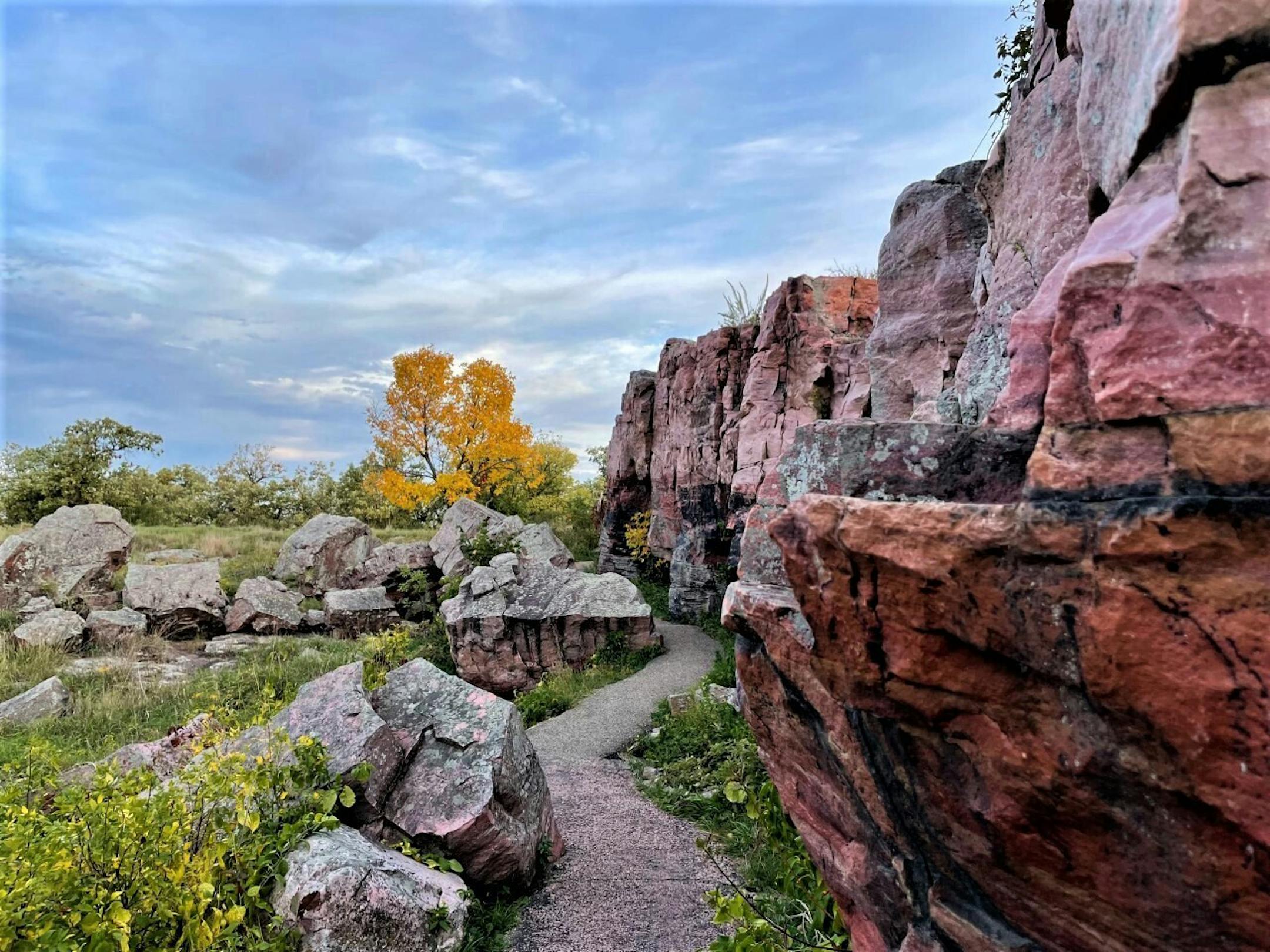
Pipestone National Monument’s Circle Trail winds through pink quartzite formations and tallgrass prairie. (National Park Service)

Grand Portage National Monument

At the unit on the North Shore, the Historic Depot and the Heritage Center, which also is the unit’s headquarters and visitor center, are closed. The grounds and trails are open.

North Country National Scenic Trail

The shutdown could affect long-planned work on a new 11-mile segment, said Matt Davis, North Country Scenic Trail Association regional director for Minnesota, Wisconsin and North Dakota. The national trail covers 4,800 miles from North Dakota to Vermont. About 850 of those miles course through northern Minnesota.

The association collaborates with the NPS and federal agencies such as the U.S. Forest Service and U.S. Fish & Wildlife Service.

Near Remer, some trail volunteers will work on a new segment late next week in the Chippewa National Forest. But they will operate without liability protection if the shutdown continues, Davis said. The shutdown suspends normal protection under the NPS’ Volunteers-In-Parks program.

“For some people, that [protection] is important,” he said.

The shutdown undercuts what is traditionally the busiest season for trail work due to the weather, Davis said. The volunteers also might go it alone: Their Forest Service allies in the national forest won’t be on-site with their chain saws.

Correction: An earlier version of this story incorrectly referred to Mississippi Park Connection.
about the writer

about the writer

Bob Timmons

Outdoors reporter

Bob Timmons covers news across Minnesota's outdoors, from natural resources to recreation to wildlife.

See Moreicon

More from Outdoors

See More
Rising above the treeline (Top of this photo), on the shore of Birch Lake, the Twin Metals Copper Nickel Mine Plant site and Tailings Management site is part of the proposed plan. ] In theory, the copper-nickel mine Twin Metals wants to build in the headwaters of the Boundary Waters Canoe Area Wilderness is a zero-discharge mine — a closed loop that will endlessly recycle millions of gallons of water, including rainwater and the polluted process water it uses to extract ore and
Brian Peterson/The Minnesota Star Tribune

The copper-nickel mine is controversial for its proximity to the Boundary Waters Canoe Area Wilderness, and the Biden Administration had canceled its leases.

card image
card image