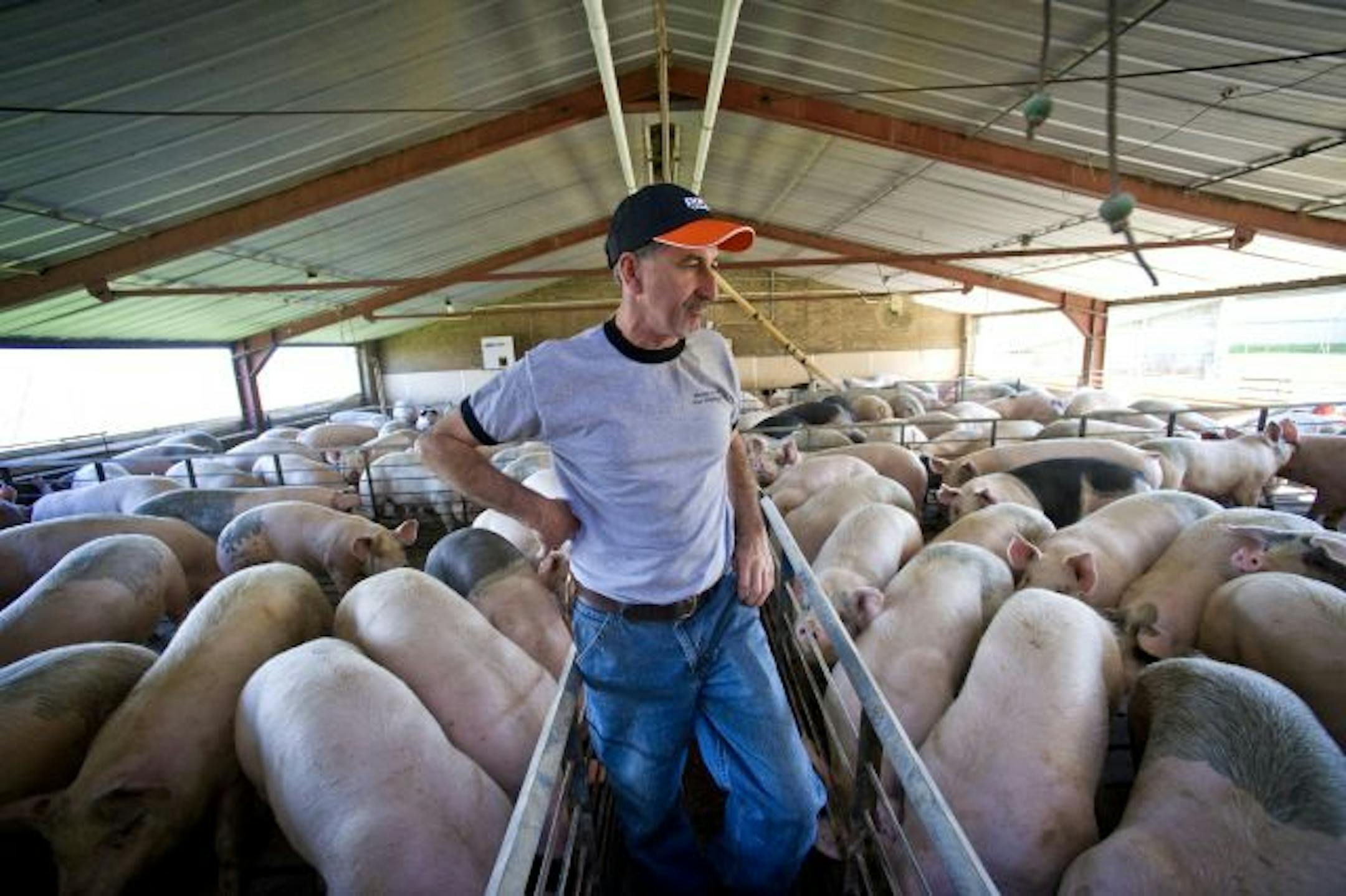
NICOLLET, MINN.
In 35 years of farming, Rick Grommersch had never seen anything like it -- corn out of the ground in April. By month's end, some sprouts were already ankle-high. "We're off to a good start," Grommersch said as he strode through the cornfield on his hog farm.
Corn is the key ingredient in hog and cattle feed, and with any luck, those early corn shoots will prove a metaphor for Grommersch and legions of Minnesota livestock producers.
While consumers have been enjoying lower-priced pork and beef, hog and cattle farmers have gotten hammered. Grommersch hasn't made a profit since 2007, and he's had to dip into savings normally earmarked for vacations, home improvements or even his kids' college education.
In 2009, Minnesota farm income hit its lowest level since 2001, while experiencing its biggest annual decline in almost 30 years -- 63 percent -- and hard times on hog and cattle farms were a key culprit.
Supply and demand was out of whack, with the bleak global economy denting demand for pork and beef without a corresponding decline in production by farmers. The price of corn remained relatively high. And to top it off, pork producers got nailed by fear of the H1N1 virus -- aka swine flu -- even though it couldn't be spread by eating pork.
But this year, demand is picking up, while the supply of cattle and hogs has fallen. Prices for the meats have risen nicely in recent months, and for the first time since 2007, many weary producers should be profitable this year. "The hog guys, the cattle guys -- they were really dealt a tough hand," said Michael Swanson, an agricultural economist at Wells Fargo. "Things are finally breaking their way."
In 2009, every sector of Minnesota's farm economy took a hit. But crop farmers were coming off a tremendous 2008 and despite a 55 percent decline in farm earnings last year, still managed to post a median income of $60,101, according to an annual study by the Minnesota State Colleges and Universities system and the University of Minnesota Extension Service.