Border czar tells Minnesotans to stop impeding ICE. It’s not always clear what that means.

Tom Homan predicated ending Operation Metro Surge on protesters not “obstructing” ICE. But legal experts say the definition has become overly broad.

The Minnesota Star Tribune
February 6, 2026 at 12:00PM
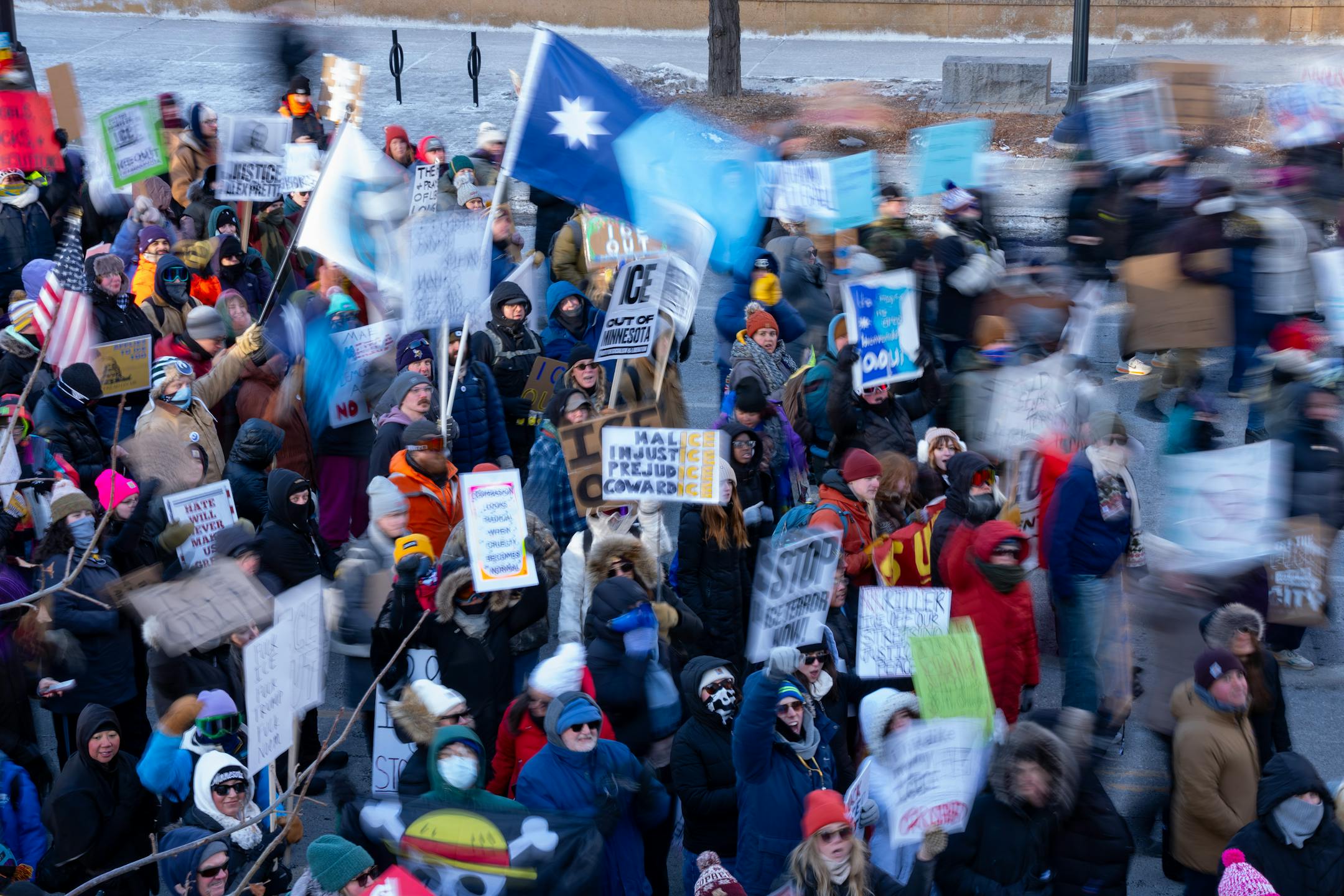
Thousands of anti-ICE protesters march through the streets of downtown Minneapolis on Jan. 30. (Alex Kormann/The Minnesota Star Tribune)

Tens of thousands of protesters marching with signs. A chorus of whistles shrieking to alert neighborhoods to the presence of federal agents. Parents escorting neighborhood children to school. People on street corners holding up phones to record what they see.

The overwhelming majority of the pushback against the federal immigration enforcement surge in Minnesota has been peaceful, even amid efforts to make agents’ jobs difficult.

But sometimes, it’s turned more aggressive. People taunt agents and throw snowballs, and in a relatively small number of cases — often over-represented in viral online videos — build barricades, smash vehicle windows, vandalize hotels and shove agents.

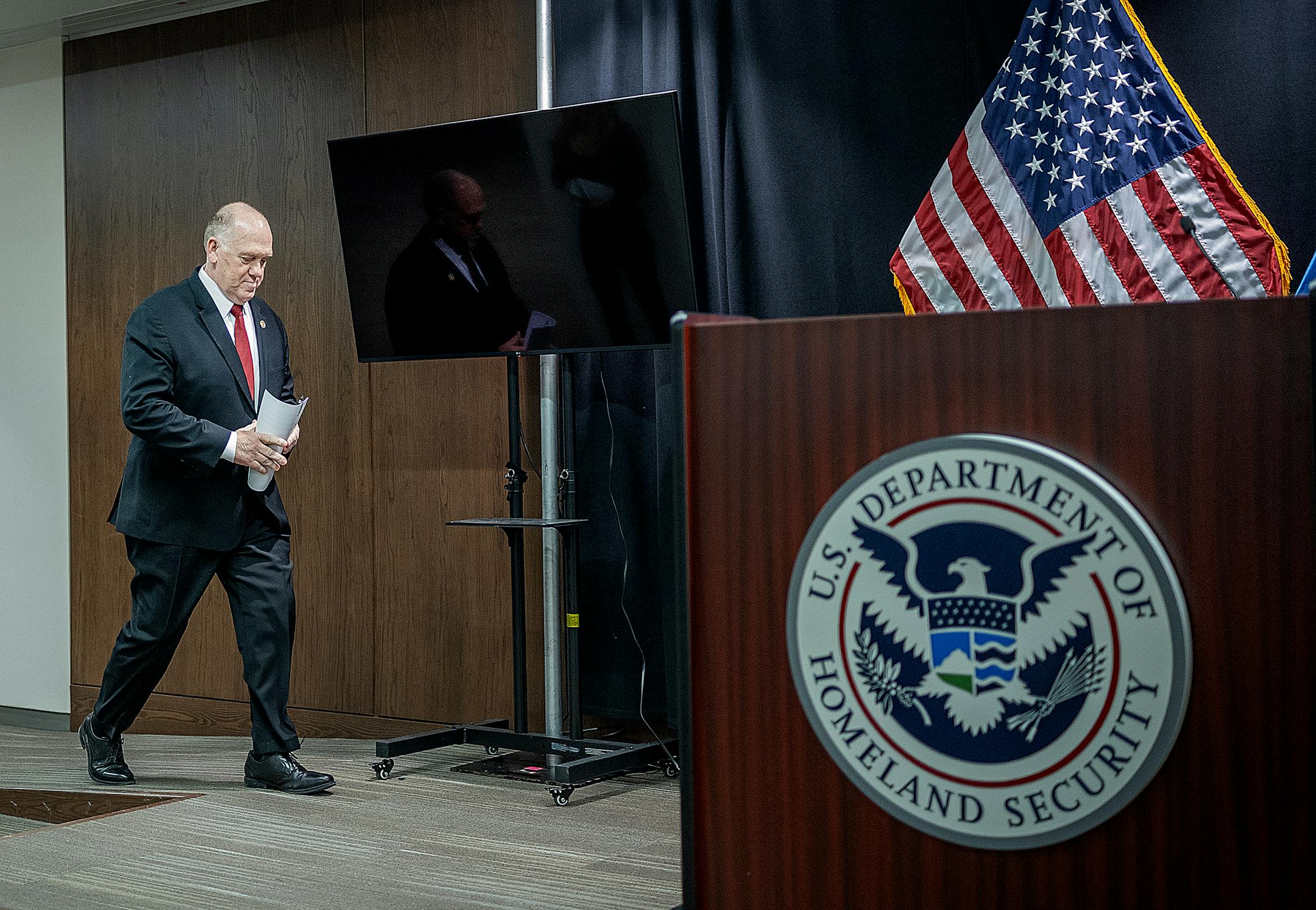
On Wednesday, as border czar Tom Homan announced 700 agents would be leaving the state, he said the surge would end when protesters stop impeding agents’ work in Minnesota. He cited protesters’ road blocks, doxxing of agents, hateful rhetoric, impeding officers and touching agents as examples of behavior he sees as troubling.

“Protest,” he said. “But stop impeding, stop interfering, stop violating the law. We will arrest you.”

But defining when resistance crosses over into obstruction and a crime isn’t always simple.

And legal experts told the Minnesota Star Tribune it’s even murkier in the current environment because the Trump administration seems to use a very broad definition of “obstruction” and at times flouts the law itself.

Plenty of things that make a law enforcement officer’s job more difficult are perfectly legal, said Ilya Somin, a professor at George Mason University’s Antonin Scalia Law School.
“But as to where is the precise line? I think it’s hard to identify a general rule for that,” Somin said.

Border czar Tom Homan makes his way to the podium to address the media at the Whipple Federal Building in Ft. Snelling on Feb. 4. (Elizabeth Flores/The Minnesota Star Tribune)

At the Feb. 4 news conference, Homan said that in the past month 158 people have been arrested for assaulting, resisting or impeding officers.

Fourteen people were accused of assaulting agents in charges unsealed Jan. 28. On social media, U.S. Attorney General Pam Bondi referred to the group as “rioters” who resisted and impeded agents. And on Feb. 3, a Minneapolis woman, accused of trailing agents and ramming her vehicle into one of theirs, appeared in U.S. District Court.

Affidavits filed in federal court include accusations ranging from spitting at to throwing a brick at federal agents. They also accuse protesters of impeding law enforcement by shoving agents and blocking or striking agents’ vehicles.

But what has happened in other cities shows the cases don’t always stick. In December, the Associated Press found that of 100 people charged with felony assaults on federal agents, more than half had charges reduced to misdemeanors or dismissed. All five defendants who had gone to trial were acquitted.

Tim Zick, a law professor at the College of William and Mary, said the federal government seems to have “adopted an overbroad interpretation of ‘obstruction’” noting the much-publicized case of a man who threw a sandwich at a federal agent in Washington, D.C. — and was acquitted.

“The administration has tried to blur the line between objecting and dissenting to its actions and obstructing them,” Zick said.

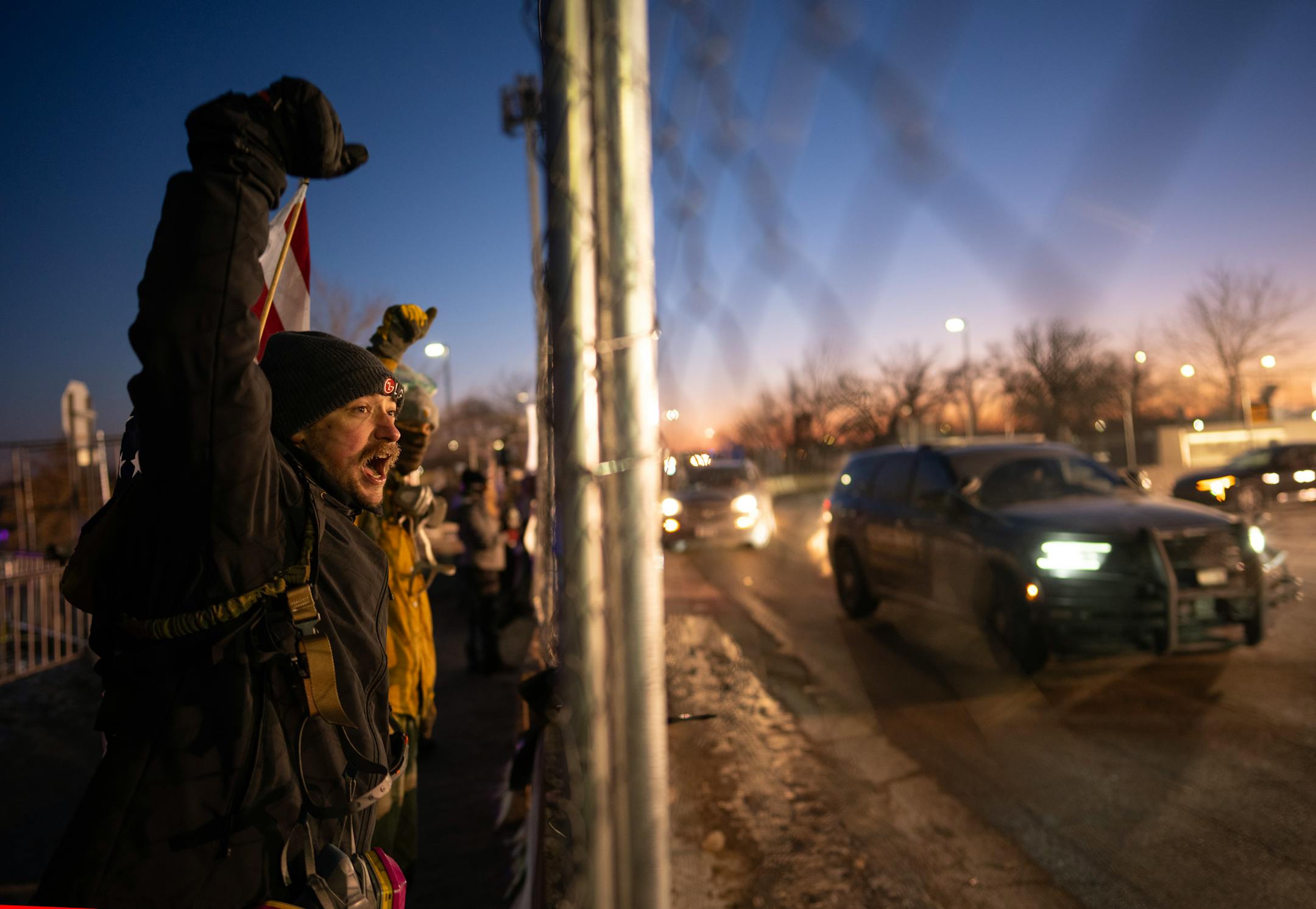
A demonstrator raises his fist in solidarity after a vehicle honked in support while passing the daily protest across the street from the Whipple Federal Building at Fort Snelling on Jan. 25. (Jeff Wheeler/The Minnesota Star Tribune)

Protesting vs. obstruction

Many forms of protest — even kinds that annoy or offend law enforcement — are protected in the United States, said Christy Lopez, a law professor at Georgetown University and former U.S. Department of Justice civil rights official. Some, like vandalism or violence, clearly aren’t, while others, like impeding law enforcement, can fall into a gray area.

Obstruction of law enforcement, Zick said, typically involves a physical act of interference, such as “preventing passage, assaulting an agent or intervening in an arrest.”

Whether something can be considered obstruction often depends on who’s making that call.

Lopez said she’s seen “a lot of federal law enforcement agents telling people they are doing things that are unlawful that are not unlawful. So that makes it more difficult.”

For instance, while filming in public places is legal, she said agents might unlawfully order people to stop. But “if you’re right in their face and they’re in the middle of doing something, that can be considered obstruction.”

Catherine Ross, law professor at George Washington University, warned that a person could face prosecution for obstructing law enforcement even if a court later finds the law enforcement actions, such as warrantless seizures, were illegal or unconstitutional.

In addition to marching and singing, some protesters have engaged in civil disobedience, or intentionally breaking laws, as a form of nonviolent protest.

Lopez said actions such as putting up barricades in the street “do open up people to arrest sometimes. And that is a long, proud tradition in the rights movements in this country, is people being willing to be arrested.”

Other actions, she said, such as breaking windows or assaulting officers, are “just unlawful.”

The difference between observing and obstructing is front of mind for Minnesotans resisting ICE and its tactics.

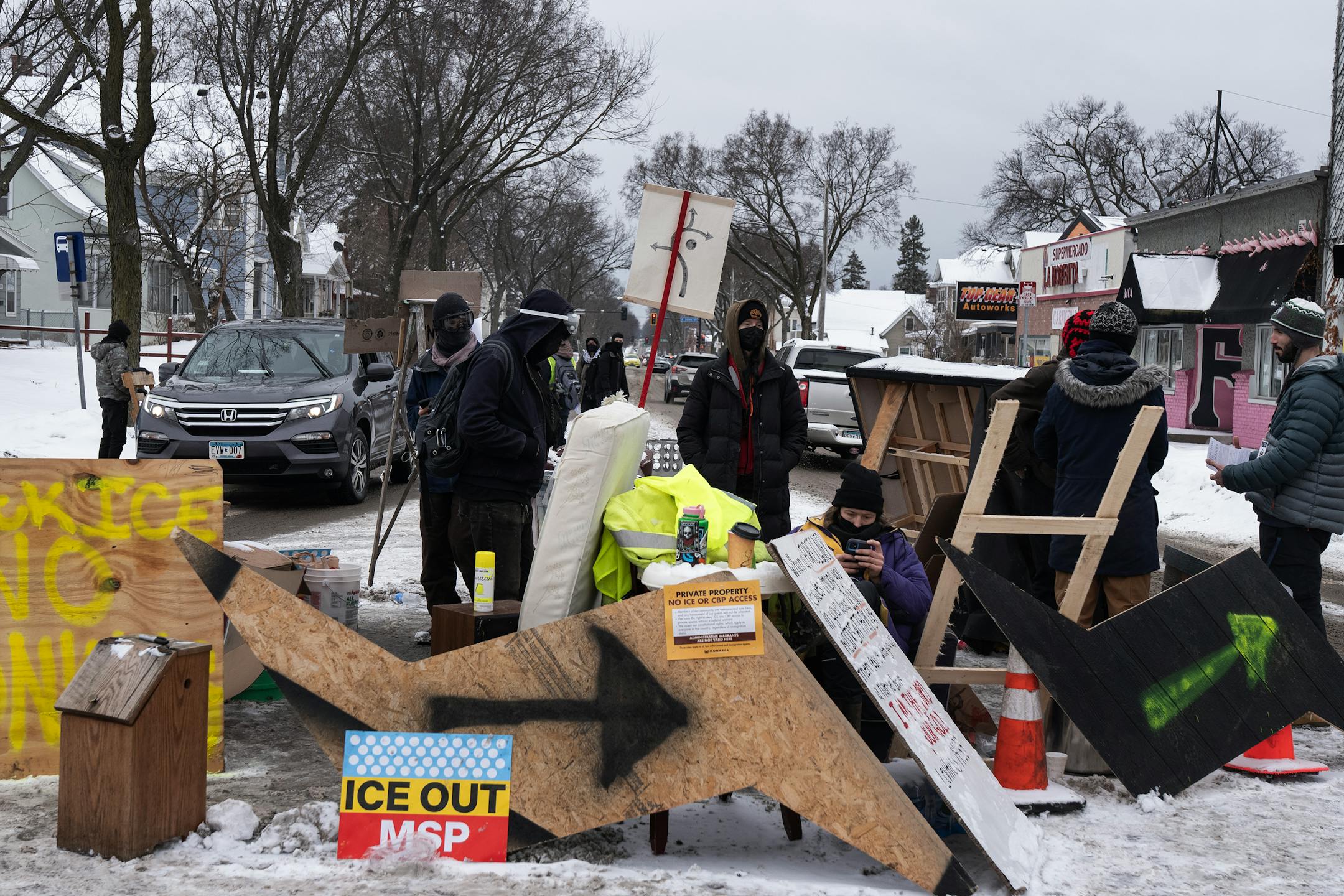
Observers build a barricade at E. 34th Street and Cedar Avenue as a checkpoint for ICE vehicles entering the Powderhorn neighborhood in Minneapolis on Feb. 1. (Richard Tsong-Taatarii/The Minnesota Star Tribune)

The legions of Minnesotans trained to observe immigration agents are doing just that — legally, said Will Stancil, a Minneapolis attorney who has been tracking immigration enforcement vehicles.

But federal agents “are pretending that this effort to monitor and record them constitutes obstruction and it’s just wrong,” he said.

Tensions sometimes flare between those who seek to observe or protest immigration enforcement within the confines of the law and those stepping over the line.

Stancil recounted watching some protesters set fires in dumpsters after federal agents killed Alex Pretti. Then, he watched as other protesters chased the fire-starters off. Despite the tensions between agents and protesters that day, things never boiled over, he said.

Kaegan Recher, who follows ICE vehicles and volunteers as a community observer, said he thinks keeping things peaceful is the way to keep public support on the side of the protests.

“Obviously, there’s going to be some people who might cross the line, and I’ve seen it myself,” he said, clarifying that the vast majority of those resisting ICE are parents, grandparents, everyday citizens. “We need those grandmas and those grandpas out on street corners more than we need anybody who’s smashing windows or cutting tires.”

Recher acknowledged that some protest efforts, such as honking horns and blowing whistles to alert neighborhoods of federal agents’ presence, are an attempt to impede immigration enforcement — because he sees agents ignoring legal norms.

“They’re targeting people of color on the streets, they are pulling people of color out of their cars,” he said. “So, as far as that’s concerned, we want to make those community members aware of ICE’s presence so that they can protect themselves.”

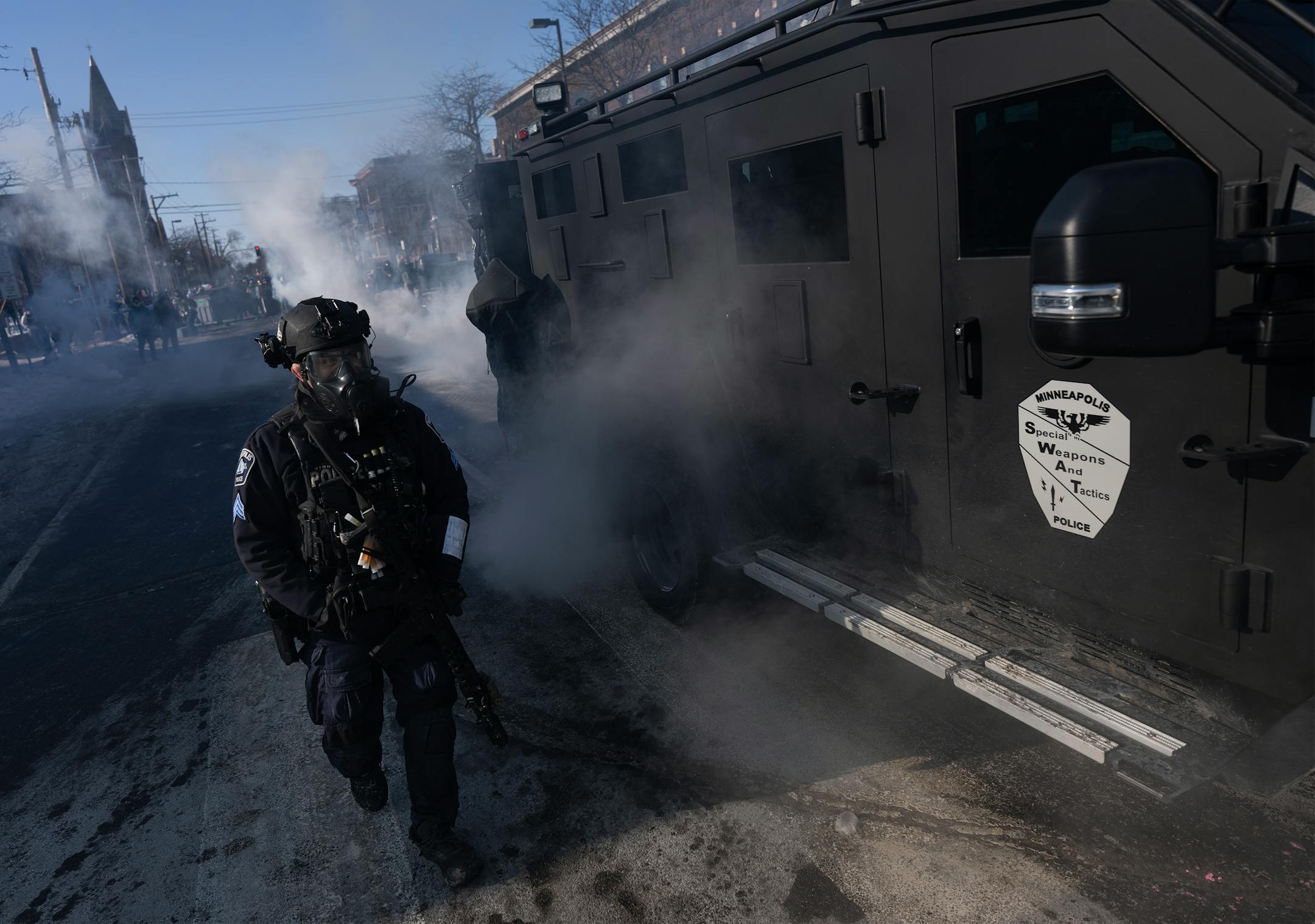
Minneapolis police officers deploy tear gas to clear the scene of protesters after the fatal shooting of Alex Pretti on Nicollet Avenue on Jan. 24. (Richard Tsong-Taatarii/The Minnesota Star Tribune)

Different views

The Trump administration’s view of the situation in Minneapolis, where officials label protesters as agitators and “domestic terrorists,” differs from legal experts’ characterization of largely peaceful protest.

Confrontations between Minnesotans and federal agents have multiplied in the weeks since Operation Metro Surge began. Agents have pepper-sprayed and tear-gassed crowds, detained U.S. citizens and shot and killed two U.S. citizens.

Criminal complaints filed in federal court include accusations against protesters ranging from throwing eggs or rocks at agents’ vehicles to blocking in ICE vehicles and shoving agents.

Assistant Department of Homeland Security Secretary Tricia McLaughlin emphasized the lawlessness of some actors in a statement to the Minnesota Star Tribune.

“Assaulting and obstructing law enforcement is a felony,” she wrote. “Despite these grave threats and dangerous situations our law enforcement as followed their training and used the minimum amount of force necessary to protect themselves, the public, and federal property.”

But Somin, of George Mason, and other legal experts said there seems to be little evidence of the kind of harm to third-parties, like burned buildings, that Minneapolis saw in the wake of George Floyd’s murder — the kind of conduct that can turn public opinion against protesters.

Nonviolent civil disobedience sometimes means breaking laws, and can be effective, Zick said.

“One must accept the consequences for civil disobedience,” he said, “but it makes the point that a law or government action is morally and otherwise objectionable.”

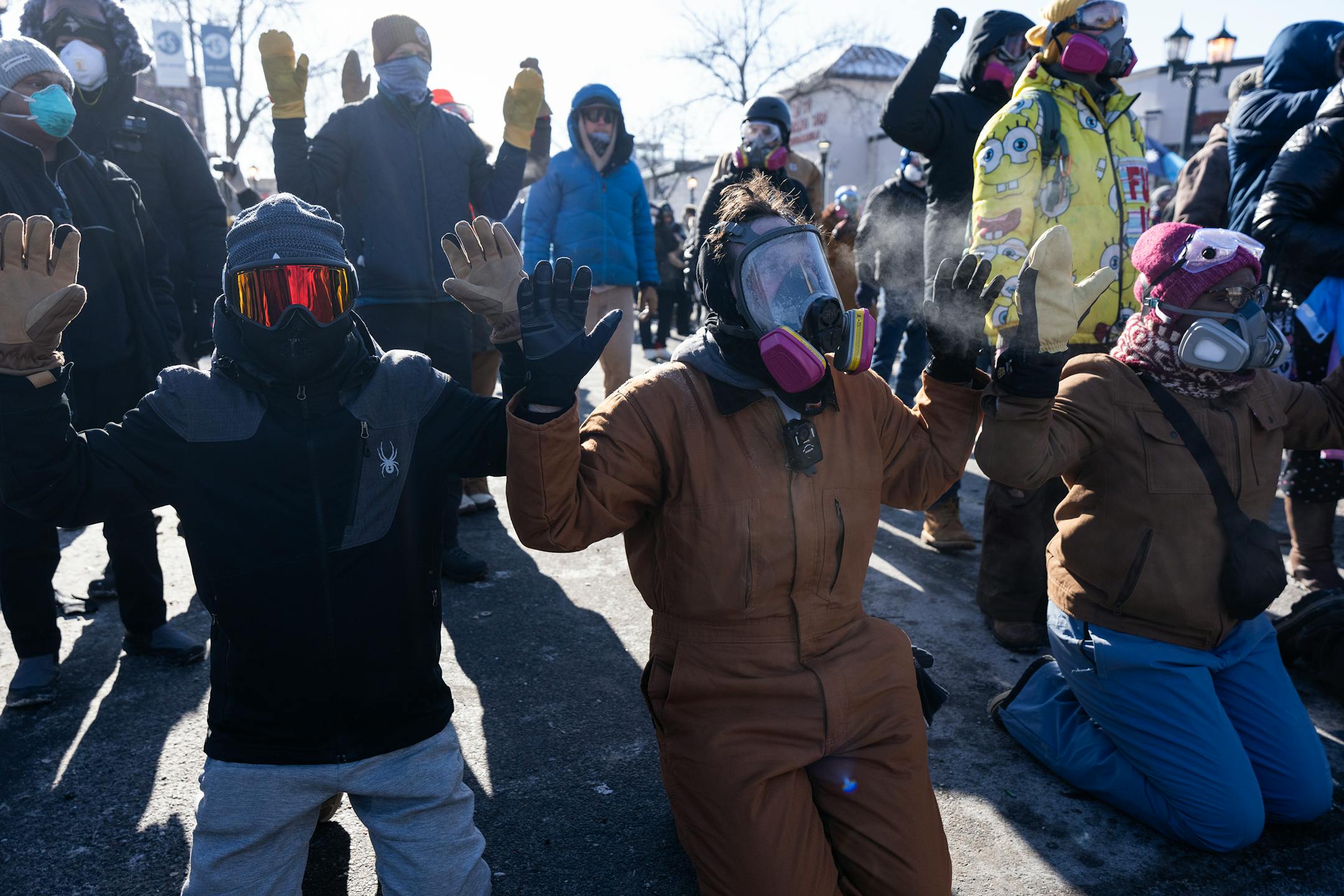
Protesters clash with federal agents after the fatal shooting of Alex Pretti on Nicollet Avenue in Minneapolis on Jan. 24. (Richard Tsong-Taatarii/The Minnesota Star Tribune)
about the writers

about the writers

Greta Kaul

Reporter

Greta Kaul is the Star Tribune’s built environment reporter.

See Moreicon

Sarah Ritter

Reporter

Sarah Ritter covers the north metro for the Minnesota Star Tribune.

See Moreicon

More from News & Politics

See More
card image
Hennepin County Sheriff's Office

Steven Labatt left a generator back on the lake and didn’t bother to try to retrieve it, according to the criminal complaint.

card image
card image