
Minnesota health CEOs say Senate bill will 'seriously undermine' care

Leaders in Minnesota's health care community called the Senate Republican health care reform bill disappointing because of the GOP's continued insistence on significantly cutting Medicaid.

June 23, 2017 at 3:09PM
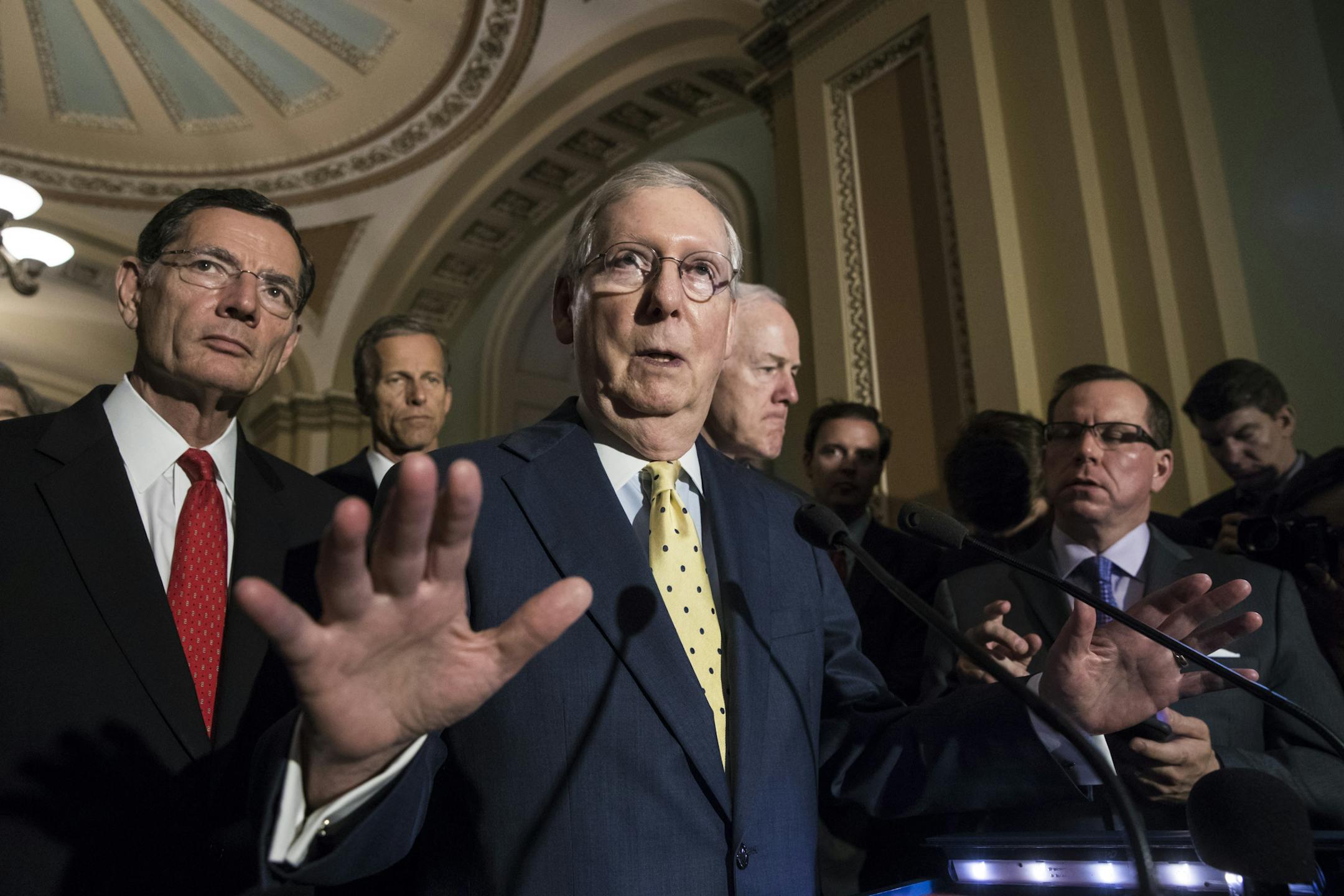
Senate Majority Leader Mitch McConnell, R-Ky., joined by, from left, Sen. John Barrasso, R-Wyo., Sen. John Thune, R-S.D., and Majority Whip John Cornyn, R-Texas, speaks following a closed-door strategy session, at the Capitol in Washington, Tuesday, June 20, 2017. Sen. McConnell says Republicans will have a "discussion draft" of a GOP-only bill scuttling former President Barack Obama's health care law by Thursday. (AP Photo/J. Scott Applewhite)
Senate Majority Leader Mitch McConnell, R-Ky., joined by, from left, Sen. John Barrasso, R-Wyo., Sen. John Thune, R-S.D., and Majority Whip John Cornyn, R-Texas, speaks following a closed-door strategy session, at the Capitol in Washington, Tuesday, June 20, 2017. Sen. McConnell says Republicans will have a "discussion draft" of a GOP-only bill scuttling former President Barack Obama's health care law by Thursday. (AP Photo/J. Scott Applewhite) (The Minnesota Star Tribune)

WASHINGTON – Leaders in Minnesota's health care community called the Senate Republican health care reform bill disappointing Thursday because of the GOP's continued insistence on significantly cutting Medicaid, the federally paid health insurance program for the poor.

The health bill "will seriously undermine health care in Minnesota and, therefore the well-being of our state," the CEOs of some of the state's major health care systems said in a draft of a letter they intend to send to Sens. Amy Klobuchar and Al Franken.

The letter, obtained by the Star Tribune, said major cuts to Medicaid, which aids the poor, elderly and disabled, "are not viable."

Under the Senate version of health care reform — a 142-page "draft" entitled the Better Care Reconciliation Act of 2017 — Minnesota could lose $2 billion in Medicaid funding by 2021, the letter said. That would leave the state unable to completely fill the gap.

"The big story has been and continues to be what [the Republican plan] is going to do to Medicaid," said Jim Schowalter, CEO of the Minnesota Council of Health Plans, a trade group for insurers.

The Senate version of health care reform mirrors much of the American Health Care Act the House passed earlier. All of it is aimed at a Republican promise to repeal and replace the Affordable Care Act, President's Obama's signature health care reform. The Senate version limits Medicaid more than the House, though the changes would take effect over a longer period.

"While it takes more time to phase them in, those cuts will have the same impact," Schowalter pointed out. "It's going to shift who pays."

The ranks of the uninsured will swell, health care system administrators say. States will have to pick up the tab for indigent care. And uncompensated care will go up for care providers.

The Minnesota Medical Association blasted the Senate proposal as anything but better care.

It "is a somewhat slower path to the same end as the House bill — fewer people insured, less affordable coverage, poor people harmed, and Medicaid crippled," Dr. David Agerter, the president of the physicians' group said in a statement. "It is not good for patients and not good for Minnesota."

In touting their bill, Senate Republicans pointed to more affordable premiums for individuals seeking insurance if they do not have it through their employers. Meanwhile, the GOP plan eliminates the Affordable Care Act's requirement that large employers provide employee health insurance.

Supporters of the GOP reform say it gives flexibility for states to create plans that better suit their citizenry. The Senate reform bill, like the House version, lets states seek waivers that allow them to get blocks of money to structure their own programs that can limit or exclude some benefits guaranteed in the Affordable Care Act. States would also be able to impose, within certain limits, work requirements on Medicaid recipients.

The House bill lumped mental health and substance abuse treatment into a $15 billion Patient and State Stability Fund that also includes maternity coverage and newborn care. The Senate bill designates $2 billion to states to "support substance use disorder treatment and recovery support services for individuals with mental or substance use disorders." The Senate bill also allows Medicaid to pay for psychiatric hospital stays up to 30 days at a time and 90 days in a year. But both bills allow states to make mental health and addiction treatment an optional benefit.

Still, a lack of national standards "discourages preventive care," said Wendy Burt of the Minnesota Hospital Association. "It has the potential to really create a lot of chaos and disruption in people's health care needs."

Under the Republican plan, people will not be required to pay a penalty if they do not have health insurance, as they were under the ACA. Also, most taxes that financed the ACA will go away.

In a statement, Franken called the bill "a disaster for the economic stability and livelihood of Minnesota families" and vowed to fight it.

In a Facebook post, Klobuchar said "millions of Americans would lose their health insurance or have to spend much more out of pocket for the care and treatments they need."

Dr. Kevin Croston, CEO of North Memorial Health, expressed concern that the AHCA was all take and no give.

"They're shortening up the money," he said. "But they're not giving us the ability to manage the care.

"I'd like to be paid for the care I provide, and I'd like to be measured by the quality of care I provide. In the end, what I'm going to be getting is less to do the same work."

Staff writers Jennifer Brooks and Jeremy Olson contributed to this story.

Jim Spencer • 202-662-7432

about the writer

about the writer

Jim Spencer

Washington Correspondent

Washington correspondent Jim Spencer examines the impact of federal politics and policy on Minnesota businesses, especially the medical technology, food distribution, farming, manufacturing, retail and health insurance industries.  

See Moreicon

More from Business

See More
card image
Spencer Platt

The U.S. stock market roared back on Friday, as technology stocks recovered much of their losses from earlier in the week and bitcoin halted its plunge, at least for now.

Attendees of Frostbike made their way through the convention Saturday at the Quality Bike Products campus in Minneapolis. ] (AARON LAVINSKY/STAR TRIBUNE) aaron.lavinsky@startribune.com Frostbike 2016 was held at the Quality Bike Products Campus on Saturday, Feb. 27, 2016 in Bloomington, Minn.
card image