High rate of dual-career couples a key driver of Twin Cities’ economy

Data on Minneapolis-St. Paul’s “headquarters economy” is being updated after 10 years to assess if Minnesota remains an economic unicorn.

The Minnesota Star Tribune
October 10, 2025 at 8:28PM
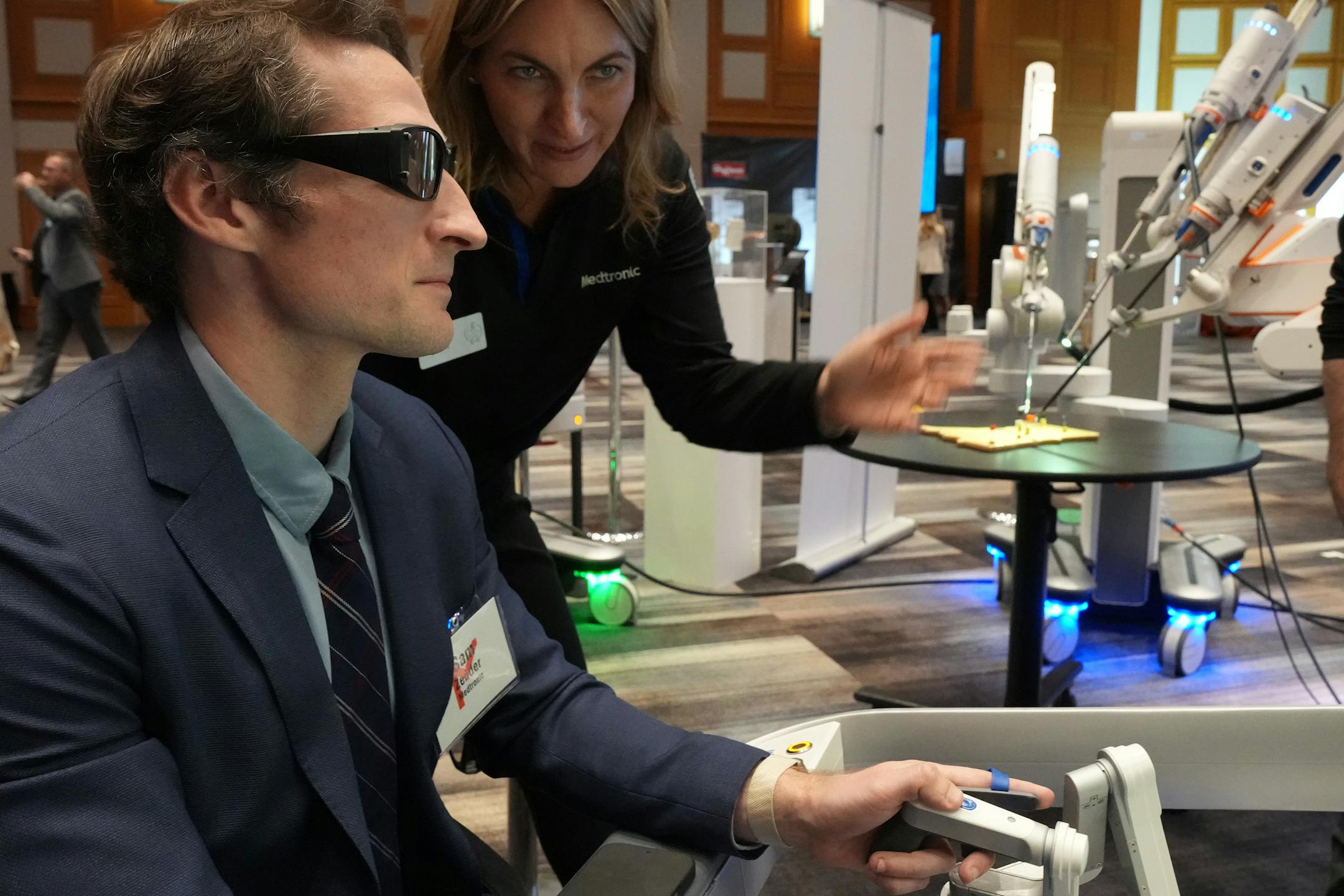
Sam Zender of Medtronic tries out the Hugo robotic-assisted surgery (RAS) system with the help of Kendall Kapitan during the annual Minnesota Business Partnership meeting at the Minneapolis Convention Center on Thursday. (Richard Tsong-Taatarii/The Minnesota Star Tribune)

Sometimes corporations call it the “two-body” problem — when dual-career couples both need jobs to move.

But in Minnesota, especially the Twin Cities, dual-career couples are the norm. The metro has the most of any big cities in the nation, according to new research by University of Minnesota business professor Myles Shaver.

The percentage of dual-career couples has increased from 69% to 80% over the last decade, Shaver said earlier this week at the Star Tribune’s North Star Summit.

Shaver, of the Carlson School of Management, first dubbed the metro area’s “headquarters economy” in 2015, unpacking the effects of region’s unusually high concentration of Fortune 500 companies and other large corporations.

With funding from the Minnesota Business Partnership (MBP), he’s in the process of updating his oft-cited data. His early findings focus on how the Twin Cities’ high rate of two-income households is an asset to the economy.

“Dual professional careers are and will continue to be a source of economic vitality for the Midwest,” Shaver said.

Partners can use their professional skills at several different corporations in different industries, he said, contributing to the adage that it’s hard to get people to move to Minnesota, but impossible to get them to leave.

Dual incomes, he contends, also allows for career risk-taking. If one person has a stable career, the partner can experiment with a startup or riskier job opportunity.

Myles Shaver, a professor at the University of Minnesota Carlson School of Management, has written a book on the Twin Cities' headquarters economy and is updating the data. (Richard Tsong-Taatarii/The Minnesota Star Tribune)

Before the partnership’s annual meeting Thursday, Shaver shared his progress with the board, but said he was not going to share any more publicly until completing the analysis.

Shaver’s 2018 book “Headquarters Economy: Managers, Mobility and Migration” highlighted how the heavy concentration of headquarters companies is a key differentiator for Minnesota.

The partnership funded the update to see if the premise remains true today.

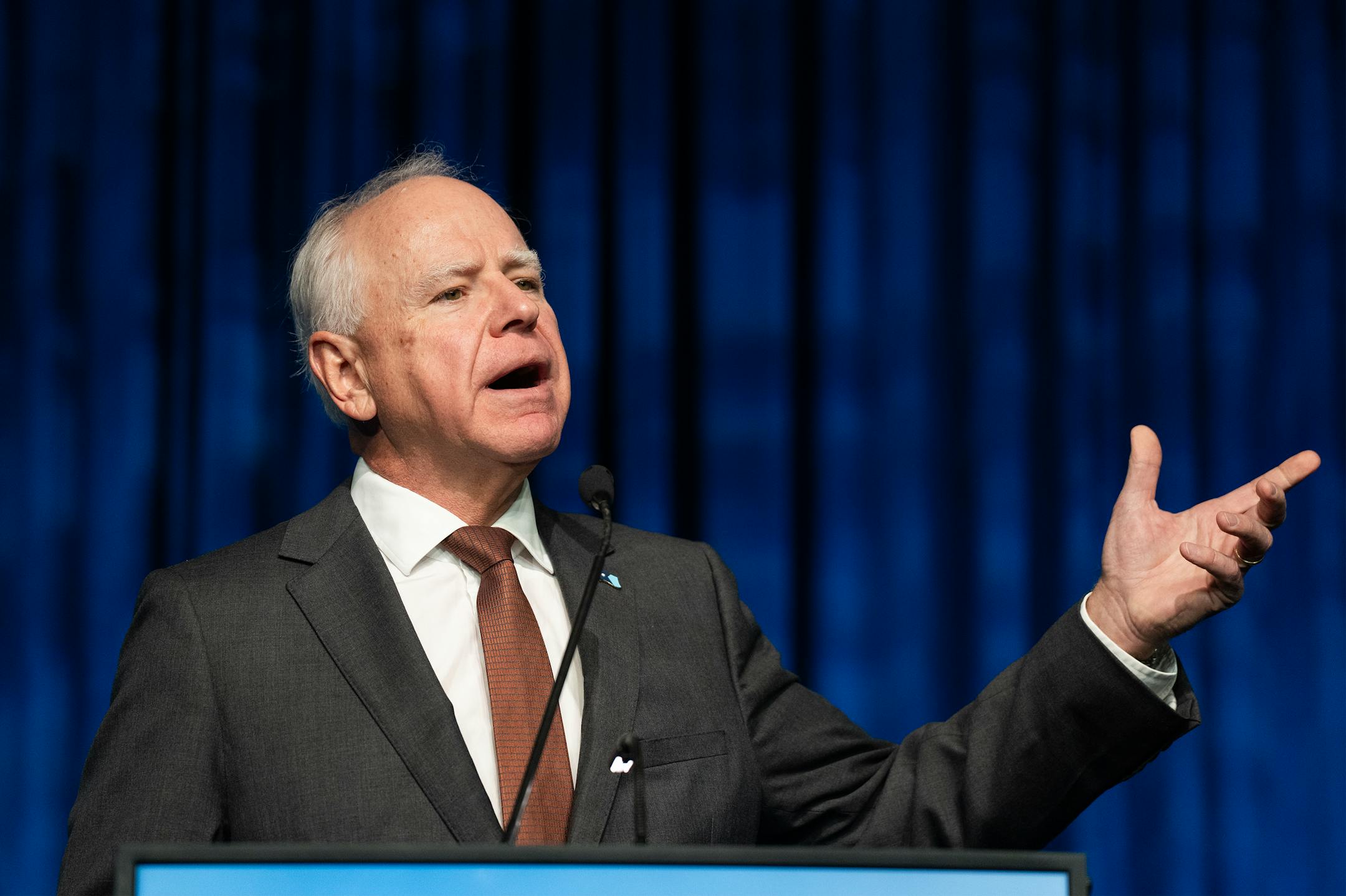
Shaver’s efforts were referenced throughout the night, including by Gov. Tim Walz who talked about the long-term contributions of businesses in transforming the economy.

When he travels with other Midwest governors, Walz says he lets them lay claim to being the heart of the Midwest.

“I’ll give them that, because we are the brains of the Midwest,” Walz said. “And we need to stay in that position.”

Gov. Tim Walz said at the Minnesota Business Partnership annual meeting Thursday that Minnesota is the "brains of the Midwest." (Richard Tsong-Taatarii/The Minnesota Star Tribune)

Geoff Martha, chair and CEO of Medtronic PLC and chair of the Minnesota Business Partnership, said the state must protect that advantage as other communities are trying to replicate it.

“We can’t take this ecosystem for granted,” he said.

The partnership, which lobbies for Minnesota business interests, has expanded how it promotes companies. That was on display at the meeting, which was a long happy hour rather than the typical sit-down meal. Participants had time to network and wander through 56 trade show-style “HQElevate” demonstrations that highlighted the history and innovation of its member companies.

MBP CEO Kurt Zellers’ strategy for the partnership is to show, not tell. The group also has launched legislative visits to member companies for up-close views of innovation and conversations with CEOs.

3M's oversized Scotch tape dispenser mockup was one of the displays of the state's innovation at the Minnesota Business Partnership's annual meeting on Thursday. (Richard Tsong-Taatarii/The Minnesota Star Tribune)
about the writer

about the writer

Patrick Kennedy

Reporter

Business reporter Patrick Kennedy covers executive compensation and public companies. He has reported on the Minnesota business community for more than 25 years.

See Moreicon

More from Economy

See More
card image
Mary Altaffer/The Associated Press

There are seven answers in the form of tech companies like Nvidia, Apple and Microsoft. But their outsized impact could spell disaster if the AI bubble bursts.