In a 1998 interview, the Spice Girls’ Mel B asked the Artist Formerly Known as Prince what she should call him. He decided on “Spud,” but could only offer a coy smile as an explanation.
Twenty-five years later, it looks more like a premonition. Breeders at the University of Minnesota have created a new purple and yellow potato, naming it the Paisley Purple after the artist’s Chanhassen studio. It’s at a handful of local farmers markets and on the tasting menu at Alma, a fine-dining restaurant in Minneapolis. And as the “Purple Rain” musical ends its run at downtown’s State Theatre, the potato serves as a starchy ode to the late artist.
But like the musical and its namesake artist, the Paisley Purple faces a long road out of the Twin Cities. Grocery stores have been hesitant to stock purple potatoes and give them a chance at mainstream appeal, farmers and researchers say. However, the early success of the Paisley Purple has given its creators Prince-like dreams.
“I can see it being on the shelves,” said Maggie Whelan, Alma’s executive chef, “like the potato equivalent to the Honeycrisp apple.”
The Honeycrisp of potatoes
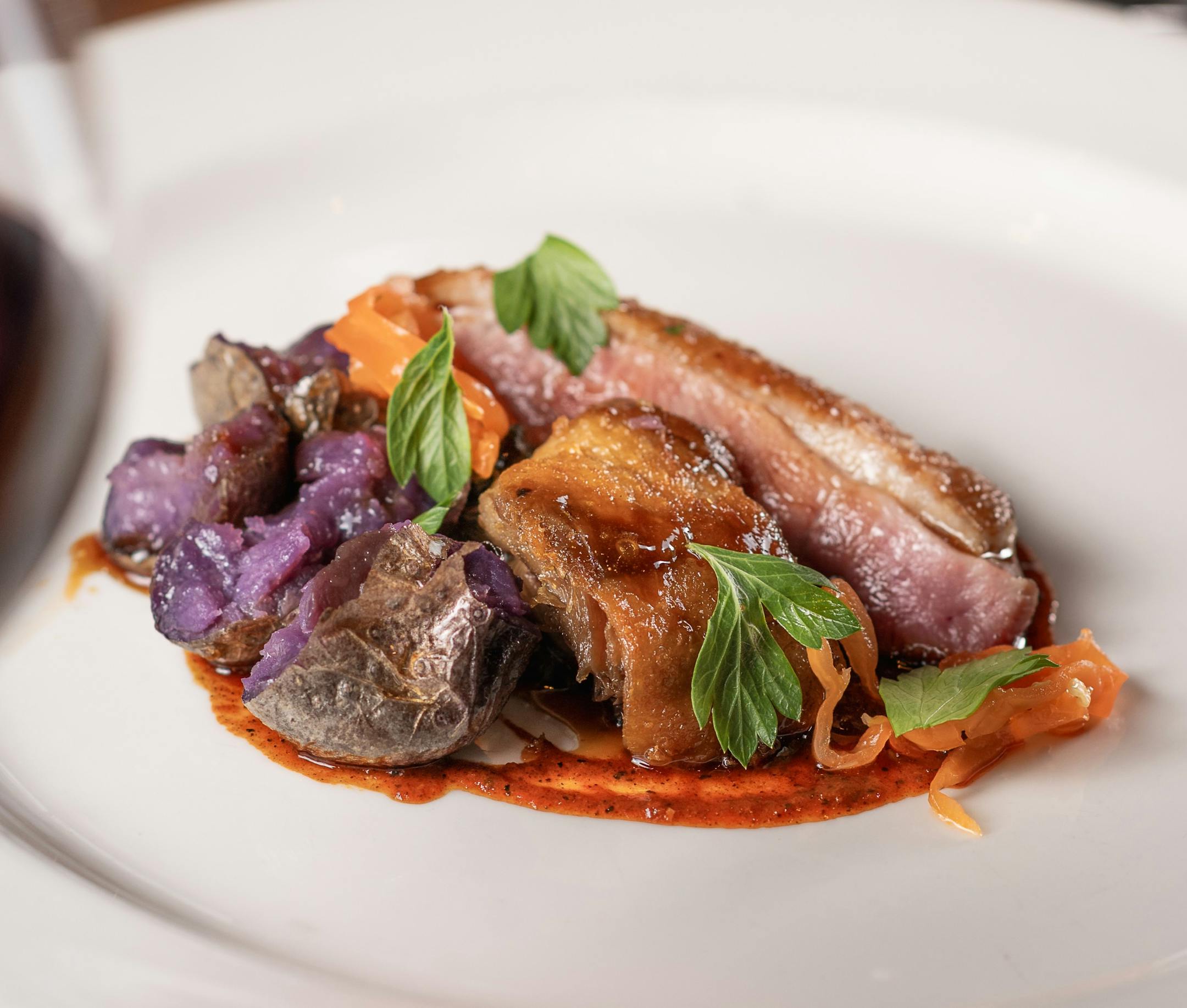
At Alma, Whelan says they roast the potato with little other than olive oil. It’s important not to smother the Paisley Purple’s flavor, which Whelan describes slightly sweet. Tableside, it comes with a sprinkle of flaky salt, a pat of butter and a story about literal Minnesota roots.
“I gesture to the right, down University to the U,” Whelan said. “But I always talk about how delicious it is in comparison with other potato products.”
Perhaps nobody has known the Paisley Purple longer than Kent Mason, the farmer tasked with taking the initial lab samples and turning them into farmable seed. He got them from the potato’s creator, Christian Thill, almost a decade ago. But Thill, who ran the U‘s potato breeding lab, died unexpectedly shortly after. For years, Mason kept the potatoes alive, unsure if the researchers would ever return.
But geneticist Laura Shannon received Thill’s samples of the Paisley Purple when she took over the potato breeding program in 2017. They came to her a mystery, she said, just the samples and some scant scribbles of notes. Shannon couldn’t tell why Thill made the Paisley Purple. She just knew it needed to be Minnesotan.