
Advertisement

Walz signals openness to revived Sanford-Fairview merger

The two health systems tried to combine in 2013, but the deal fell apart after resistance from Minnesota political leaders.

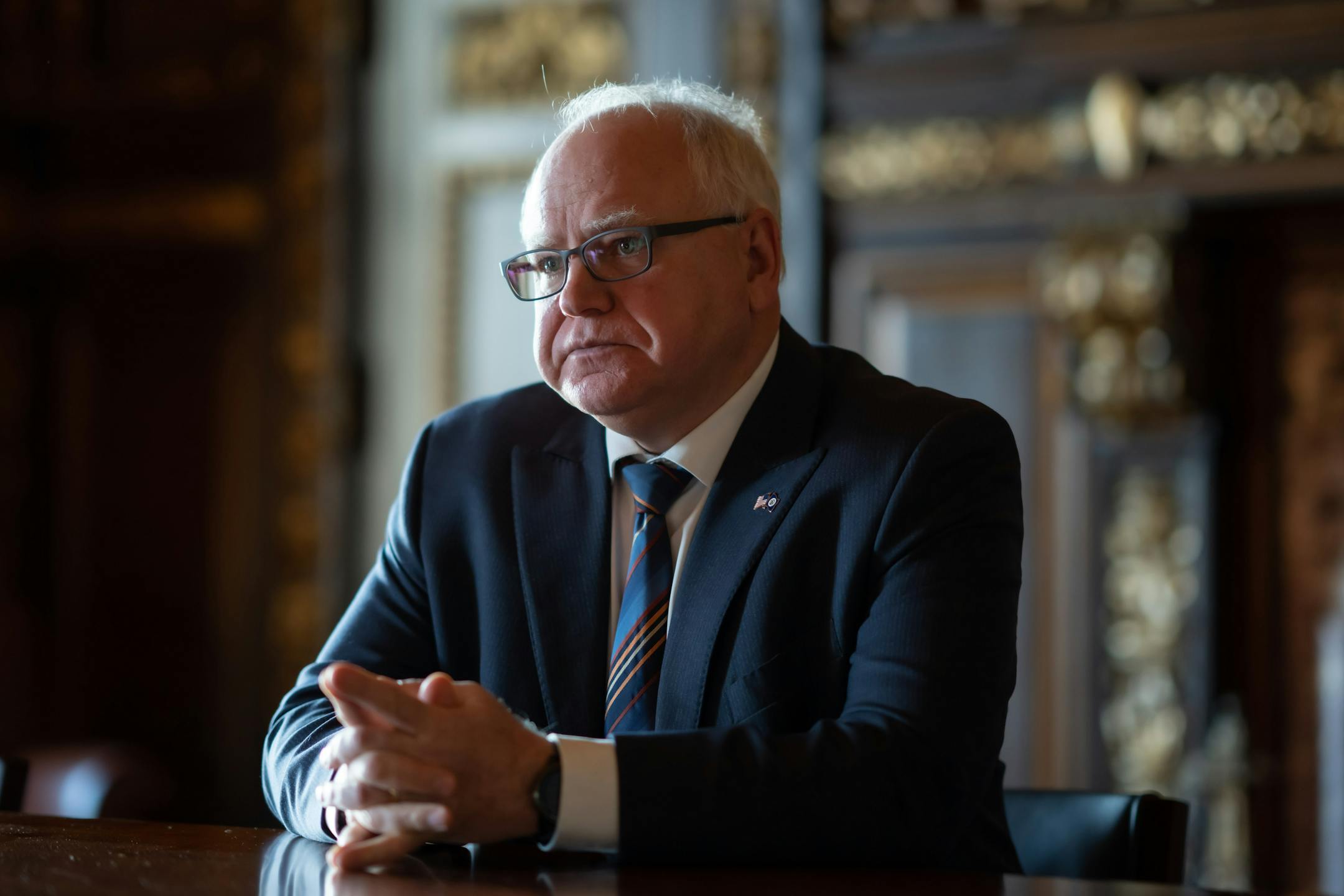
Minnesota Gov. Tim Walz during an interview Wednesday in St. Paul expressed openness to the proposed merger of Fairview Health Services and Sanford Health. (Glen Stubbe, Star Tribune/The Minnesota Star Tribune)
Advertisement

Gov. Tim Walz expressed openness to the proposed merger of Minneapolis-based Fairview Health Services with Sioux Falls-based Sanford Health, signaling friendlier political waters than the nonprofit health giants encountered when they tried to combine a decade ago.

In an interview Wednesday at the Capitol, Walz told the Star Tribune that the engagement between his administration and Sanford, the nation's largest rural health care system, has been transparent and candid — even before talk of a merger was floated earlier this month.

"What I can tell you is the new CEO at Sanford, the communication and the relationship with our office is 100 percent different than it used to be," Walz said.

The two health systems tried to combine in 2013, but the deal fell apart after resistance from Minnesota political leaders. The debate prominently featured the University of Minnesota because Fairview owns the U's teaching hospital in Minneapolis.

Asked whether the door was more open for a deal now than it was a decade ago, Walz said, "I think that's correct." But the governor also said: "There's a lot of work to be done left in it."

Walz, who represented southern Minnesota in Congress for over a decade, said a "tough" environment for rural health care has strained health systems' ability to provide needed care and remain financially viable. He also said those economics have necessitated mergers.

But Walz cautioned that such mergers cannot be devoid of consideration for quality of care. He invoked the plight of Albert Lea residents after Mayo Clinic several years ago reduced services at the town's hospital.

"The delivery in rural health care will look different, and there is going to be some realignment," Walz said. "We just need to make sure the communities are being heard and service is not interrupted."

Advertisement

State lawmakers don't have an automatic say in whether the deal can move forward, but the experience of the failed Sanford-Fairview merger in 2013 shows how they can make such combinations difficult.

Minnesota's former attorney general Lori Swanson led opposition to the plan by challenging the idea of an out-of-state organization running the University of Minnesota Medical Center, the taxpayer-supported training location for most of the state's doctors. State lawmakers introduced legislation to block the move, and former Minnesota Gov. Mark Dayton backed a plan for the university to take over Fairview instead.

Shortly after Swanson publicly disclosed talks with Fairview in 2013, Sanford abandoned the idea, saying it had a policy of "only going where we are invited."

Minnesota's current attorney general, Keith Ellison, has signaled a different approach to evaluating the merger idea. Whereas Swanson quickly held a high-profile public hearing at the Capitol, where she grilled Sanford executives, Ellison is scheduling three or four public hearings — including in greater Minnesota — that likely will begin in January.

His office is also encouraging Minnesotans to use a dedicated web form to submit comments.

"Rural health care is just a challenge," Walz said, "So I think the AG is right on this at the listening session. The complexity of the teaching hospital and the University of Minnesota play into this."

Advertisement
about the writers

about the writers

Christopher Vondracek

Agriculture Reporter

Christopher Vondracek covers agriculture for the Star Tribune.

See Moreicon

Christopher Snowbeck

Reporter

Christopher Snowbeck covers health insurers, including Minnetonka-based UnitedHealth Group, and the business of running hospitals and clinics.

See Moreicon

More from Business

See More
card image
Elizabeth Flores/The Minnesota Star Tribune

Waning consumer demand and volatile commodity prices have put pressure on poultry producers. Life-Science Innovations already owns other bird facilities throughout the state.

Todd Geselius, vice president of agriculture at the Southern Minnesota Beet Sugar Co-op, shows what a sugar beet looks like when it is harvested in the field on Sept. 9, 2015 in Renville, Minn. (Jim Gehrz/Minneapolis Star Tribune/TNS) ORG XMIT: 1175088 ORG XMIT: MIN1510142301350530
card image
Advertisement