Citizenship ceremonies take on new meaning while immigration raids underway

The process of becoming a citizen is becoming harder. For immigrants in the Twin Cities, getting through it has never felt more important.

The Minnesota Star Tribune
December 19, 2025 at 11:43PM
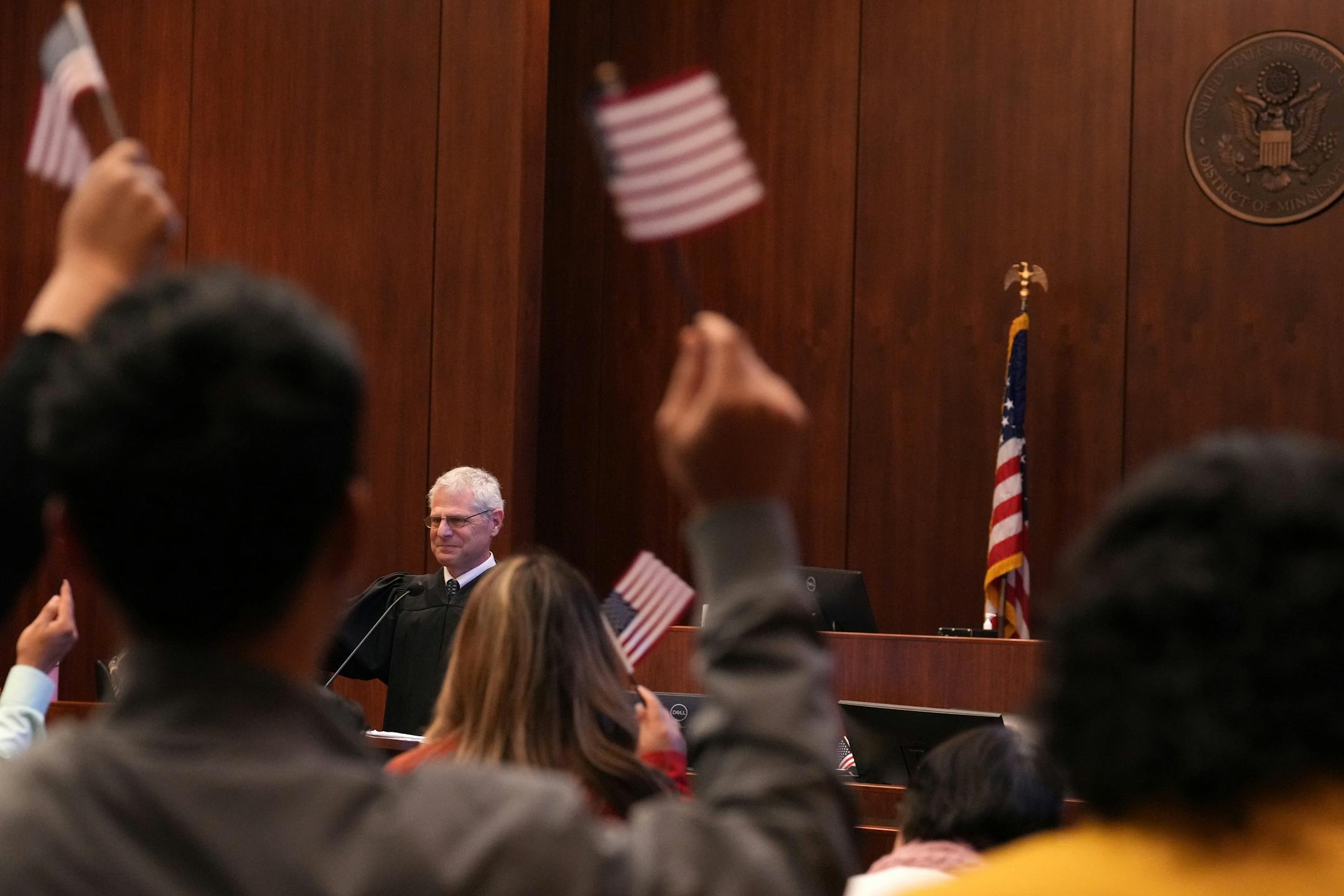
Judge William Fisher invites new citizens to wave their flags during the second of two citizenship ceremonies on Friday, Dec. 19 at the Warren E. Burger Federal Building and US Courthouse in St. Paul. (Anthony Souffle/The Minnesota Star Tribune)

After more than 50 immigrants took their oath of allegiance in a St. Paul courtroom Friday morning, Magistrate Judge John Docherty told these new citizens that their status strengthens the United States.

Their rights, the judge said, enable the practice of democracy. He encouraged them to vote. “Protest injustice when you see it, even if it seems that nobody else is listening,” he continued.

“One last thing,” the judge told the packed room of people hailing from Mexico, Ethiopia and dozens of other countries.

People these days are disagreeing, he said.

“That’s fine,” Docherty said. “But they are disagreeing in remarkably unpleasant ways, which is not fine at all. And unfortunately, it is many of our so-called leaders who are often leading the way to the bottom in being insulting and being rude. Don’t be like that.”

He continued: “Not being nasty is not the same as giving up or surrendering your beliefs.”

This message resonated for many in the U.S. Courthouse in frigid downtown St. Paul.

Naturalization ceremonies — through which people become American citizens — are embodying a new feeling of significance as the White House pushes to limit immigration and make the citizenship process more difficult.
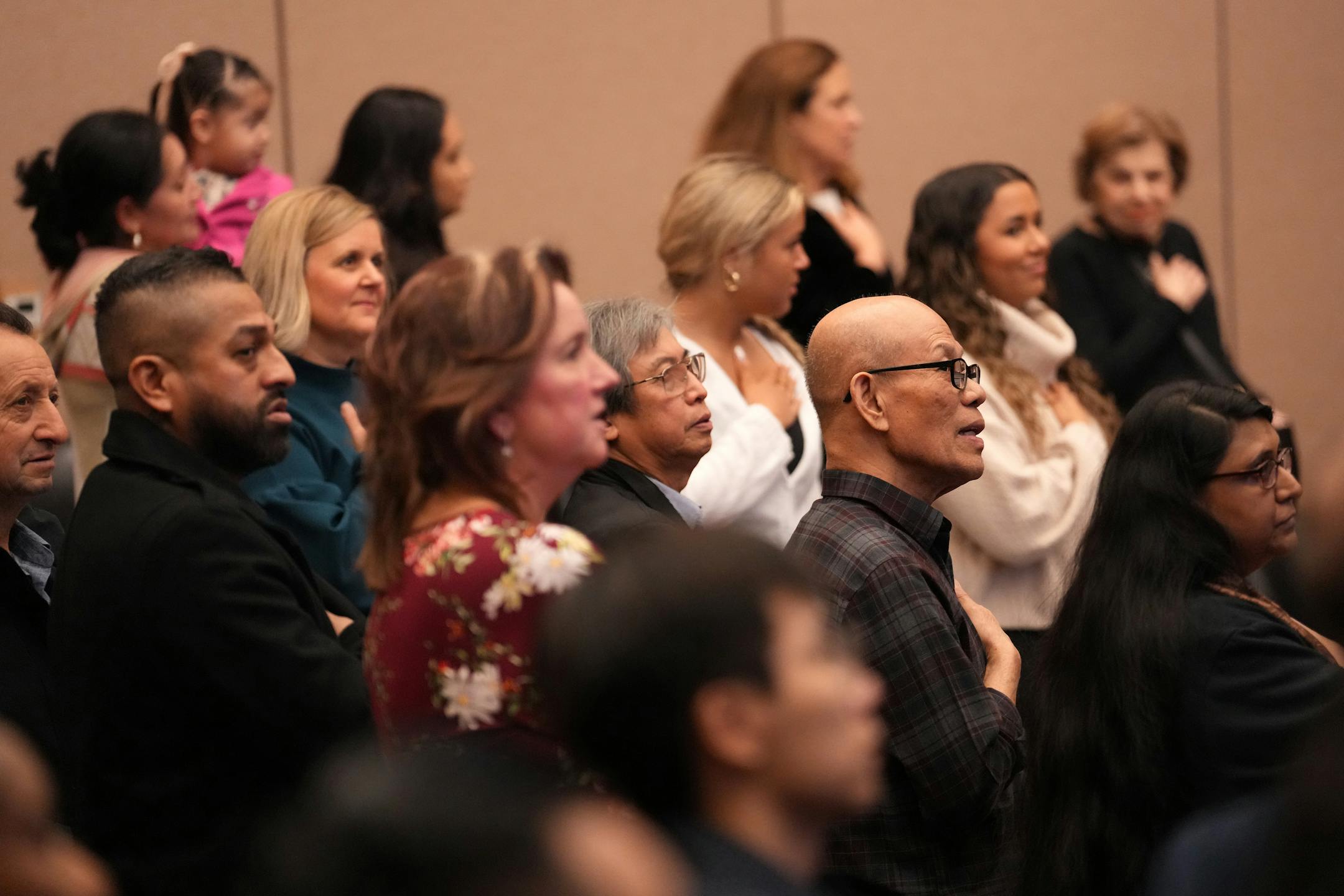
Attendees from numerous countries stand at the start of a citizenship ceremony on Friday. (Anthony Soufflé/The Minnesota Star Tribune)

Several new citizens said their status carries heightened meaning as federal agents sweep the Twin Cities, stopping immigrants amid President Donald Trump’s attacks on Minnesota’s large Somali community.

Immigrants can work for decades to reach these ceremonies.

Once they stand in a federal courtroom and pledge their loyalty to the United States, they already filed extensive paperwork verifying they met residency requirements, completed an interview vetting for “good moral character” and passed a civics test the Trump administration is making more difficult.

U.S. Citizenship and Immigration Services spokesman Matthew Tragesser said in a September news release that the changes — the first of many — make sure certain new citizens “are fully assimilated and will contribute to America’s greatness.”

Getting through the exhaustive process is a source of pride.

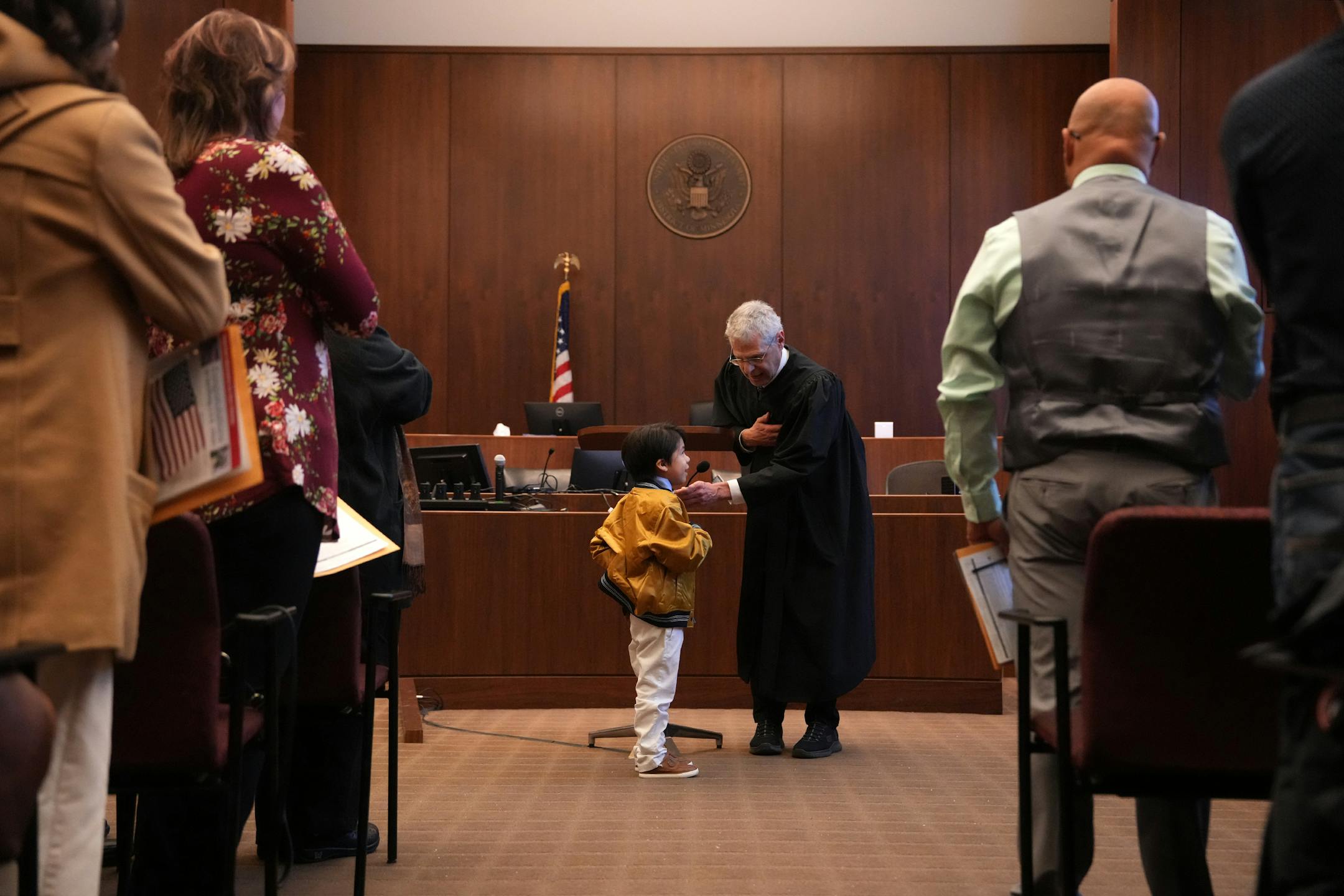
A court worker referred to the son of Joaquin Ortega as a “little helper” as the Benson, Minn., family stood in line for a photograph with a judge following a later ceremony.

The boy led the group of new citizens in the Pledge of Allegiance. His father, a Mexican immigrant, said he came here for simple reasons: to find work and support his family.

Judge William Fisher gets help with the Pledge of Allegiance from Jared Ortega, 6, whose dad Joaquin was becoming a citizen. (Anthony Soufflé/The Minnesota Star Tribune)

In the morning ceremony, Judge Docherty told the immigrants he is also a naturalized citizen. The Scottish judge’s solidarity felt like “such a big deal” for Roselyn Johnson of north Minneapolis.

It took Johnson nearly 30 years to reach the ceremony at the Warren E. Burger Federal Building.

She moved to the United States from Liberia when she was three years old, seeking asylum from a civil war tearing through the West African country. The 31-year-old joked that she plans to tape her letter-sized citizenship certificate to her chest.

“This is a moment of freedom,” she said.

Johnson works on Lake Street in south Minneapolis and has watched people “getting stopped and getting grabbed” by federal agents, she said. Before Friday, she feared this could happen to her.

“I feel so grateful to be able to have that opportunity while I know other people are fearing [for] their life,” Johnson said.

Buoyed by her citizenship, she plans to speak up and protest federal immigration actions.

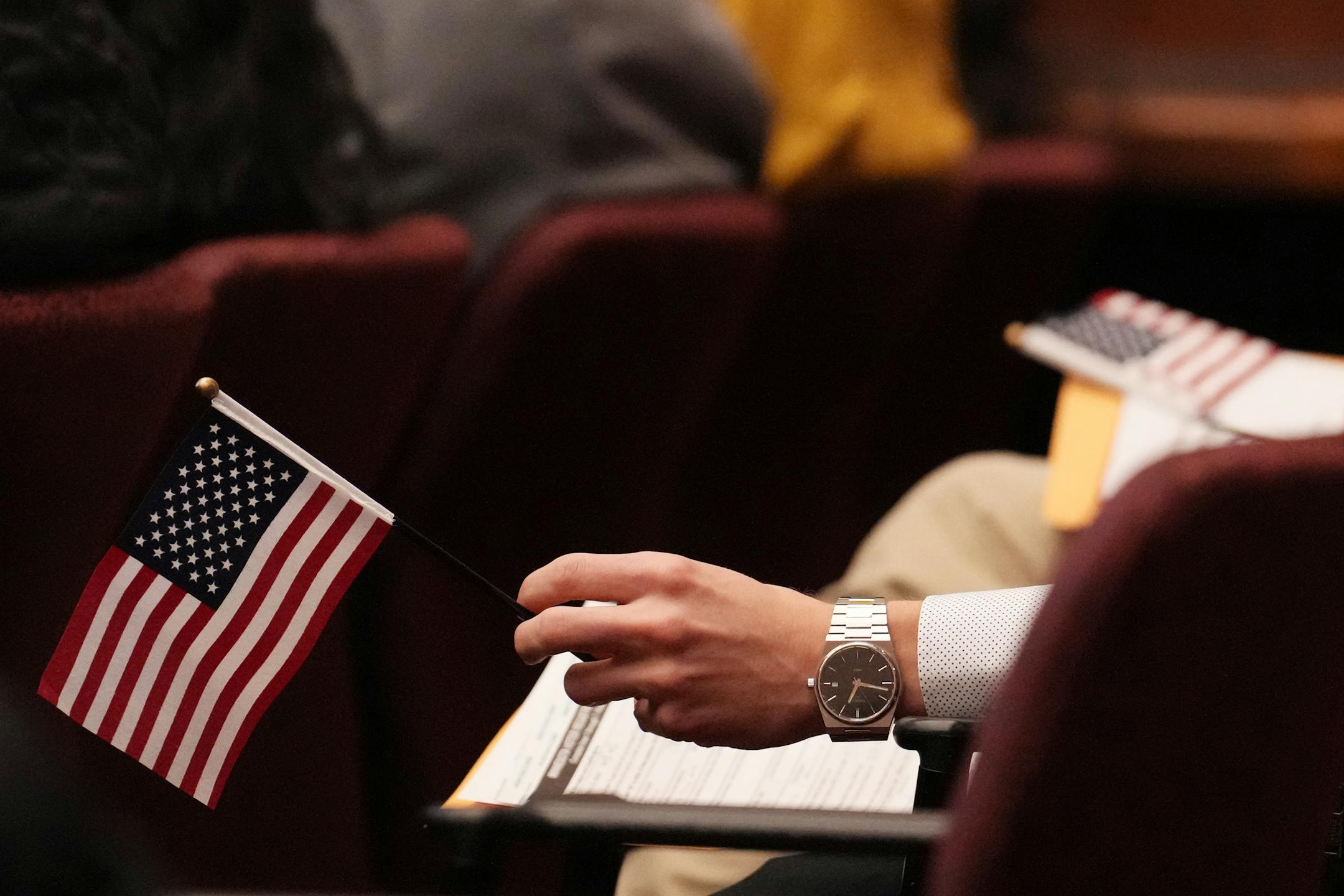
Attendees held miniature U.S. flags. (Anthony Soufflé/The Minnesota Star Tribune)

Yessica Nava, 26, said immigrants are living in fear right now.

She moved to the United States from Mexico as a toddler, and says her mother wanted to give her a better life. Her citizenship will make daily life easier, as she previously worried how officers might question her immigration status in stops.

The judge, she noted, insisted that the American fabric isn’t just white, as Latinos, Africans and many more make up the country.

The new citizens waved mini American flags and one wore a stars-and-stripes tie. Toddlers giggled in the back of the courtroom, bundled in their thickest winter clothes.

Before the ceremony wrapped up, Docherty asked the group a question:

“Are you real Americans?”

“Yes,” they responded in unison.

“A little louder,” the judge insisted.

“Yes!” they exclaimed.

about the writer

about the writer

Victor Stefanescu

Reporter

Victor Stefanescu covers medical technology startups and large companies such as Medtronic for the business section. He reports on new inventions, patients’ experiences with medical devices and the businesses behind med-tech in Minnesota.

See Moreicon