

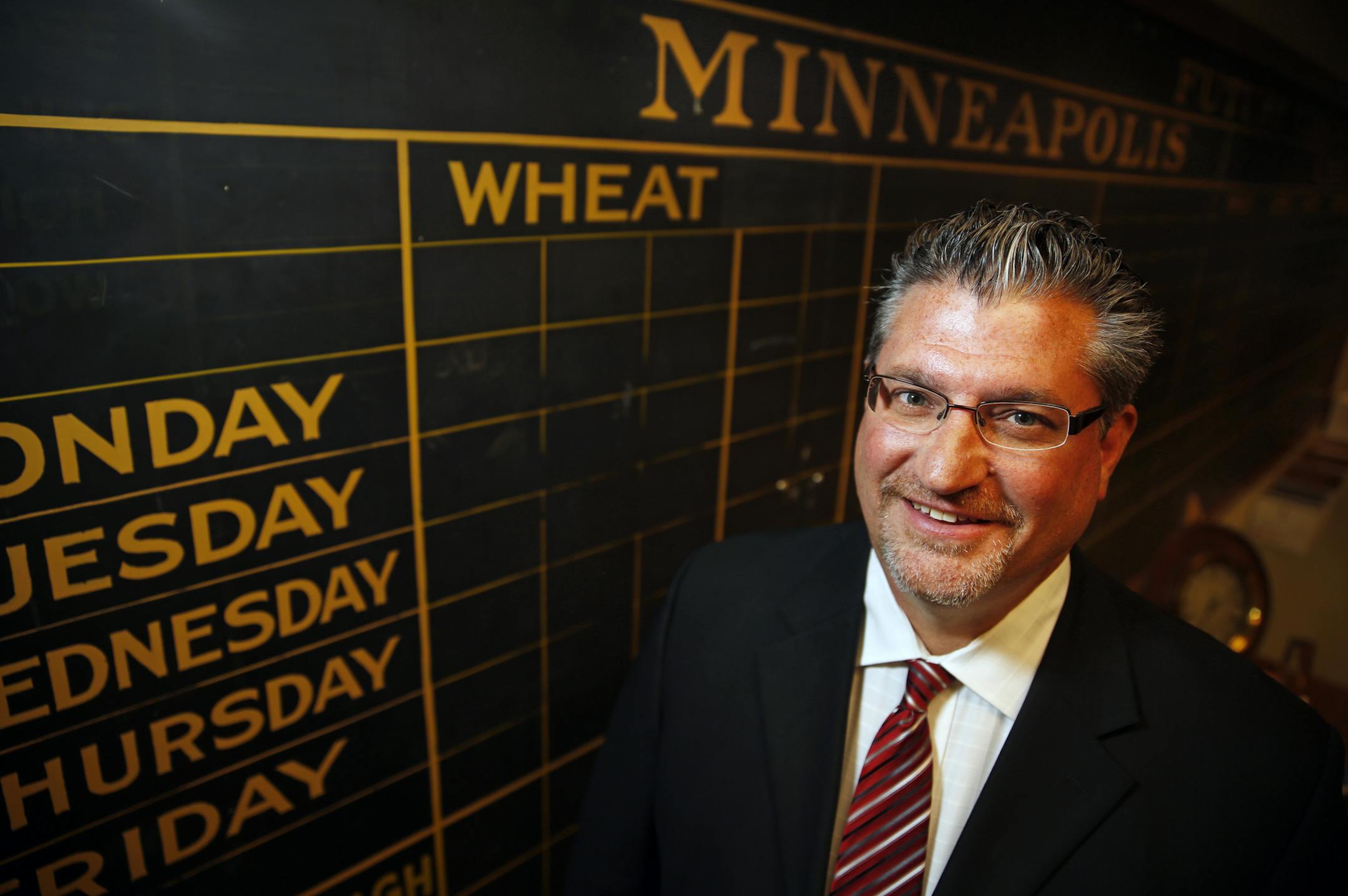
By Mike Hughlett mike.hughlett@startribune.com
A product of long-gone days when flour milling was king, the Minneapolis Grain Exchange is on a roll these days.
A sea change in Canada's grain marketing system is creating new opportunities for the Minneapolis exchange's signature wheat futures contract. Volume in that contract is relatively strong. And a new apple juice futures contract could provide an additional boost.
The question is whether the exchange, a downtown landmark and the nation's last independent agricultural futures market, will still be around in a few years to reap the benefits.
Commodity exchanges across the globe — those trading futures contracts on everything from Treasury bonds to oil to pork bellies — have been rapidly combining over the past decade.
"We're a business and we're willing to sit down and talk [with potential suitors]," Minneapolis Grain Exchange CEO Mark Bagan said.
But he said the focus remains on growing the business. "The bottom line is we've been around for 132 years and we've been able to survive."
In the United States, the futures business is controlled by Chicago-based CME Group, owner of the Chicago Mercantile Exchange and Chicago Board of Trade, and Atlanta-based IntercontinentalExchange (ICE), owner of myriad global commodity exchanges. The latter is buying the New York Stock Exchange's parent company for over $9 billion.


