
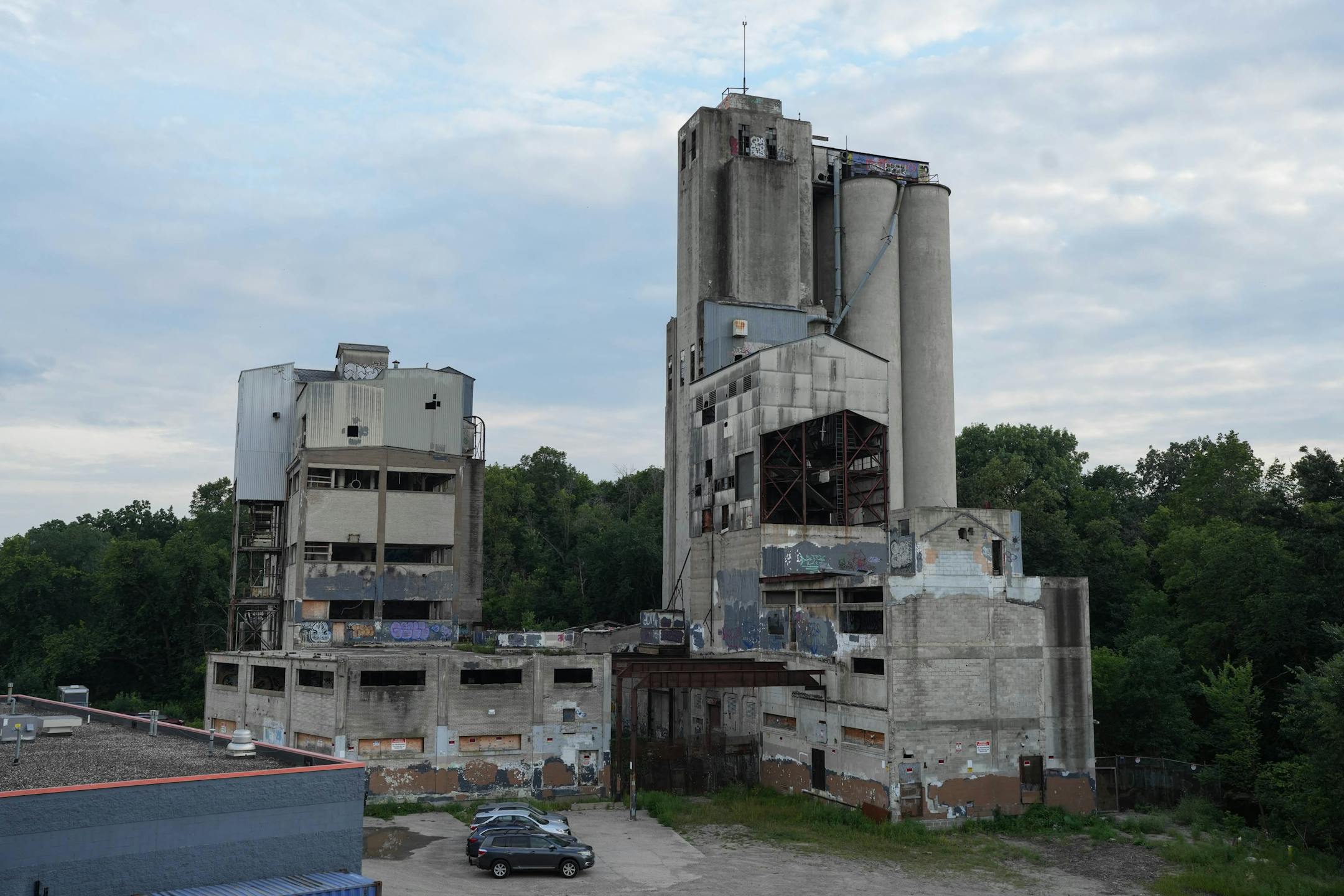
From crumbling industrial ruin to hotel, restaurant and spa? City says it could happen.

The Fruen Mill, next door to Utepils Brewing, has been a developer’s nightmare and a fall trap for urban explorers. The property’s owner has big plans for the Minneapolis site.

The Minnesota Star Tribune
August 14, 2025 at 9:44PM
The Fruen Mill in August 2025. New owner Greg Koch has remediated some hazards in preparation for redevelopment. (Susan Du/The Minnesota Star Tribune)

Many a developer has taken the measure of the old Fruen Mill, the monstrous ruins of a historic grain mill in the western reaches of Minneapolis, and walked away. Over the decades, the mill on the banks of Bassett Creek in the Bryn Mawr neighborhood became a magnet for daredevil graffiti taggers and teenage urban explorers.

The new owner of the mill — and the building that Utepils Brewing rents next door — now plans to give it a go.

Greg Koch, co-founder of California-based Stone Brewing, purchased the property at 303 Thomas Av. N. in 2023 for half a million dollars, according to real estate records. He plans to convert the mill into a hotel, restaurant and spa, said Erik Hansen, Minneapolis’ director of community planning and economic development.

“It’s a really incredible vision he has for the redevelopment of this thing,” said Hansen, who attended the nearby Anwatin Middle School decades ago and has always known the mill as a perpetually abandoned husk. “It’ll take a little bit of time, but yeah, I think this is a real one.”

Koch attended the Bryn Mawr Neighborhood Association’s meeting on Wednesday night to request a letter of support for redeveloping the mill. He was guarded about the details, however, telling curious board members he hasn’t determined what he’s going to build. It isn’t clear how much his project will cost.

“We’ve spent most of the time and effort towards the infrastructural things necessary, such as buttoning it up to keep further ... you know, it has a checkered past history,” Koch said at the meeting. “So we’ve worked with the police department and fire department and community to make sure that we’ve done that, other abatement issues, and such.”

Bryn Mawr board members agreed to support the Fruen Mill’s reactivation, regardless of what form it takes.

“We’ve been wanting this site developed since like 1985, I think, and so it’s pretty exciting that it’s possible something could happen to get our kids out of there,” said board secretary Jessica Wiley.

A regulatory puzzle

Dan Justesen, president of Utepils Brewing, has been as eager as anyone to see the Fruen Mill “change into something that draws people versus scares people,” he said in an interview. His newsletters have hinted at progress over the years, but the complexity of the building and the surrounding land seems to have always barred any real plans from materializing.

The mill is concrete, and the site is marred with chemicals left over from its industrial heyday and railroad lines that delivered grain. The property also sits squarely in the flood plain next to Bassett Creek, where development requires the scrutiny of the watershed district.

“I know they’re planning stuff because I interact with them on a daily basis. You know, I’m their tenant,” said Justesen. “They seem to be active. They seem to be, to my impression, in good spirits.”

On Aug. 21, the Bassett Creek Watershed Management Commission is expected to consider a request from Koch for a variance from its rules designed to avoid flood-related problems. The watershed district’s development policy allows playgrounds, surface parking lots, and other uses far less involved than a hotel and restaurant.

“There’s been a lot of really good dialogue with the developer, but yeah, if it’s going to move forward with how the developer is envisioning the project, it will need variances from some of our floodplain standards,” said Laura Jester, commission administrator.

Other developers who have toyed with the idea of doing something with the Fruen Mill “have never gotten this far,” she said. “They’ve never engaged our engineers in fully understanding what is necessary and all of the variances. My sense is that it was always just too complicated of a project for other developers, or maybe they didn’t have the vision of keeping the structures that this developer does.”

City planners have been helping Koch navigate the land use approvals he requires. Hansen has submitted a letter of support to the watershed district.

A hazardous history

While the 19th-century milling district that put Minneapolis on the map was located along the Mississippi River, the Fruen family business harnessed the water power of Bassett Creek and rose to prominence as a cereal empire converting milled whole grains into ready-to-eat breakfast foods. Rights were later sold to the Quaker Oats Co., according to the memoir of descendant Ross Fruen.

As industry multiplied along Bassett Creek and the population grew, it became a dumping ground and open sewer, resulting in parts of it being buried throughout the 20th century.

Over the past five years, there have been 171 emergency calls to the Fruen Mill, many for trespassers, injuries and technical rescues.

In 2021, a woman fell two stories through a hole onto concrete, and firefighters had to cut through a steel gate to reach her. Two years later, a teenage girl fell 20-30 feet. When her friend called the police, he said she may have broken her tailbone because she couldn’t move her legs.

“The neighborhood would love to see an active building, and as cool as it is to have the nostalgia of this relic, this old building, I think they’d much rather have a cool little speakeasy and a day spa and a place for their relatives to come when they’re out of town,“ Hansen said.

about the writer

about the writer

Susan Du

Reporter

Susan Du covers the city of Minneapolis for the Star Tribune.

See Moreicon